
Styles
#3260
Pierre-Joseph Redoute style reference and prompts
Explore the “Pierre-Joseph Redoute” reference with pooled pigment and washes, negative space, and teal and ochre tones. View the images, copy the style or example prompt, and discover related styles on Looksift.
Compare the Qwen Image 2.1 and GPT Image 2.5 examples, choose the visual qualities you want, and copy the style prompt for your own project.
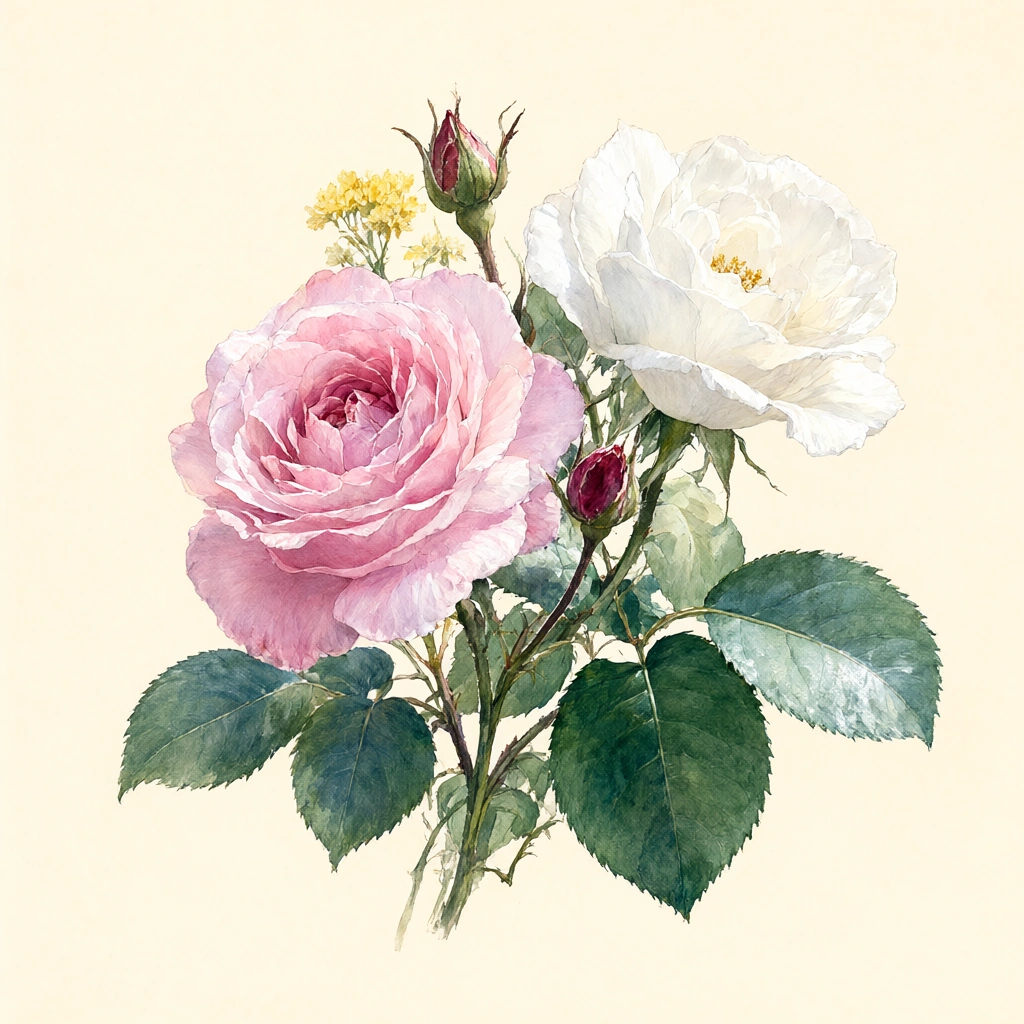 Qwen Image 2.1
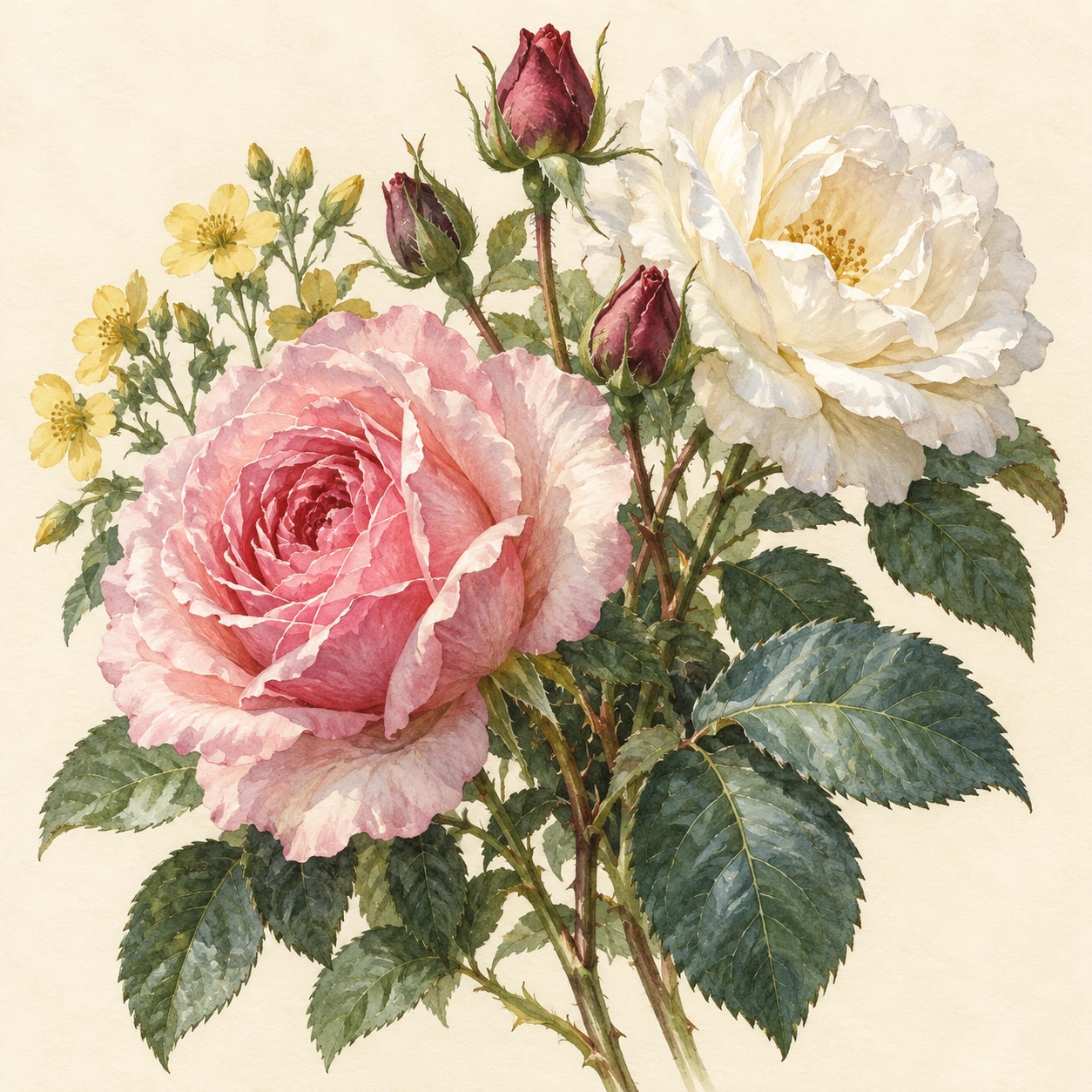 GPT Image 2.5
Reference details
- Reference ID
- 3260
- Category
- Painting
Reference prompts
Style prompt
The botanical watercolor style rests on pale open paper, transparent layered washes, and exact small linework. Soft tonal shifts model rounded folds without heavy outlines, while sharper strokes select veins, serrations, and inner recesses. Cool blue-green masses support blush pink, off-white, muted red, and small ochre accents. Dense overlapping forms gather in one area, but generous negative space keeps the arrangement light. Pigment pools gently along a few edges and thins toward luminous highlights, retaining the medium's watery character. Diffuse upper-side light gives raised planes delicate brightness and leaves folds in quiet shadow. The overall effect is precise and graceful, joining naturalistic observation to an airy, carefully balanced page composition.Full example prompt
A square botanical watercolor shows a cluster of pink and white roses with leaves and buds against a pale warm cream background. The flower group rises from the lower center and leans upward toward the right, leaving quiet blank paper around its outer edges. A large blush-pink bloom dominates the left middle area. Its many curled petals shift from cool rose in the shaded center to almost white along the lit outer rims. Above and to the right, a pale white rose opens in layered translucent folds, with a small golden center partly visible. Several tight dark red buds stand among slender stems near the upper middle, while a small spray of yellow flowers appears behind the larger blooms on the left. Broad blue-green leaves spread across the lower right and lower left, their veins and serrated edges drawn with close observation. Some leaves overlap into deep green shadow; others catch cool pale light along their central ribs. Thin brown-green stems remain visible through gaps in the foliage, connecting the flowers without forming a heavy outline. The cream ground contains little setting or cast shadow, presenting the arrangement as an isolated study. Watercolor washes build gentle petal translucency, and finer dark strokes clarify folds, veins, and bud edges. Light seems to arrive softly from the upper left, brightening petal rims while leaving deeper creases and leaf undersides shaded. The composition is detailed but airy: dense overlapping forms gather around the center while plenty of pale paper remains at the corners. No writing or labeling is visible. The overall image is delicate and exacting, using restrained color changes and botanical precision to make the flowers feel both natural and carefully arranged.