
Styles
#3481
Gabriel Pacheco style reference and prompts
Explore the “Gabriel Pacheco” reference with muted colors, cool blue-gray tones, and pale neutral tones. View the images, copy the style or example prompt, and discover related styles on Looksift.
Compare the Qwen Image 2.1 and GPT Image 2.5 examples, choose the visual qualities you want, and copy the style prompt for your own project.
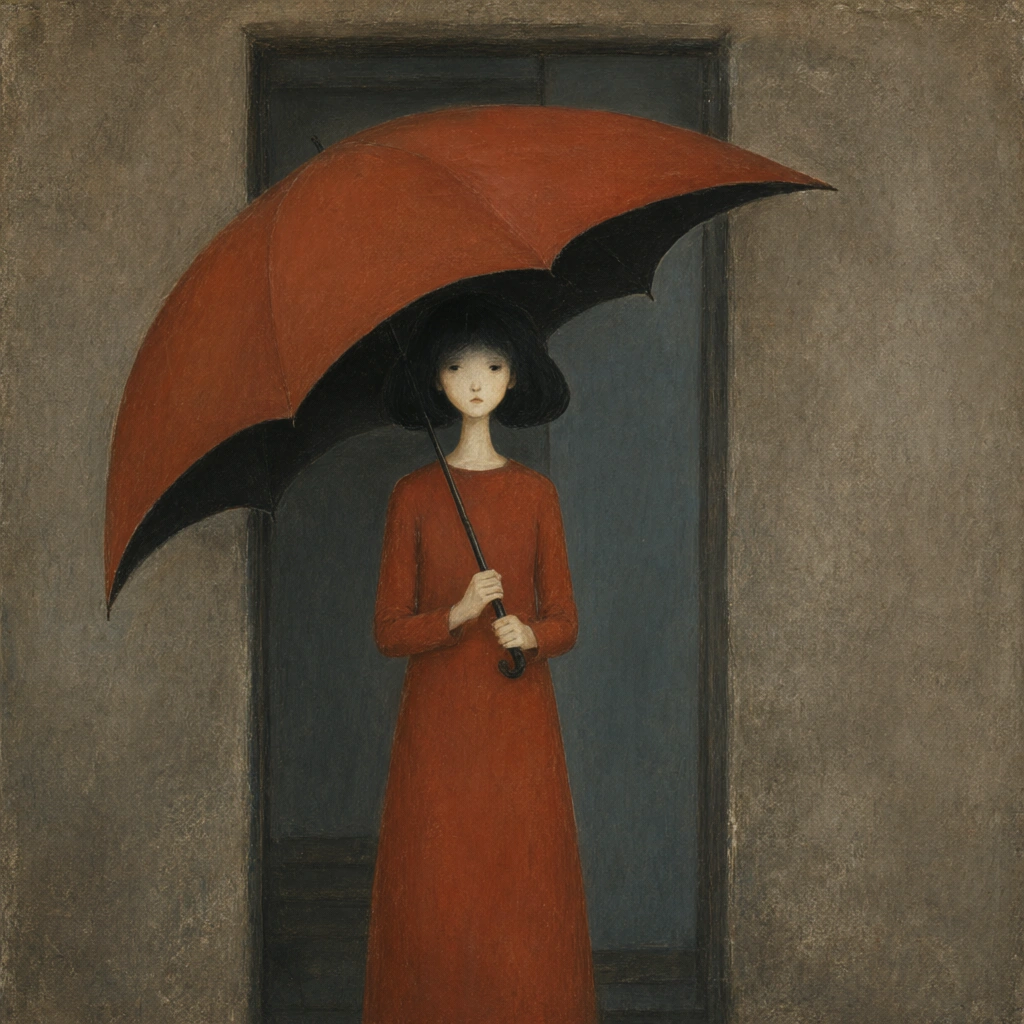 Qwen Image 2.1
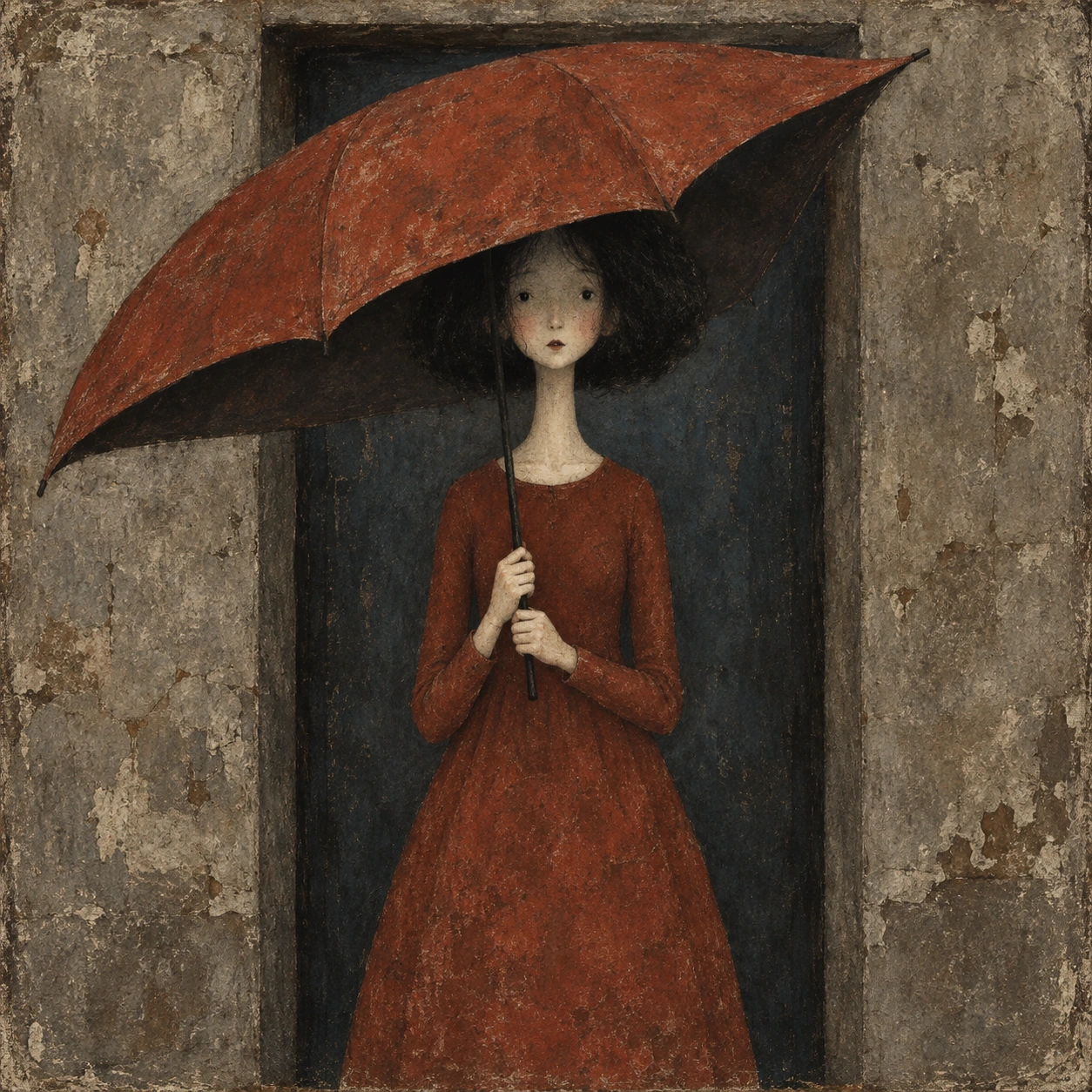 GPT Image 2.5
Reference details
- Reference ID
- 3481
- Category
- Painting
Reference prompts
Style prompt
The poetic storybook treatment uses sparse elongated forms, simple tiny features, and a single oversized curved accent within a rectangular architectural recess. Rust red, dusty blue-gray, charcoal, cream, and worn brown form a narrow muted palette. Broad quiet wall space and powdery surface stains surround the central vertical figure. Edges are softened, abraded, and slightly grainy, like paint absorbed by old paper. Scale is gently distorted: the protective arc feels much larger than the delicate form beneath it. Light is subdued and diffuse, with a dark interior plane providing separation instead of dramatic shadows. The overall finish is minimal, whimsical, and faintly melancholic, letting silence and unusual proportions create narrative suggestion.Full example prompt
A square quiet storybook painting shows a slender young woman standing alone within a dark rectangular doorway. The doorway fills the middle of the image and is set into a rough gray-brown plaster wall. She faces the viewer directly, her pale oval face small beneath a large asymmetrical rust-red umbrella. A voluminous black bob flares around her head and disappears under the umbrella edge. Her eyes and mouth are tiny dark marks, giving an uncertain, almost doll-like expression. A very long narrow neck leads into a simple brick-red long-sleeved dress that widens gently toward the bottom crop. Both hands hold the umbrella's thin black handle at chest height, one above the other. The canopy begins at the left edge, curves broadly above her face, then narrows to a pointed tip at the upper right. The black underside shadows her hair and forehead. Behind her, the door recess is muted charcoal blue, darker than the surrounding stone but lighter than her hair. The wall surface carries scratches, stains, and a mottled powdery grain. Little else defines the setting: there is no visible street, rain, or interior furniture. The composition is almost centered but the umbrella's huge leftward spread makes it asymmetrical. The color range is very restricted: rust red, dusty brown, blue-gray, charcoal, cream skin, and worn plaster. Edges are soft and slightly scuffed, as if the image were painted on old paper. Her still upright posture and sparse facial details leave the mood open to interpretation. There is no readable text. The painting is whimsical and faintly melancholic, using the umbrella's bold curve to shelter a fragile figure in an austere architectural frame.