
Styles
#3930
Levalet style reference and prompts
Explore the “Levalet” reference with crosshatching, tactile surfaces, and a monochrome palette. View the images, copy the style or example prompt, and discover related styles on Looksift.
Compare the Qwen Image 2.1 and GPT Image 2.5 examples, choose the visual qualities you want, and copy the style prompt for your own project.
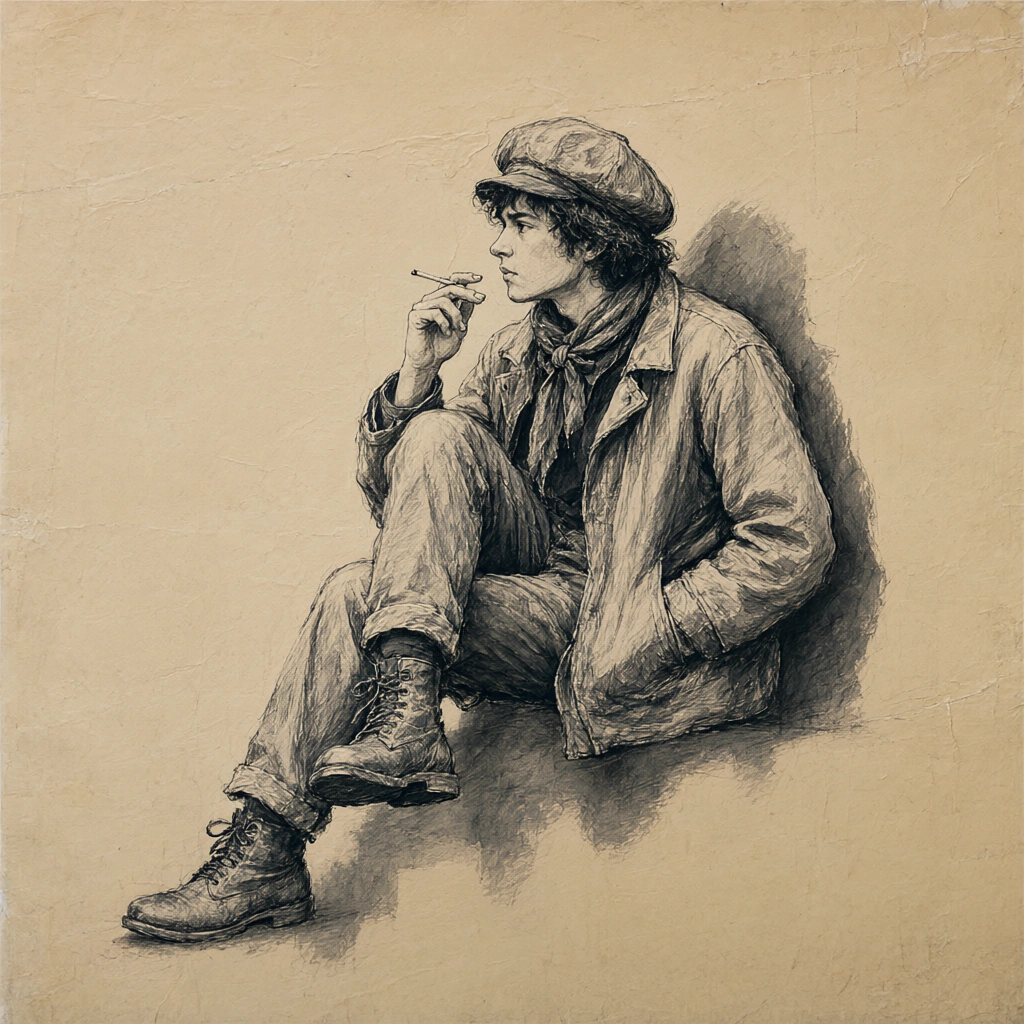 Qwen Image 2.1
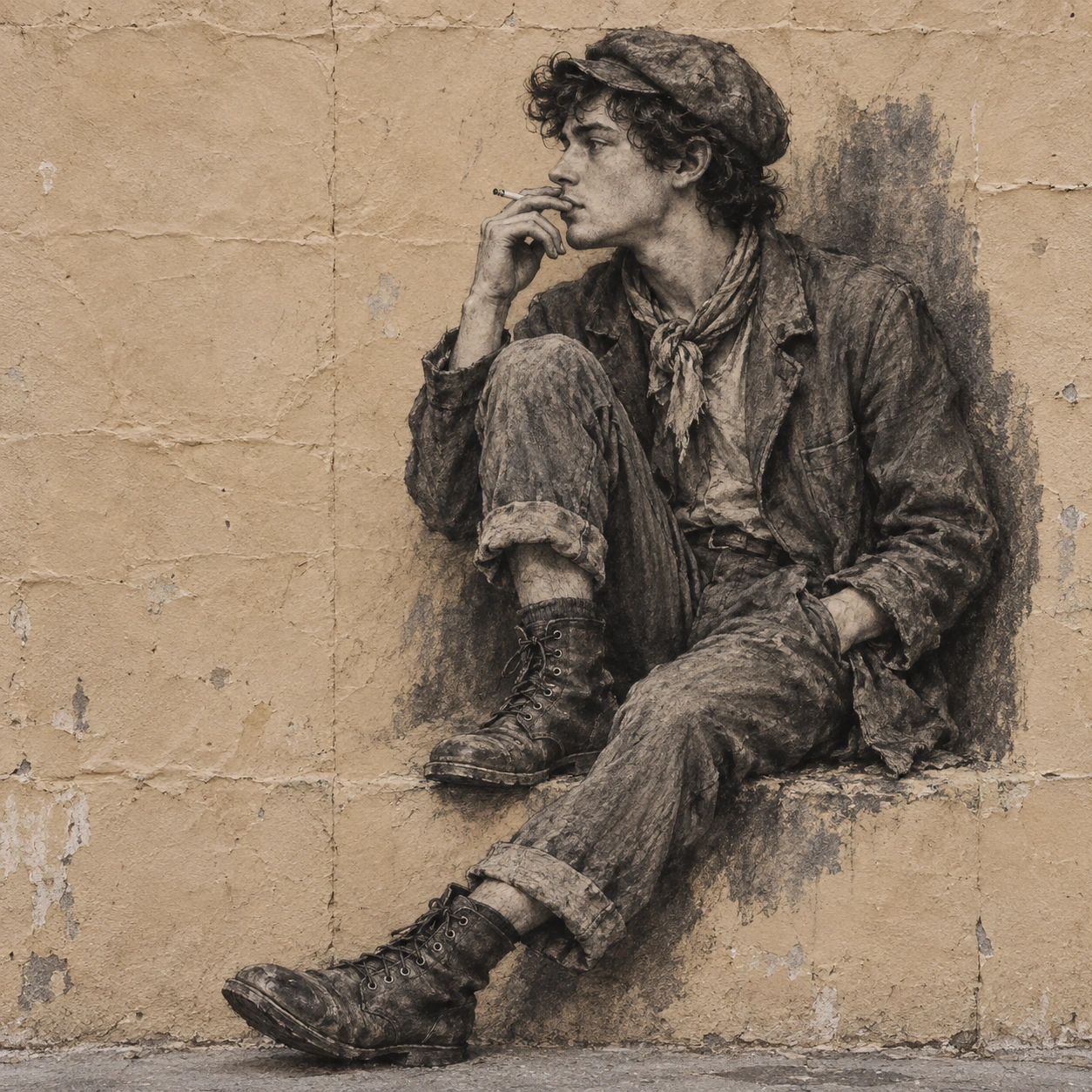 GPT Image 2.5
Reference details
- Reference ID
- 3930
- Category
- Photography
Reference prompts
Style prompt
Monochrome figurative street drawing uses dense charcoal-like hatching and broad gray washes on a warm, unpainted wall. Precise contour work and layered crosshatching give cloth, hair, skin, and leather different weight, while darker patches imply cast shadow and shallow depth. The wall's wrinkles, scuffs, and uneven plaster remain openly visible, so the artwork reads as an intervention on a real surface rather than a clean illustration page. Frontal documentary photography records the drawn illusion with even natural light and little color beyond beige, black, and gray. Leave generous bare wall around the rendered form; careful tonal modeling can then make an ordinary gesture appear unexpectedly present in the space. The appeal comes from tactile linework, weathered support, and a poised balance between illusion and exposed material.Full example prompt
A square street-art photograph shows a life-size monochrome drawing of a young traveler sitting sideways on a plain tan wall. The figure wears a rounded soft cap over dark curly hair, a scarf tied at the neck, a loose worn jacket, rolled trousers, and heavy lace-up boots. One knee is drawn high near the chest, the other leg drops toward the lower left, and one hand is raised near the mouth holding a slim cigarette. The face turns left in alert profile, with finely shaded cheek and nose. The other hand slips into a jacket pocket. There is no painted chair: the seated pose is suggested by a dark gray patch beneath the hips and a larger rough patch at the back, making the drawn body seem to occupy a shallow niche in the wall. Dense black and gray hatch marks model the folds of fabric, boot leather, hands, and tousled hair, while broad dark washes supply shadow. The warm beige wall remains visible throughout the drawing and fills the empty left side and upper corners. Its paper-like wrinkles, seams, and scuffs cross behind and through the image, adding a physical surface separate from the drawn figure. The photograph is frontal and evenly lit, so the illusion can be read at once without a theatrical spotlight. There are no legible words or signs. The composition places the figure just right of center and lets the extended boot anchor the lower left. The mood feels observant and slightly melancholy, with an ordinary pause rendered in meticulous draftsmanship and made surprising by its placement directly on an unadorned wall.