
Styles
#3997
Glitch art style reference and prompts
Explore the “Glitch art” reference with scanline effects. View the images, copy the style or example prompt, and discover related styles on Looksift.
Compare the Qwen Image 2.1 and GPT Image 2.5 examples, choose the visual qualities you want, and copy the style prompt for your own project.
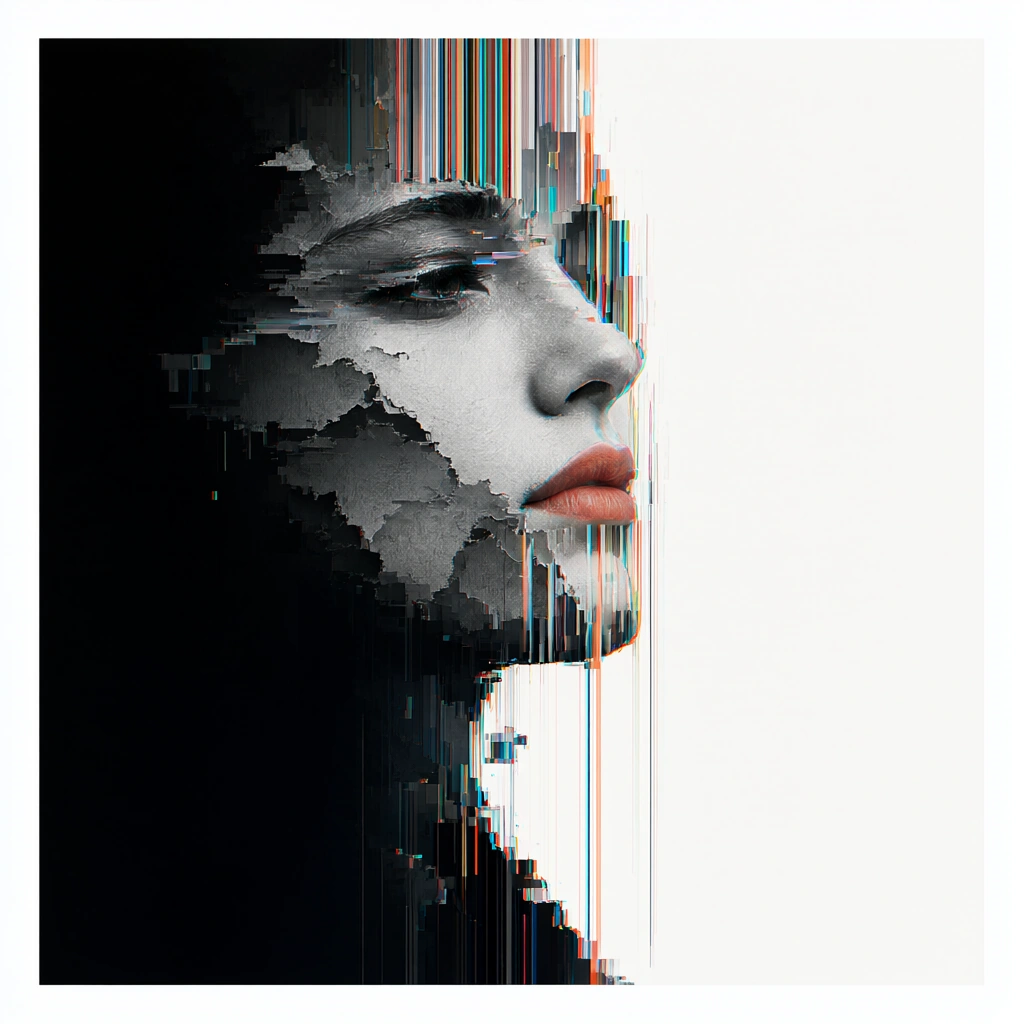 Qwen Image 2.1
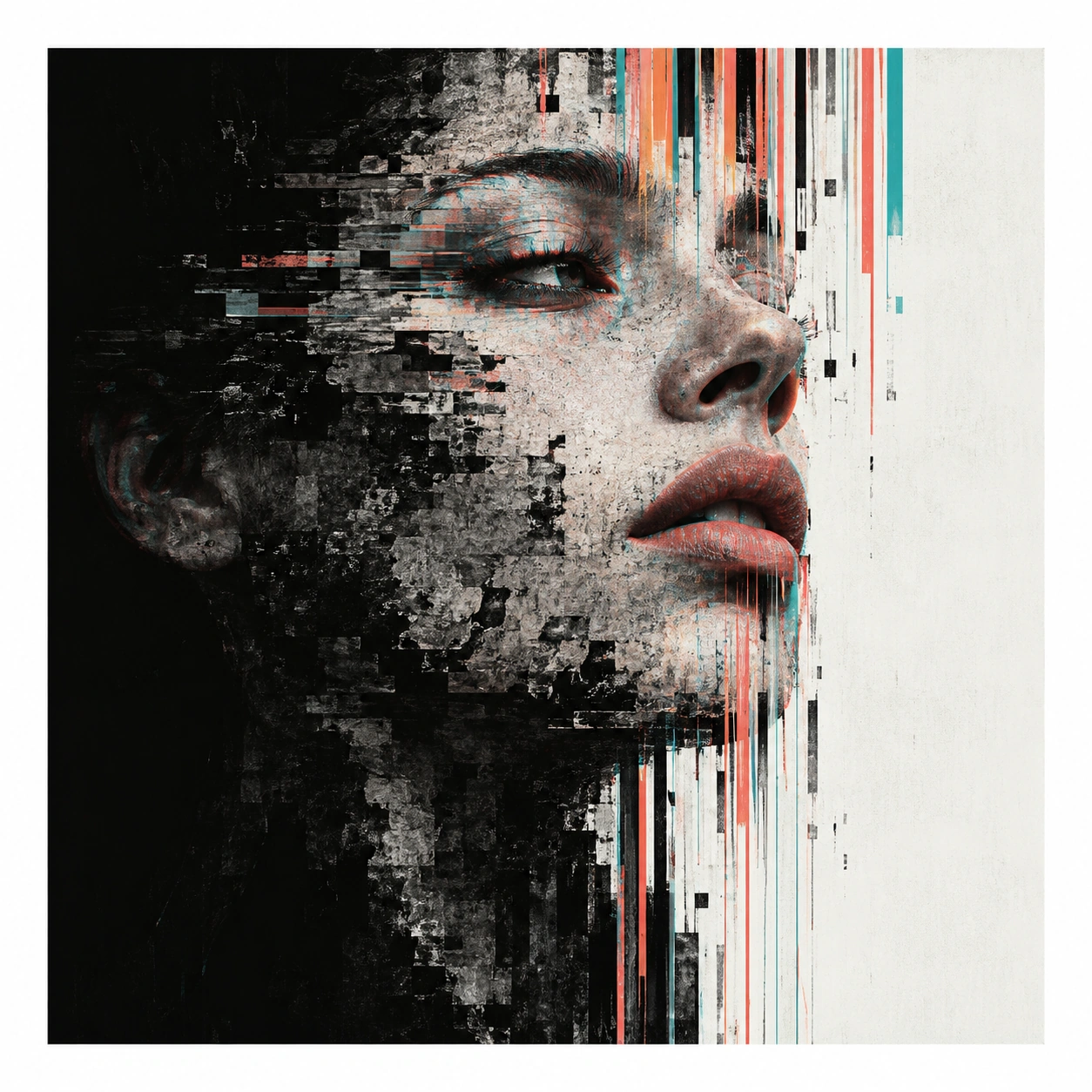 GPT Image 2.5
Reference details
- Reference ID
- 3997
- Category
- Collage & mixed media
Reference prompts
Style prompt
The digital glitch treatment interrupts a partially smooth tonal image with broken scan lines, vertical color banding, and displaced channel edges. Stark black and warm off-white create the main value divide, while narrow coral, cyan, orange, and muted gray streaks bring selective chromatic intensity. One zone retains enough continuous modeling to anchor recognition; adjacent areas fracture into coarse pixels, rubbed fragments, and abrupt horizontal offsets. Long straight bars descend through the composition and oppose irregular eroded boundaries, giving the image a strong directional conflict. Brightness comes chiefly from the pale empty field and color-channel artifacts rather than naturalistic illumination. A clean broad outer margin heightens the apparent instability of the image within it. Fine electronic grain and dark clipped regions keep the surface rough. The overall effect is fractured, unsettling, and graphic, with selective legibility emerging from deliberate visual corruption.Full example prompt
A square digital glitch artwork shows a large face in sideward three-quarter view dissolving into vertical color streaks and broken monochrome pixels. A wide white margin frames the central rectangular picture on all sides. Inside that border, the left background is nearly black, while the right is pale off-white. The face fills most of the rectangle, turned toward the right and tilted slightly upward. One half-closed eye remains near the upper-left center, but horizontal interference strips cross the eyelid and brow. The nose projects into the pale field, and full lips are tinted a muted coral red. Much of the cheek and lower jaw becomes rough gray-black texture with torn-looking patches and small horizontal shifts. The neck and lower-left silhouette merge into the surrounding dark field rather than forming a clean outline. From the upper edge above the forehead, narrow vertical bars in coral, teal, orange, gray, and black descend across the light side of the composition. More thin bars stretch downward from the mouth and chin near the lower right. Their perfect linear direction contrasts with the irregular eroded surface of the face. A few cyan and red channel offsets outline the eye and lips, suggesting misregistered electronic color. The strongest light is the blank pale ground on the right; the face itself is mostly gray and shadowed, with the colored streaks supplying isolated brightness. No separate physical light source or setting is visible, and no text can be read. The overall composition is stark and intimate, balancing a recognizable human expression against digital tearing, vertical banding, and severe white-black negative space.