
Styles
#4079
X-ray style reference and prompts
Explore the “X-ray” reference with pale neutral tones and crisp edges. View the images, copy the style or example prompt, and discover related styles on Looksift.
Compare the Qwen Image 2.1 and GPT Image 2.5 examples, choose the visual qualities you want, and copy the style prompt for your own project.
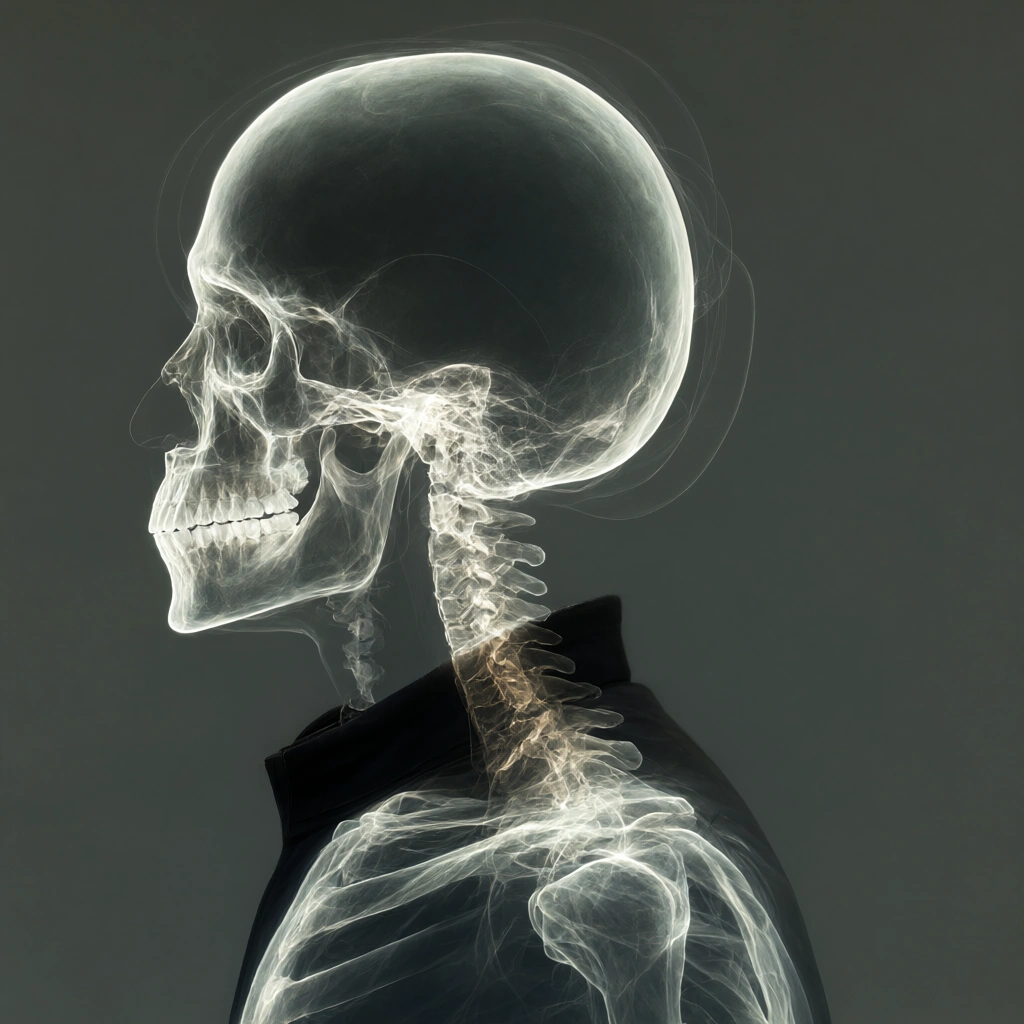 Qwen Image 2.1
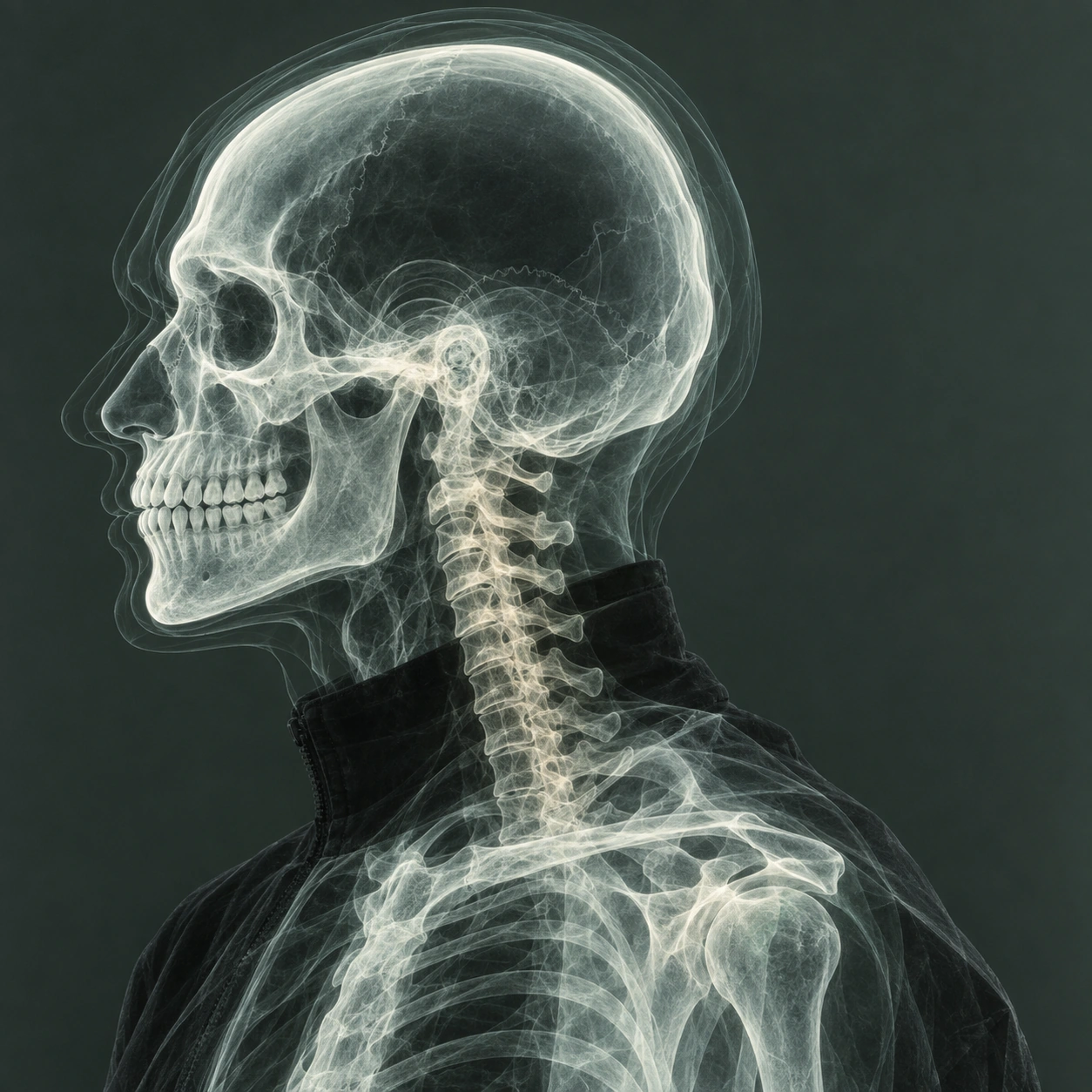 GPT Image 2.5
Reference details
- Reference ID
- 4079
- Category
- Photography
Reference prompts
Style prompt
A translucent radiographic treatment makes internal linework glow through darker semitransparent masses. Milky white, pale mint, and small ivory highlights sit on a subdued charcoal-green field. Thin curves repeat and overlap around stronger clean contours, producing a layered scanning effect and a slight halo of motion. Edges are brightest at the outer boundary and at dense intersections; central cavities stay deep and muted. The light appears emitted from the forms, so there is little conventional cast shadow or surface grain. A large concentrated silhouette occupies one side while the opposite area remains open, giving the luminous detail room to stand out. The visual effect is analytical, spectral, and quietly dramatic.Full example prompt
A square X-ray-like digital image presents the left-facing profile of a skull, neck, and upper torso against a smooth dark gray-green background. The head dominates the upper two thirds, with a bright milky-white skull outline, a dark rounded cranial cavity, and fine internal arcs around the eye socket and temple. The nasal bridge, jaw, and teeth are sharply legible along the left side of the frame. Several faint translucent contour loops sweep around the back of the head and chin, giving the profile a sense of layered imaging rather than a single opaque outline. Beneath the jaw, the cervical vertebrae descend in a narrow pale stack, shifting to more complex overlapping bones at the shoulder. The shoulder and upper chest enter from the bottom edge, where lighter skeletal lines show through a dark jacket-like outer shape. A black high collar wraps the neck and partly interrupts the bone structure, adding a solid shadowed band between head and torso. Most of the profile faces left, while the right side of the square remains comparatively open and quiet. The viewpoint is a strict side view, making the shape of the cranium and the repeated teeth and vertebrae easy to follow. Light seems to originate from the translucent forms themselves: their edges glow white and pale mint, with warmer ivory flecks in the neck, while the background has no distinct directional cast shadow. Fine lines vary in brightness and overlap, creating depth through transparency rather than surface texture. The overall composition feels clinical and uncanny, balancing a concentrated luminous profile with broad muted negative space.