
Styles
#1383
Eduardo Souto Moura style reference and prompts
Explore the “Eduardo Souto Moura” reference with a monochrome palette and crisp edges. View the images, copy the style or example prompt, and discover related styles on Looksift.
Compare the Qwen Image 2.1 and GPT Image 2.5 examples, choose the visual qualities you want, and copy the style prompt for your own project.
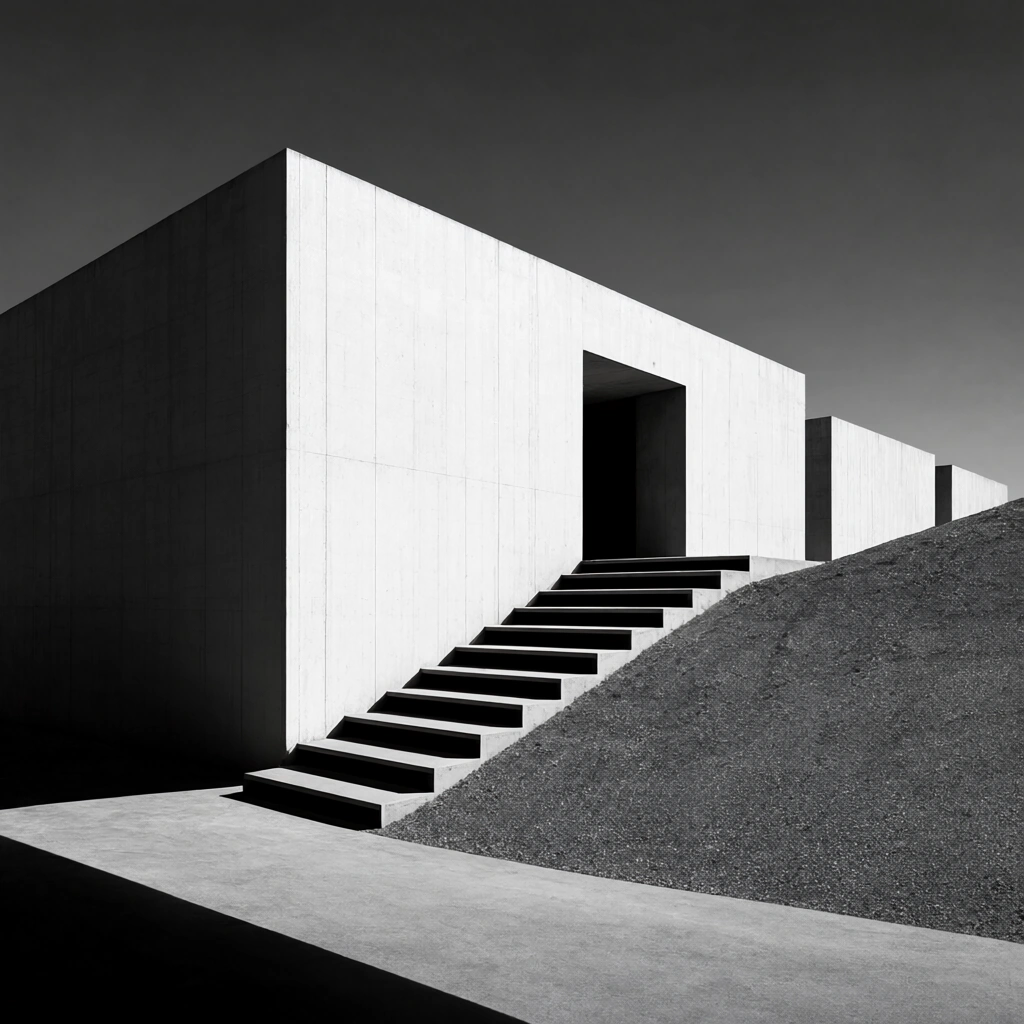 Qwen Image 2.1
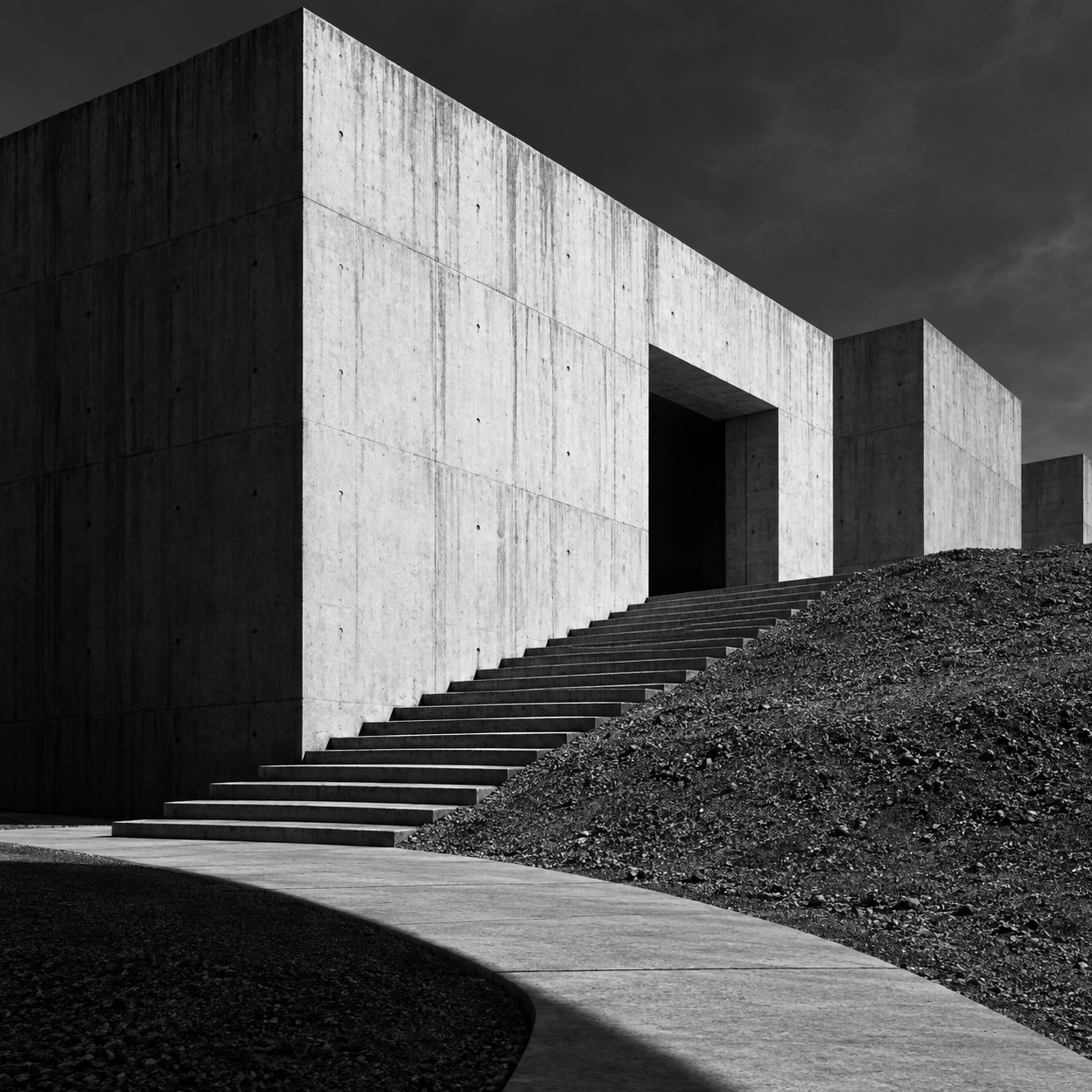 GPT Image 2.5
Reference details
- Reference ID
- 1383
- Category
- Photography
Reference prompts
Style prompt
The black-and-white photographic style organizes space through uncompromising planar contrast. Large white and charcoal fields meet at crisp edges; narrow seam lines and subtle vertical grain reveal the material beneath the geometry. Deep recesses read as nearly black voids, while brighter surfaces retain faint texture rather than blowing out completely. Strong directional light creates hard-edged triangular and rectangular shadows, making the depth and orientation of each plane explicit. A curved or sloping foreground can counter the otherwise strict orthogonal structure. The tonal range is wide but restrained to cool grayscale, with no ornamental color. Sparse composition and generous unmarked surface area focus attention on mass, edge, and recession. The overall effect is austere, quiet, and monumental, with surface texture preventing the clean forms from becoming abstractly weightless.Full example prompt
A square black-and-white architectural photograph shows a stark concrete building beside a long exterior stairway under a dark gray sky. The structure fills the left and center of the frame as interlocking rectangular volumes. Its nearest side wall falls into near-black shadow, while a broad front plane catches bright white light and exposes subtle vertical streaks and panel seams in the concrete. A deep rectangular entrance cuts into that lit plane at center right, its interior receding to black. The stairway begins near the lower left and climbs diagonally toward the entrance, each step alternating a light tread with a sharp dark riser. Along the right, a sloped earth or gravel mound rises toward the doorway and partially covers the lower stairs. In the immediate foreground, a smooth paved path curves from the lower center toward the steps, bordered by a broad dark shadow on the left. Additional block-like walls recede behind the main entrance, their edges just visible beneath the heavy sky. No people, signs, or small decorative objects interrupt the austere setting. The low viewpoint emphasizes the scale of the concrete planes and the diagonal ascent. Strong directional daylight from the upper right turns the front wall almost white, leaves the side in deep charcoal, and projects hard geometric shadows across the steps and paving. Fine vertical marks in the concrete and subtle roughness in the sloped ground keep the surfaces from reading as perfect digital blocks. The grayscale moves from white to midgray to almost black without warm toning. The overall composition is severe and quiet, with the bright planar face, dark void, and rising stair sequence forming a clear spatial rhythm.