
Styles
#2652
Margaret Bourke-White style reference and prompts
Explore the “Margaret Bourke-White” reference with tactile surfaces, a monochrome palette, and atmospheric haze. View the images, copy the style or example prompt, and discover related styles on Looksift.
Compare the Qwen Image 2.1 and GPT Image 2.5 examples, choose the visual qualities you want, and copy the style prompt for your own project.
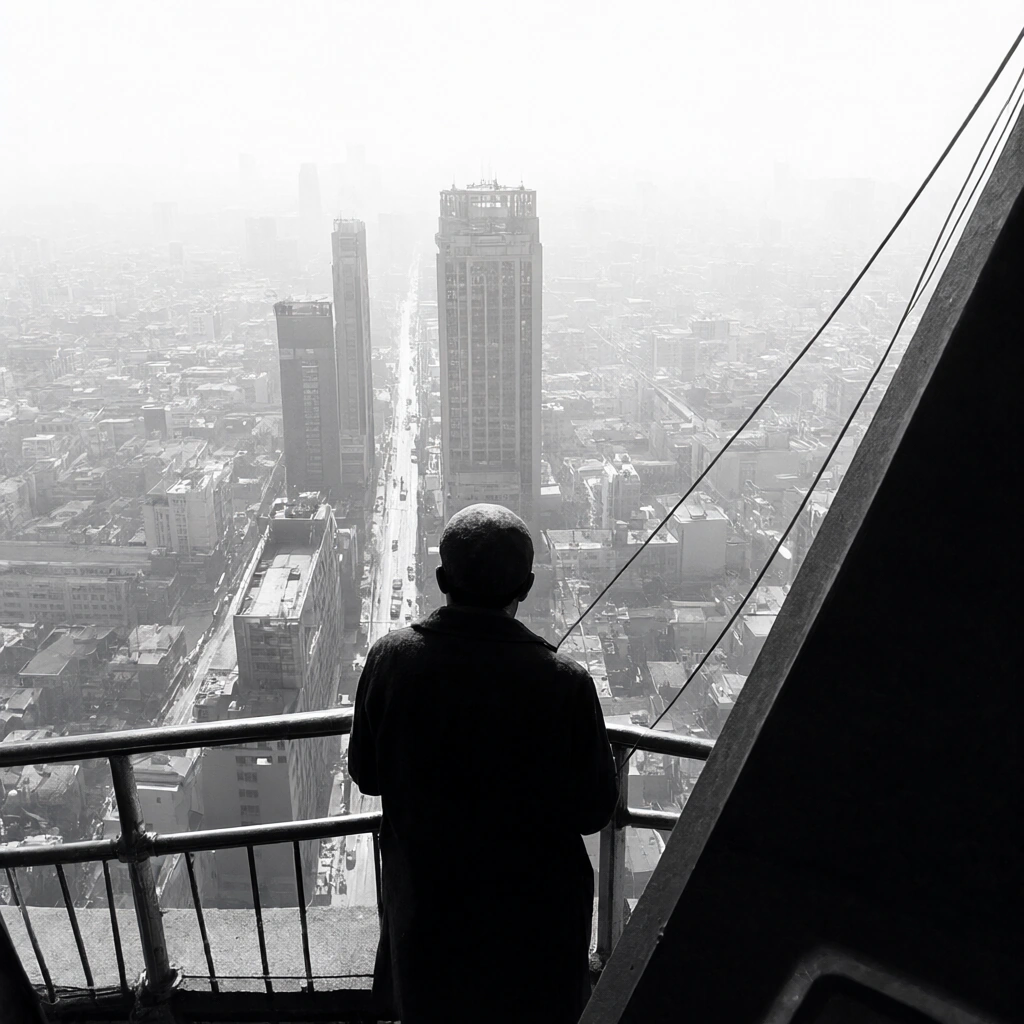 Qwen Image 2.1
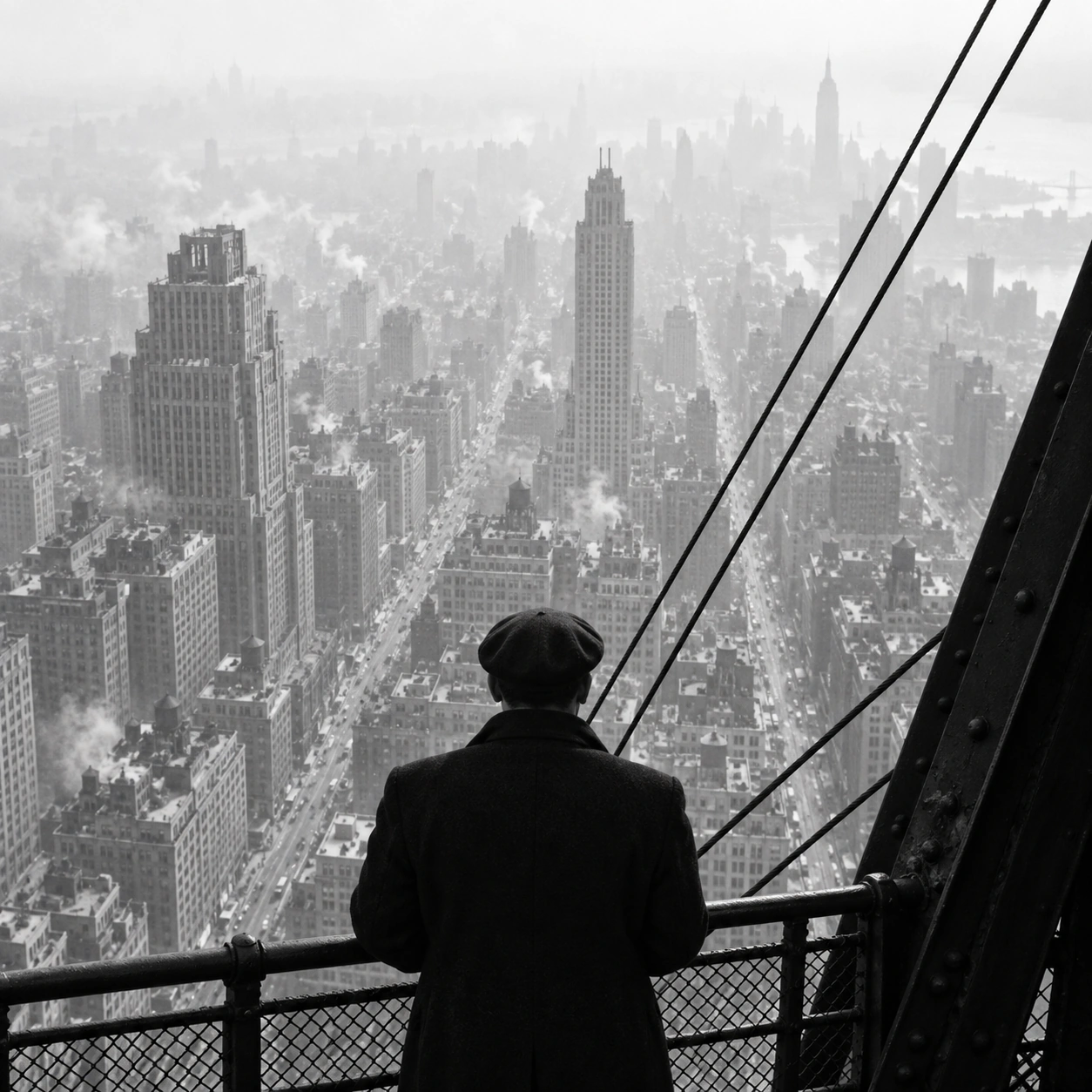 GPT Image 2.5
Reference details
- Reference ID
- 2652
- Category
- Photography
Reference prompts
Style prompt
Monochrome photography contrasts a hard near-black foreground structure with a pale distance dissolved by atmospheric haze. Strong diagonals and narrow crossing lines frame broad blocks and repeating fine grids below. The closest silhouettes retain crisp edges and substantial weight; farther forms lose contrast and definition in successive layers of gray. Diffuse daylight turns the upper distance luminous without distinct cast shadows, while film-like grain keeps even the palest spaces tactile. A steep viewpoint and converging lines give the frame powerful spatial depth. The overall effect is monumental and contemplative, with a small dark focal presence held against an expansive fading field.Full example prompt
A square black-and-white photograph looks steeply down over a city from a high outdoor platform, with one dark figure seen from behind in the foreground. The figure stands just below the center, wearing a rounded cap and a dark coat, facing the city below. A metal rail crosses the lower part of the picture in front of the body. To the right, a heavy dark structural edge rises diagonally, while several narrow cables run from the upper right toward the center and lower left. These near elements are almost black and sharply defined, framing the much paler city beyond. Tall rectangular buildings occupy the middle and far distance, but mist or smoke softens their edges. One narrow tower stands near the center; a larger, more detailed building with a stepped or open upper section sits to its left. Parallel streets and rooftops run diagonally between the towers, their patterns only partly visible through the pale atmosphere. The very top of the image fades almost to white, and the farthest structures dissolve into that brightness. No individual people or cars can be distinguished in the streets at this scale. The high viewpoint creates a strong downward pull, while the cables and railing emphasize the height and physical edge of the observation point. Fine grain, soft haze, and broad gray gradations dominate the distant city; the coat, rail, and nearby framework provide hard silhouettes. Daylight is diffused by the atmosphere, entering most strongly from above and behind the buildings, so the city is luminous but low in contrast. There are no readable signs or words. The overall composition sets one still observer against a vast, fading urban grid, balancing severe dark foreground geometry with a light-filled, almost weightless distance.