
Styles
#4095
Woodblock print style reference and prompts
Explore the “Woodblock print” reference with hatching, tactile surfaces, and asymmetric composition. View the images, copy the style or example prompt, and discover related styles on Looksift.
Compare the Qwen Image 2.1 and GPT Image 2.5 examples, choose the visual qualities you want, and copy the style prompt for your own project.
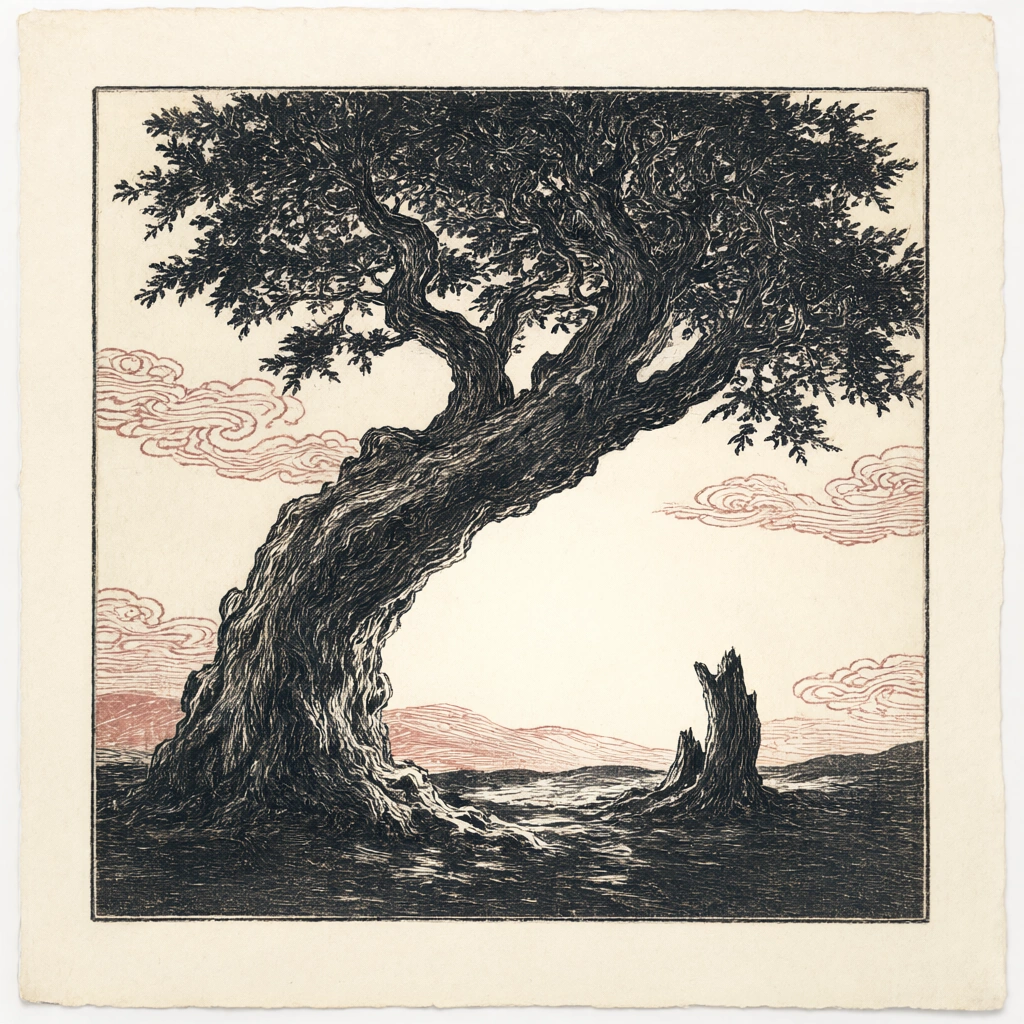 Qwen Image 2.1
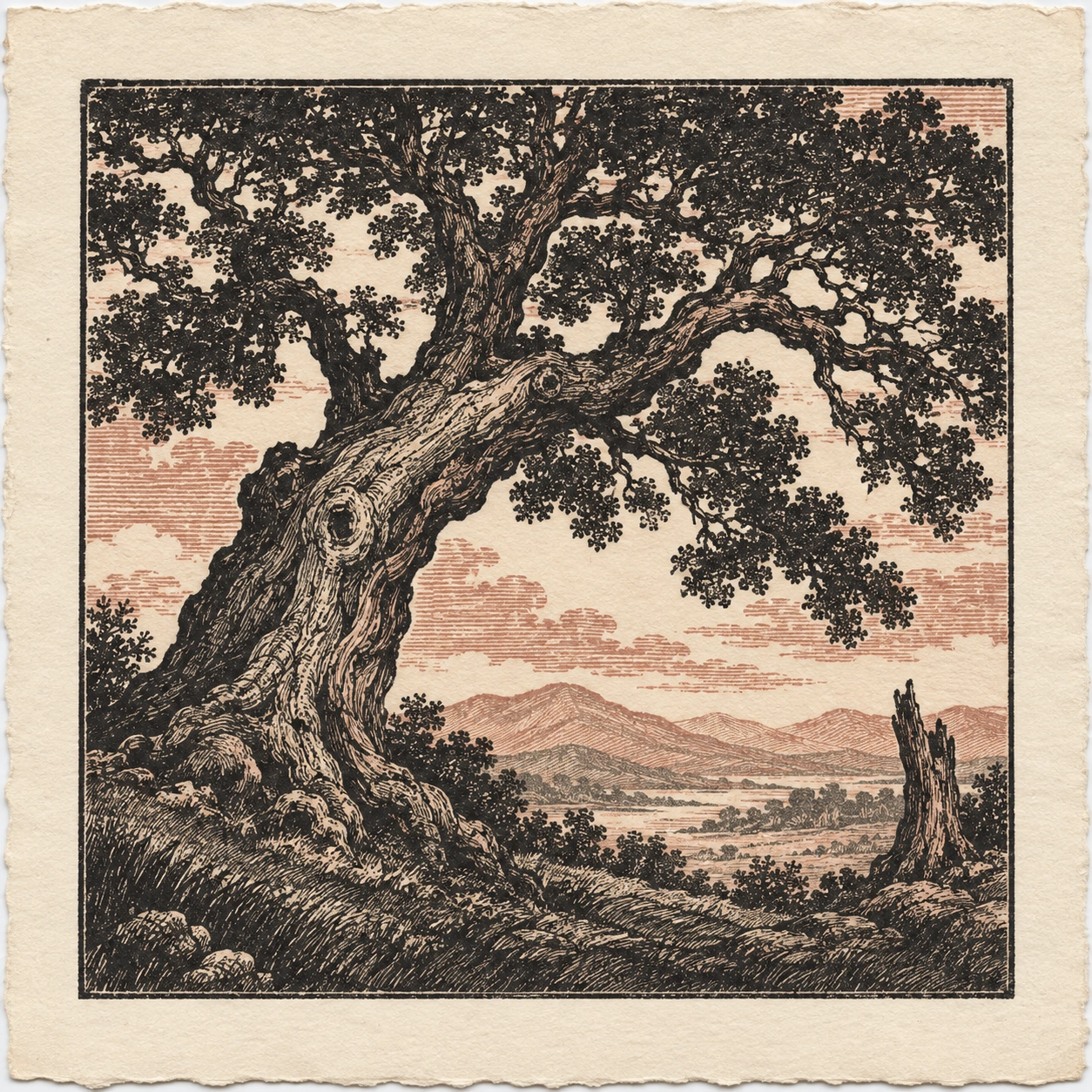 GPT Image 2.5
Reference details
- Reference ID
- 4095
- Category
- Ink & line
Reference prompts
Style prompt
Woodblock printmaking sets dense carved black linework inside a clearly bounded image area on warm, rough-edged paper. Curving structural cuts, close hatching, and small irregular marks gather into dark masses, while untouched cream intervals remain open and luminous. A restrained secondary rust-pink tone enters the distant and lighter passages without competing with the black. Illumination is graphic, arising from reserved paper against compact ink rather than smooth shading. A large asymmetrical dark cluster is counterweighted by a smaller quiet opening and generous outer margin. Fine uneven ink density keeps the restrained composition tactile and hand-pressed.Full example prompt
A square woodblock print on cream deckled paper depicts a large, twisted old tree leaning across a spare landscape. The printed image sits inside a thin dark rectangular border, leaving a broad unprinted margin around all sides. The main trunk rises from the lower left and bends toward the upper right, splitting into dense branches and dark leaf clusters that fill much of the top half. Its bark is described with curling black cuts and parallel lines, making the heavy form appear knotty and weathered. A much smaller broken stump stands near the lower right, separated from the tree by an open pale interval. Beyond them, low rounded hills and patterned clouds use rusty pink lines over a warm cream ground. The foreground is a compact band of dark hatching, while the central distance remains comparatively light. Fine uneven ink density and slight registration softness give the print a hand-pressed quality. Light is implied through the untouched paper areas: the pale opening under the leaning trunk glows, while crosshatched branches and ground fall into charcoal shadow. The composition stays flat in its graphic treatment, yet overlap, scale, and the winding trunk provide clear spatial direction. No lettering is visible. The overall image feels weathered and quietly dramatic, balancing a massive dark canopy with a small open valley and ample rough-edged paper margin.