
Styles
#3996
Adolf Loos style reference and prompts
Explore the “Adolf Loos” reference with crosshatching, tactile surfaces, and a nearly monochrome palette. View the images, copy the style or example prompt, and discover related styles on Looksift.
Compare the Qwen Image 2.1 and GPT Image 2.5 examples, choose the visual qualities you want, and copy the style prompt for your own project.
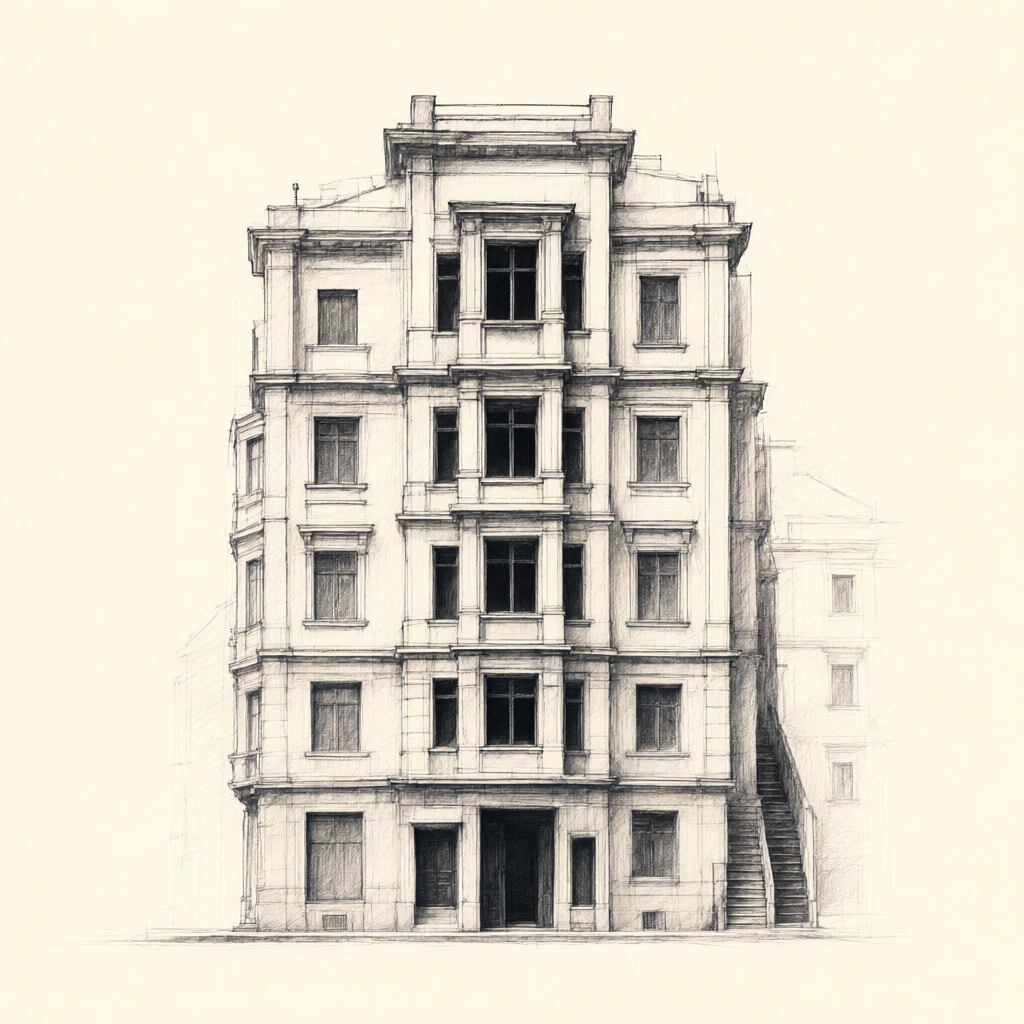 Qwen Image 2.1
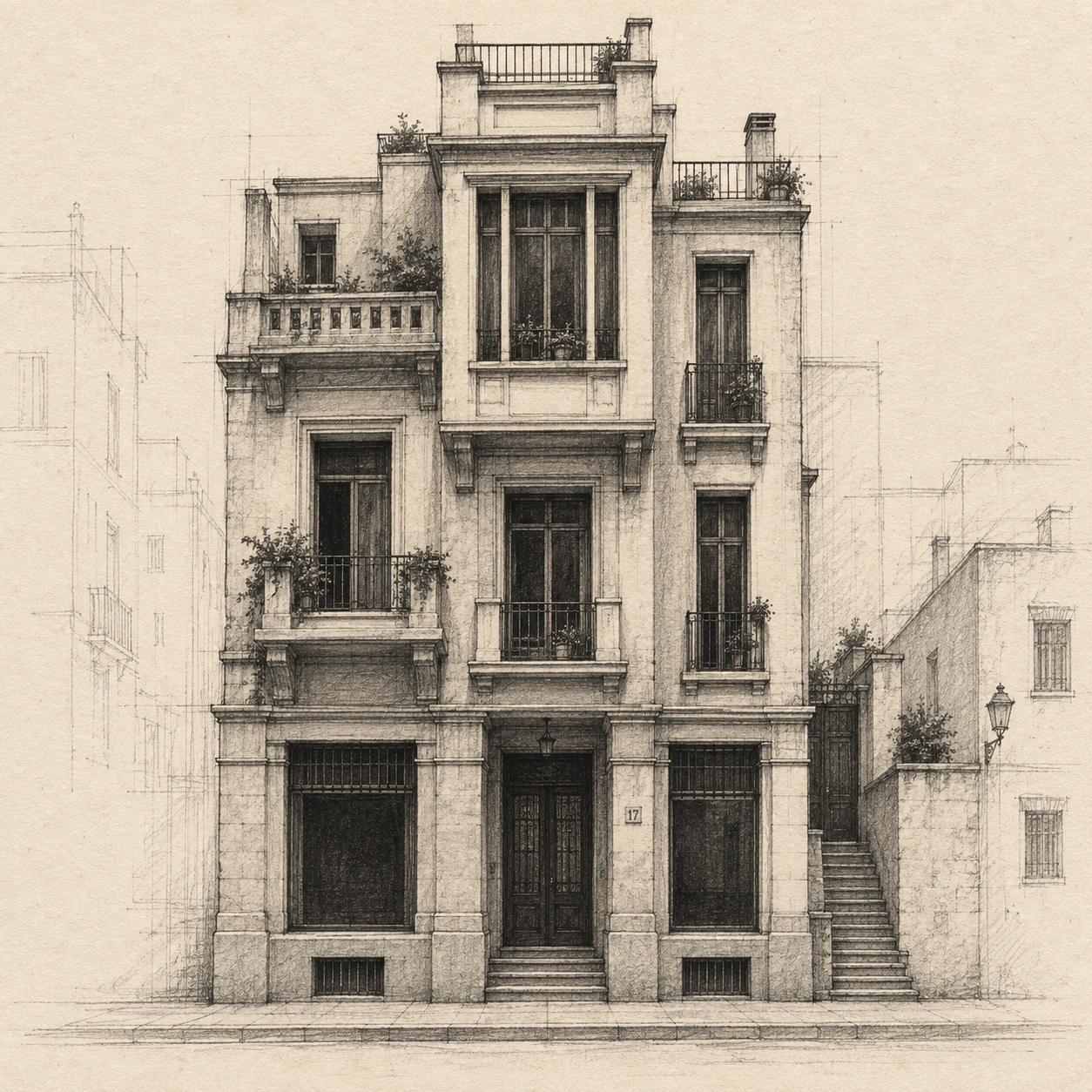 GPT Image 2.5
Reference details
- Reference ID
- 3996
- Category
- Ink & line
Reference prompts
Style prompt
Restrained architectural draftsmanship in fine graphite and black ink on warm ivory paper. The image builds form from measured straight lines, delicate cross-hatching, pale rubbed graphite, and small dark recesses. The composition lets the silhouette step unevenly while internal divisions stay exact; The image retains exploratory guide marks and lightly sketched neighboring forms. The image uses a nearly monochrome palette, even page illumination, broad pale margins, and tactile handmade irregularities for a quiet analytical rhythm.Full example prompt
A square architectural drawing on warm ivory paper presents the front elevation of a narrow, many-level city house. The building occupies almost the entire central width, with its ground line placed low and its irregular roofline stepping upward toward the middle. The drawing shows the facade in dense graphite and black ink, mixing exact straight construction lines with soft smudged shading. At street level, set a central recessed entrance between dark rectangular openings and a slightly projecting base. Above it, stack asymmetrical windows, little balconies, deep lintels, and narrow pilasters. A prominent upper window sits inside a projecting frame with vertical divisions; small parapets and a thin roof rail finish the top. On the right, a short exterior stair rises beside a lower neighboring mass, while faint adjacent buildings are only suggested with loose pale lines. The image keeps the masonry pale and the interiors of openings dark, so the structure reads through its recesses and shadows. Fine cross-hatching defines moldings, window jambs, cornices, and worn edges; The composition lets a few searching lines remain visible around the silhouette. The image uses no dramatic light source: an even page glow and careful tonal drawing make the shallow projections legible. The image preserves the generous cream margin above and around the building, a quiet, studied mood, and the tactile unevenness of a hand-drafted study rather than a polished photograph.