
Styles
#4114
Graphite drawing style reference and prompts
Explore the “Graphite drawing” reference with hatching and side lighting. View the images, copy the style or example prompt, and discover related styles on Looksift.
Compare the Qwen Image 2.1 and GPT Image 2.5 examples, choose the visual qualities you want, and copy the style prompt for your own project.
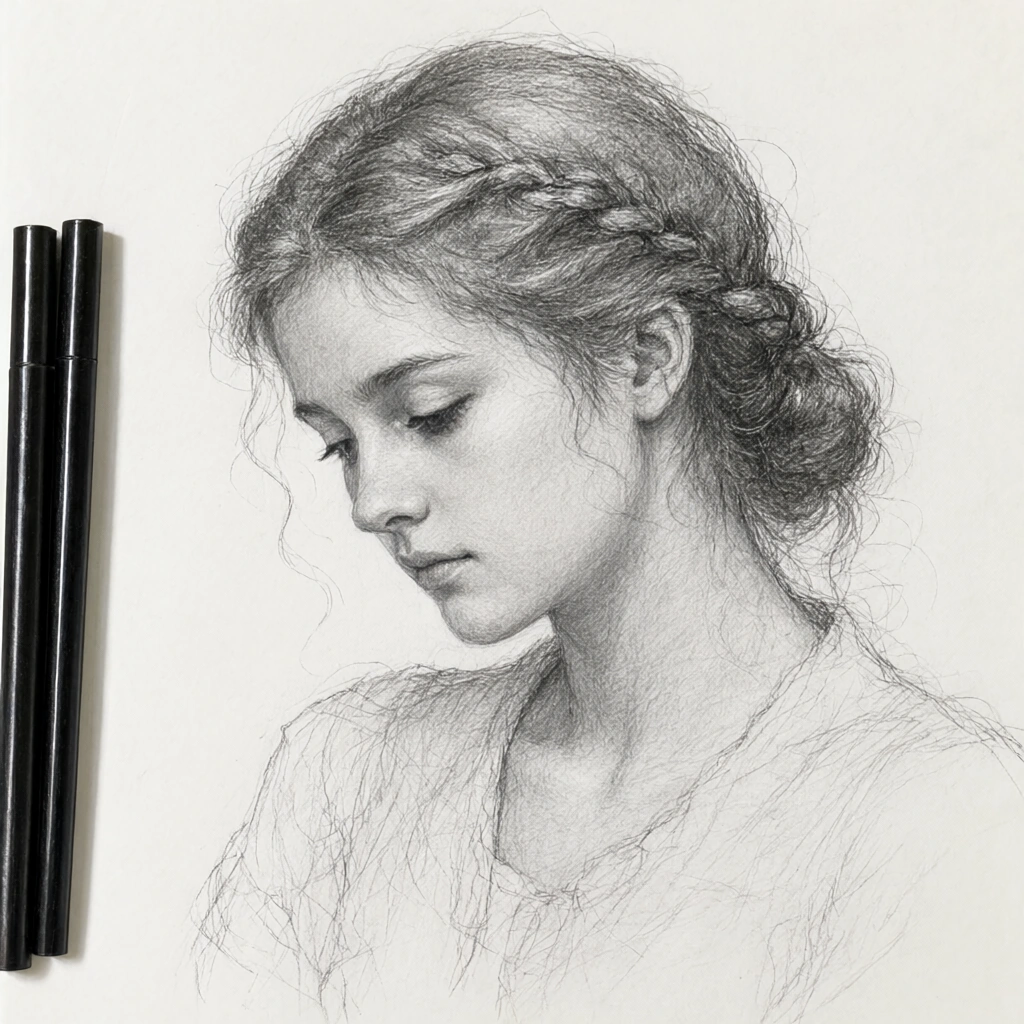 Qwen Image 2.1
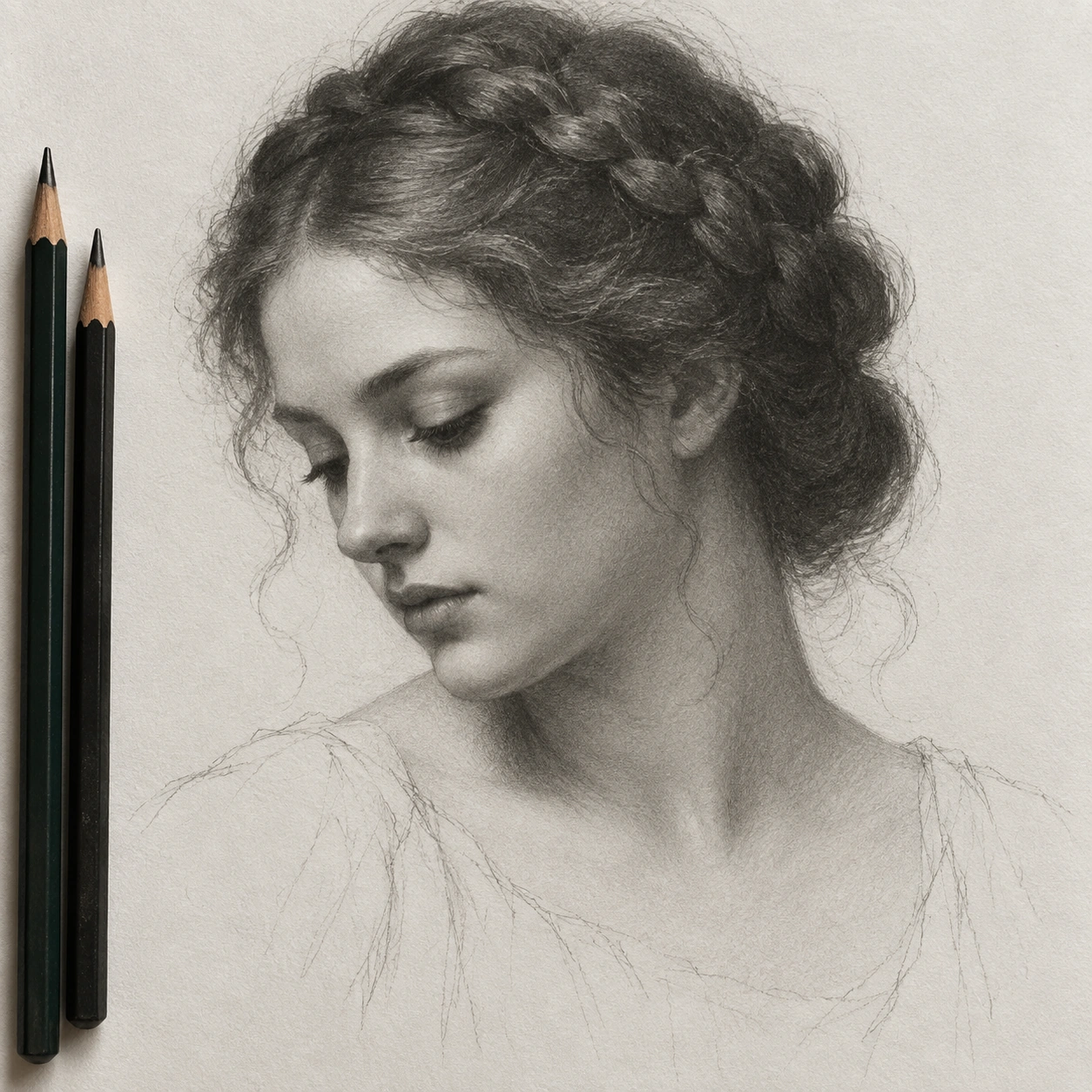 GPT Image 2.5
Reference details
- Reference ID
- 4114
- Category
- Ink & line
Reference prompts
Style prompt
Graphite drawing on pale paper uses a full range of rubbed gray, fine directional hatching, and reserved white highlights. Some forms are meticulously resolved while adjacent areas remain in light searching outline. Dark concentrations anchor the focal region and dissolve gradually into paper at the edges. Side light is translated into soft tonal transitions rather than sharp contrast. Grain, erasure, and pencil pressure remain visible, making the surface candidly handmade. The composition stays intimate and uncluttered, with quiet observational precision and a gentle unfinished quality.Full example prompt
A square graphite drawing on pale paper shows a young woman from the chest up with her head inclined toward the left and her eyes lowered. Her wavy hair is braided loosely around the crown and gathered at the back, with stray curls near the cheek and neck. The face is finely modeled in soft gray values: a gently shaded forehead, dark lashes, rounded cheek, and small closed mouth. The blouse and shoulders remain only lightly indicated with thin searching lines, allowing the head to carry nearly all the drawing's weight. Two dark pencils rest vertically on the paper at the far left, visibly framing the work surface. Graphite marks range from broad rubbed tone in the hair to tiny directional strokes along the braid and eyebrow. The darkest value gathers at the hairline and upper head; cheek and neck fade gradually into blank paper. Light seems to come from the upper left, illuminating the forehead and nose and leaving a soft shadow beneath the chin. The background is unworked white, with no setting or decoration. The composition is intimate and quiet, showing the artist's attention shifting from resolved facial detail to unfinished garment outlines. Its appeal lies in subtle tonal control and the visible process of observation.