
Styles
#4121
Willem de Kooning style reference and prompts
Explore the “Willem de Kooning” reference with thick paint texture, tactile surfaces, and pale neutral tones. View the images, copy the style or example prompt, and discover related styles on Looksift.
Compare the Qwen Image 2.1 and GPT Image 2.5 examples, choose the visual qualities you want, and copy the style prompt for your own project.
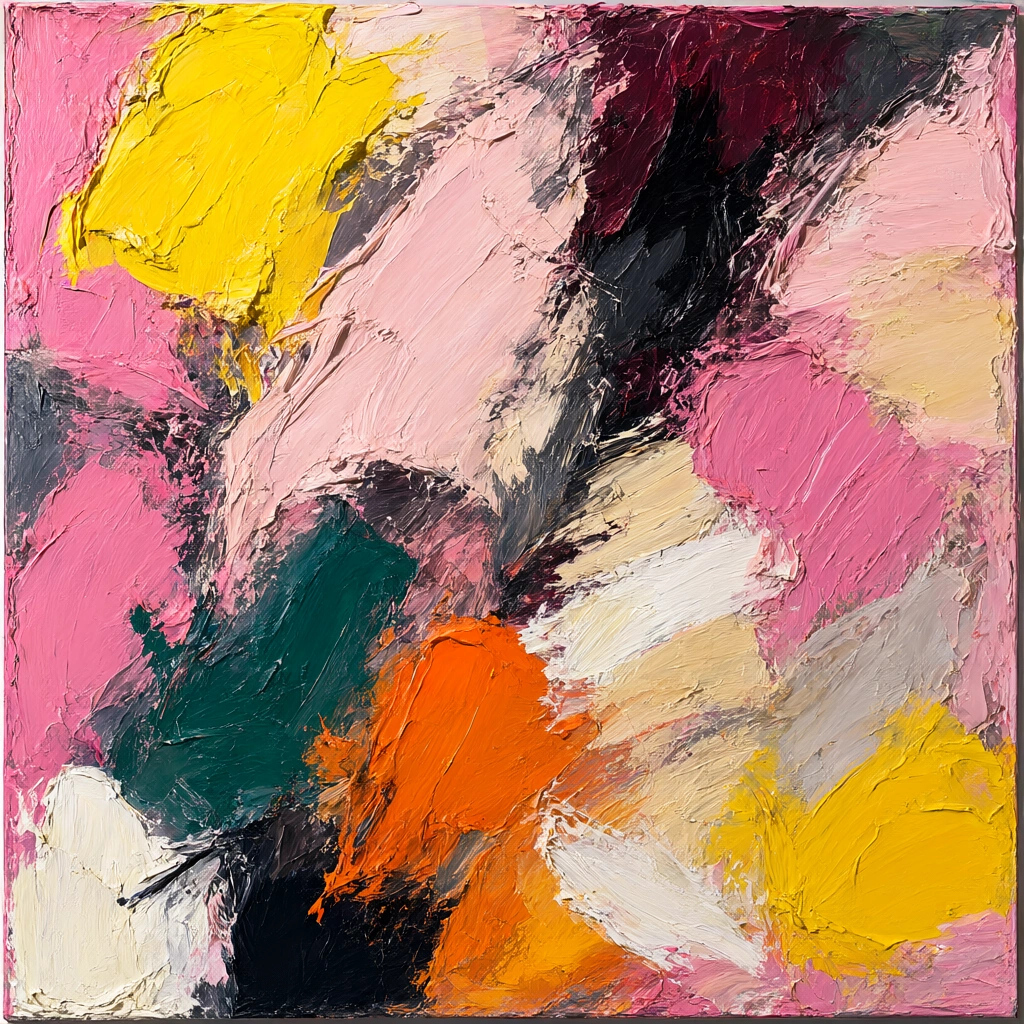 Qwen Image 2.1
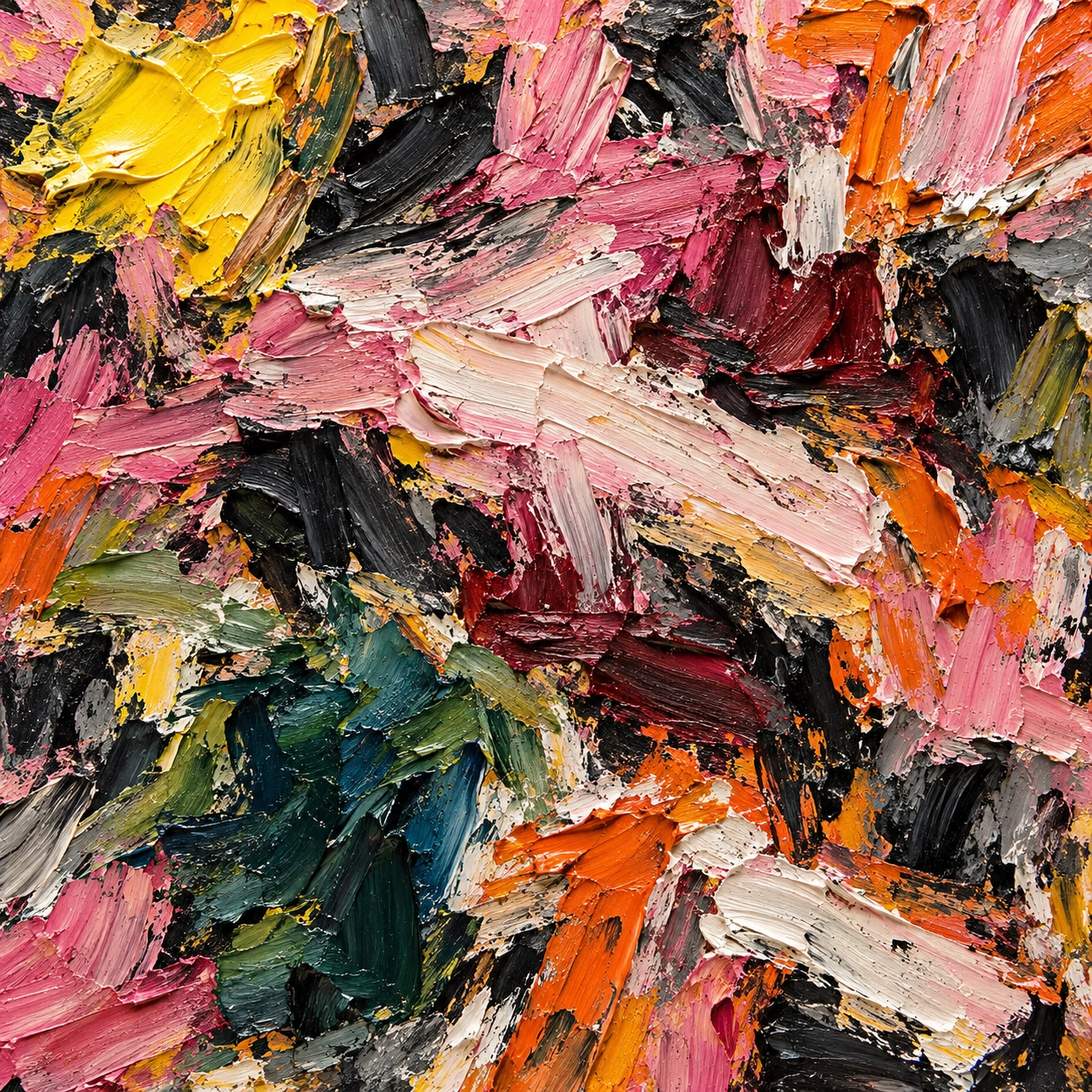 GPT Image 2.5
Reference details
- Reference ID
- 4121
- Category
- Painting
Reference prompts
Style prompt
Impasto oil painting makes the physical relief of paint the main visual mechanism. Broad dragged swipes, thick knife-like slabs, scraped channels, and thin trailing ribbons overlap without resolving into a neat outline. Pink, yellow, orange, cream, black, and muted green-blue alternate in irregular areas, with deep darks preventing the bright colors from flattening. Directional light glances across raised ridges and throws small shadows into wet-looking grooves. The entire field stays active, but larger warm gestures are punctuated by cooler and darker interruptions. The result is tactile, spontaneous, and forcefully rhythmic.Full example prompt
A square abstract oil painting fills the frame with broad, thick strokes of pink, yellow, black, orange, white, and muted green. No single object resolves from the marks; color areas press, fold, and scrape over one another across the entire surface. Near the upper left, a saturated yellow mass pushes through pink and charcoal paint, its ridges catching light. At the center, broad pale pink and cream swipes cross darker black and wine-red passages, leaving grooves where a brush or knife has dragged through the wet material. Lower down, a deep green-blue patch sits beside sharp orange and white strokes, adding a cooler interruption to the mostly warm field. Some marks are pulled into thin ribbons, while others remain as raised slabs with rough broken edges. The paint is visibly physical: thick peaks cast tiny shadows on neighboring color, and exposed lower layers appear in scraped gaps. There is no quiet background plane or horizon; every edge of the frame continues the same active surface. Strong studio light from above and slightly left glints on the highest ridges, while narrow crevices remain dark and matte. The palette feels exuberant but not uniformly bright because black and gray passages repeatedly arrest the color. No text appears. The overall composition is dense and improvisational, held together by the exchange of warm broad gestures, cool small interruptions, and the relief of wet paint.