
Styles
#4160
Otto Dix style reference and prompts
Explore the “Otto Dix” reference with angular planes. View the images, copy the style or example prompt, and discover related styles on Looksift.
Compare the Qwen Image 2.1 and GPT Image 2.5 examples, choose the visual qualities you want, and copy the style prompt for your own project.
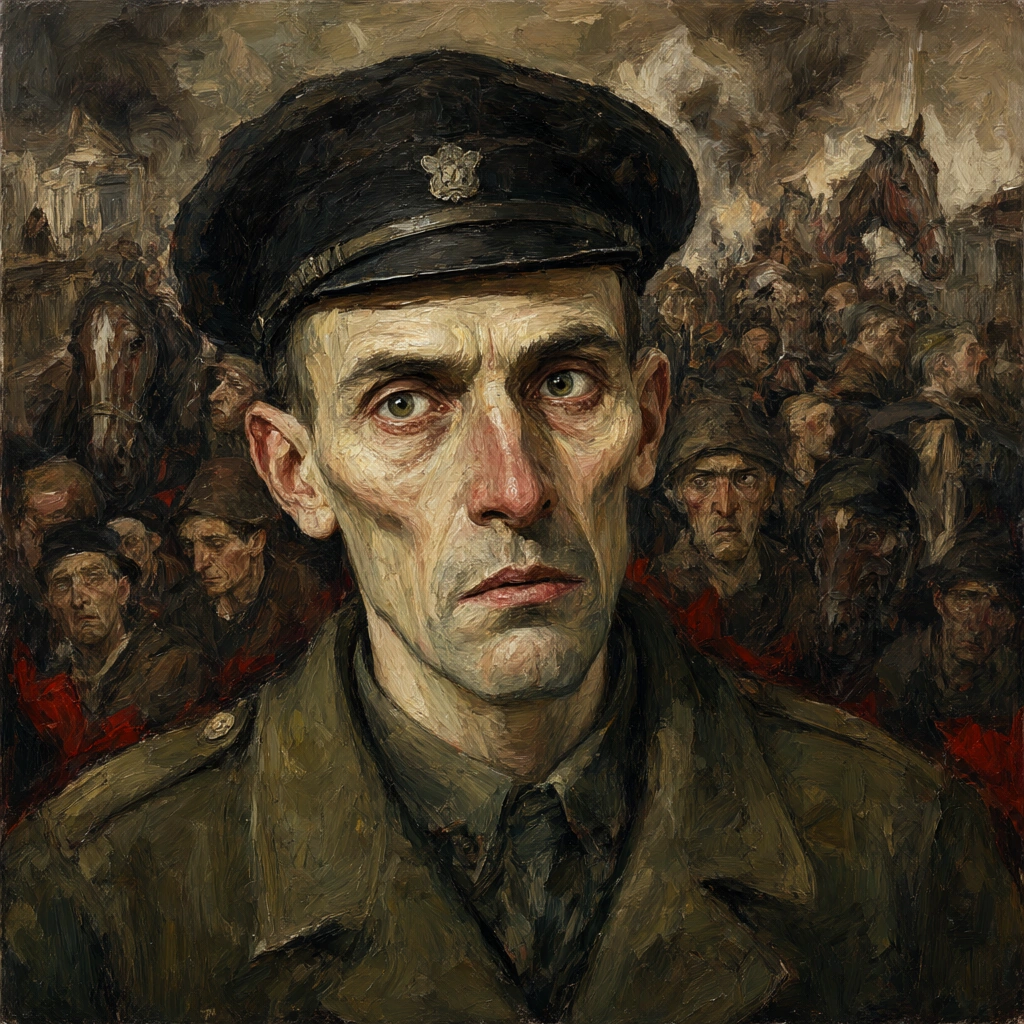 Qwen Image 2.1
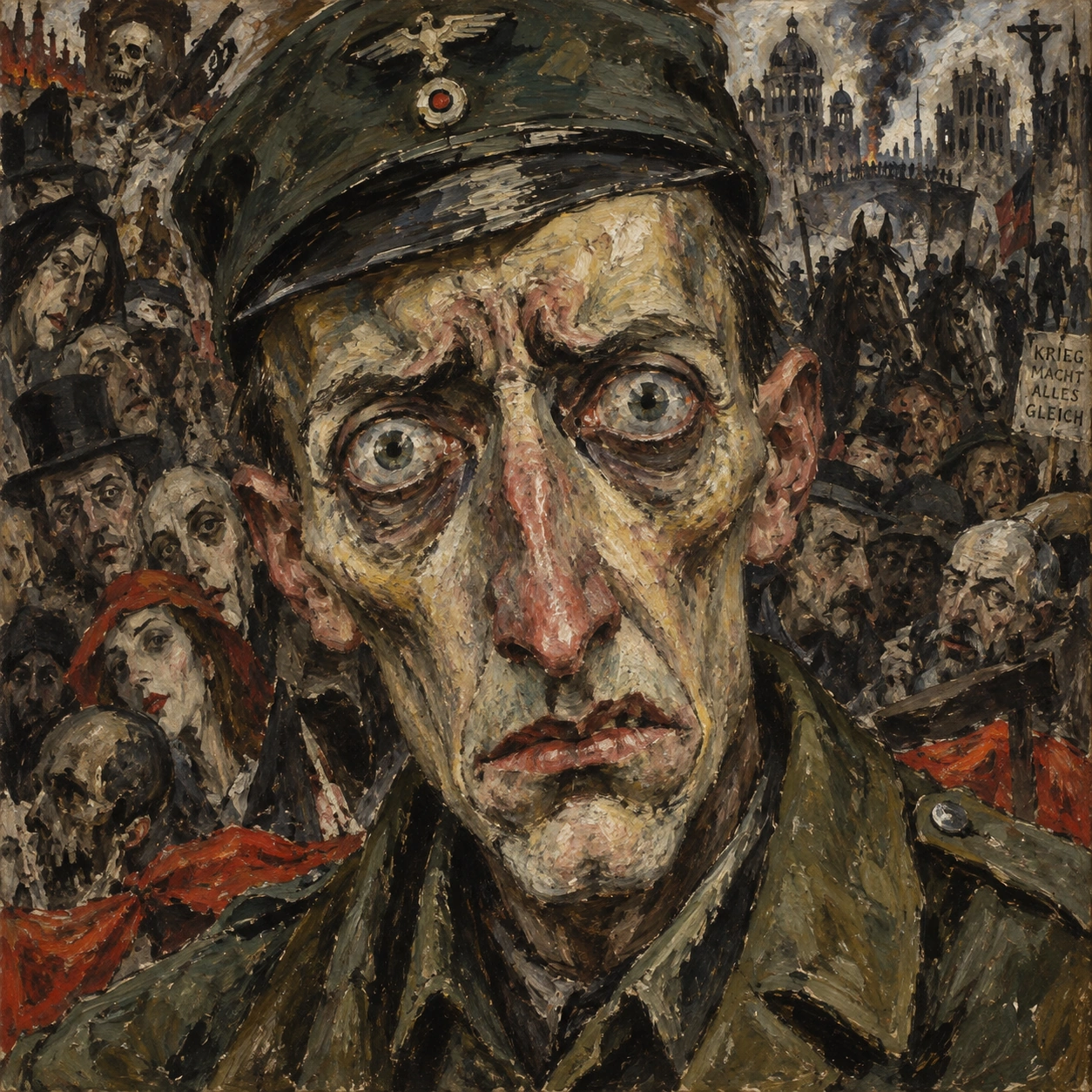 GPT Image 2.5
Reference details
- Reference ID
- 4160
- Category
- Painting
Reference prompts
Style prompt
Expressionist oil painting pushes likeness through angular planes, anxious distortion, and crowded narrative fragments. Sickly yellow-gray, olive, umber, smoke black, and muted red make an uneasy palette. Sharp dark lines concentrate around focal features, while broken thicker strokes scatter through surrounding forms. Uneven light raises selected pale planes and leaves recesses murky. The background presses close with overlapping small shapes instead of open depth. This compressed rhythm creates satirical psychological intensity, supported by visible rough paint and restless edge work.Full example prompt
A square expressionist oil portrait shows a gaunt uniformed man close to the viewer, his face filling most of the frame. He wears a dark military-style cap with a small emblem and a worn olive coat. Large pale eyes stare forward under deeply furrowed brows; the nose is long and red, the mouth tight and uneven. Behind him, a chaotic accumulation of smaller faces, smoke, horses, and indistinct architectural forms presses in from every side. The background uses brown, olive, soot gray, and muted cream, with flashes of warm red near the lower edge. The man's pale skin is painted in sharp yellow-gray planes and sickly pinks, making the expression anxious and almost caricatural. Fine dark lines around the eyes and mouth combine with broken thick brush strokes in the cap and crowd. Light falls unevenly across forehead, nose, and cheek, while eye sockets and the crowded background sink into smoky shadow. The composition is compressed and claustrophobic; there is no empty resting space around the head. Tiny scenes behind him feel like memories or social noise rather than a single clear setting. The whole image is tense, satirical, and psychologically pointed, using distorted likeness and dense painterly texture to communicate unease.