
Styles
#4188
Melainotype print style reference and prompts
Explore the “Melainotype print” reference with layered exposure effects, negative space, and sepia tones. View the images, copy the style or example prompt, and discover related styles on Looksift.
Compare the Qwen Image 2.1 and GPT Image 2.5 examples, choose the visual qualities you want, and copy the style prompt for your own project.
 Qwen Image 2.1
 GPT Image 2.5
Reference details
- Reference ID
- 4188
- Category
- Photography
Reference prompts
Style prompt
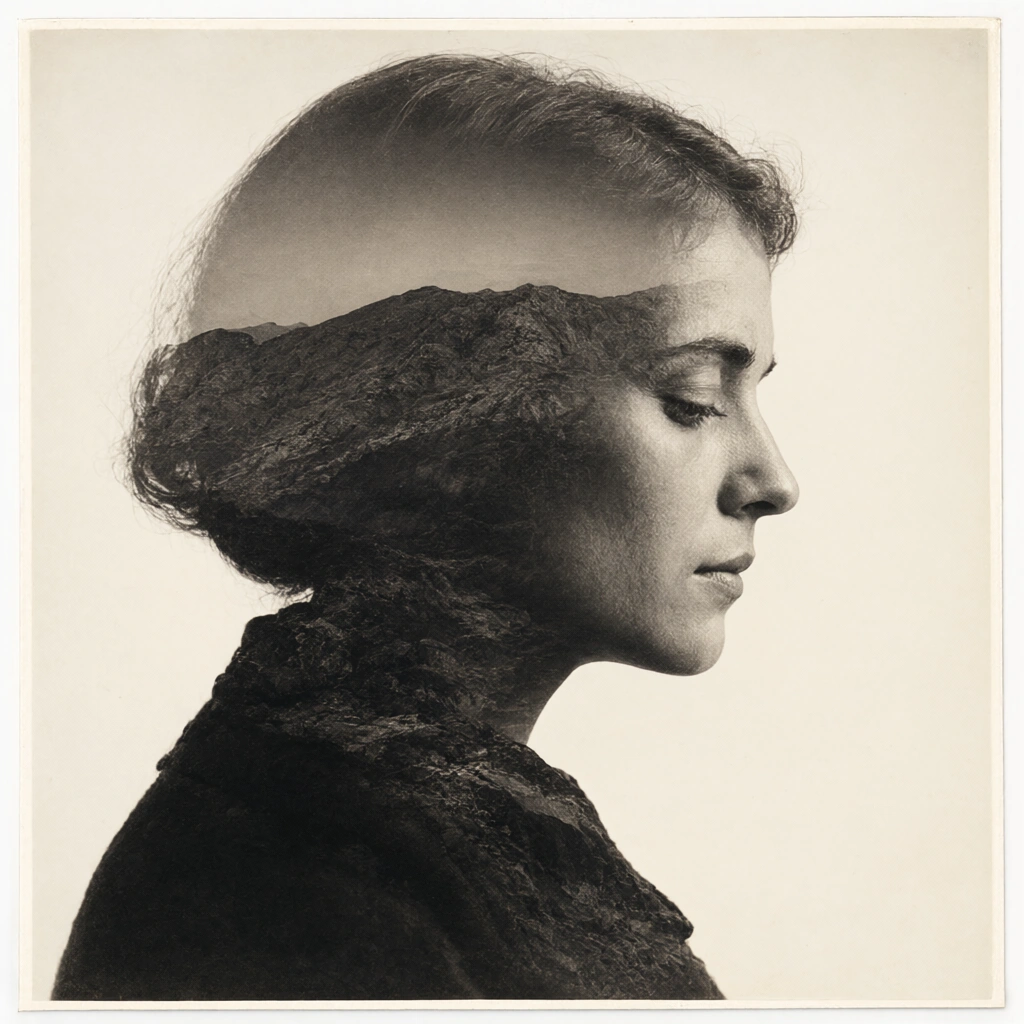
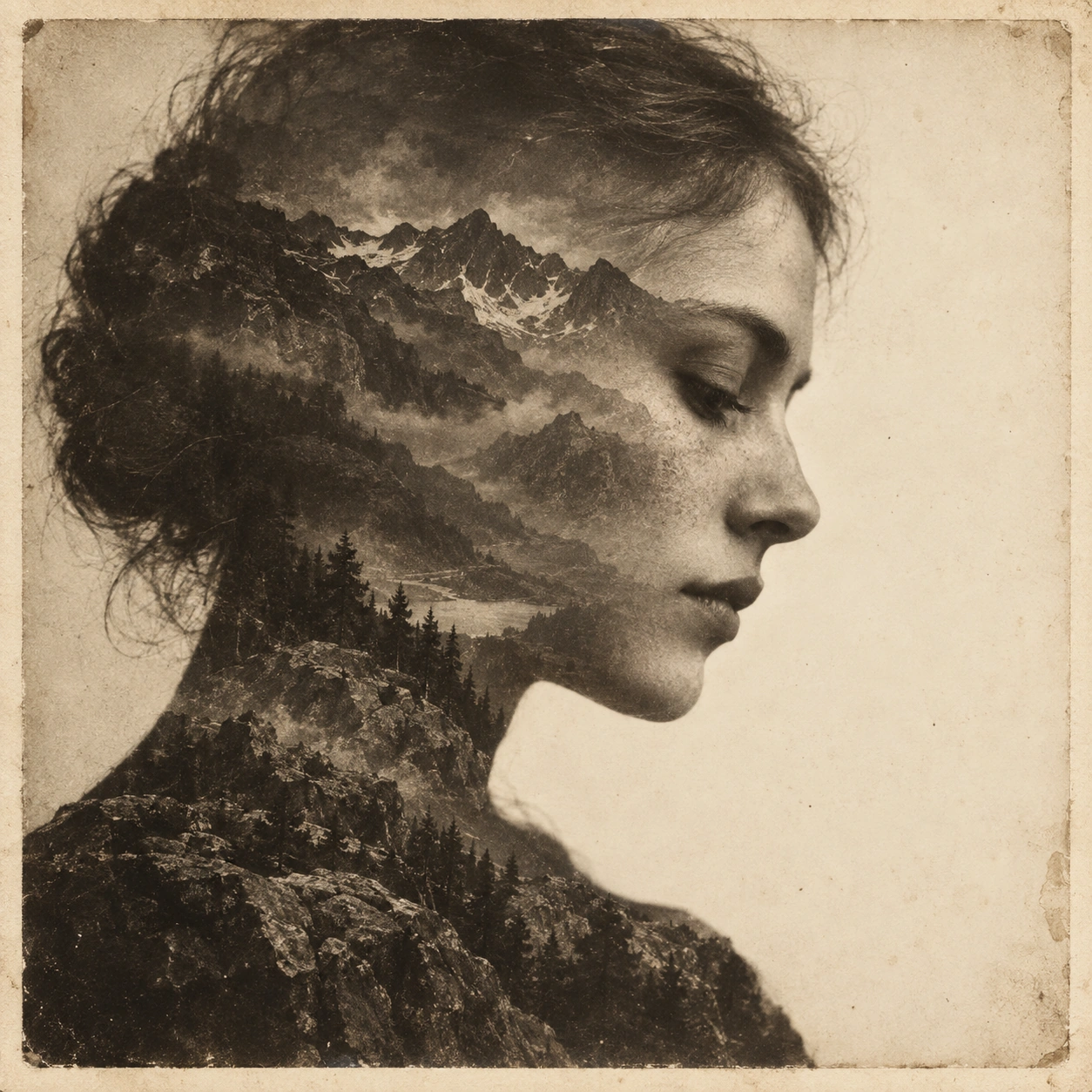
The style is antique monochrome photographic fusion with translucent double exposure and a visibly aged print surface. Two distinct spatial scales overlap through continuous tonal transitions instead of hard collage seams. Warm black, sepia and cream create a narrow palette; grain, imperfect density and slight edge irregularity preserve chemical-print character. A large dark central mass balances generous pale negative space. Soft focus and selective crisp contours let separate visual layers remain legible without losing their blended, dreamlike unity.Full example prompt
A square antique-looking photographic print shows a woman's head in right-facing profile on a pale cream ground. Her eyes are lowered and the mouth is gently closed, giving the pose a contemplative stillness. Across the hair, cheek and neck, a dark mountain landscape appears to be double-exposed into the portrait. A ridge line crosses the upper face, while rocky textures and a shadowed valley fill the lower head and shoulders. The two images blend without a hard seam; the cheek remains legible even as terrain passes through it. The print sits within a narrow pale border whose slightly uneven tone recalls an aged photographic mount. Black and warm sepia dominate, with soft gray midtones where the face and landscape overlap. Fine grain and irregular density make the merged areas feel printed in chemistry rather than assembled from perfectly clean digital layers. The profile occupies much of the square but leaves open cream space along the right edge, giving the face room to breathe. Darkest values collect at the hair and lower shoulder; light catches the forehead, nose and upper lip. The visual tension comes from two scales of experience sharing one form: intimate facial observation and distant topography, both held within the fragile surface of an old photograph.