
Styles
#4258
Abbott Handerson Thayer style reference and prompts
Explore the “Abbott Handerson Thayer” reference with scratch-like marks, anatomical modeling, and cool blue-gray tones. View the images, copy the style or example prompt, and discover related styles on Looksift.
Compare the Qwen Image 2.1 and GPT Image 2.5 examples, choose the visual qualities you want, and copy the style prompt for your own project.
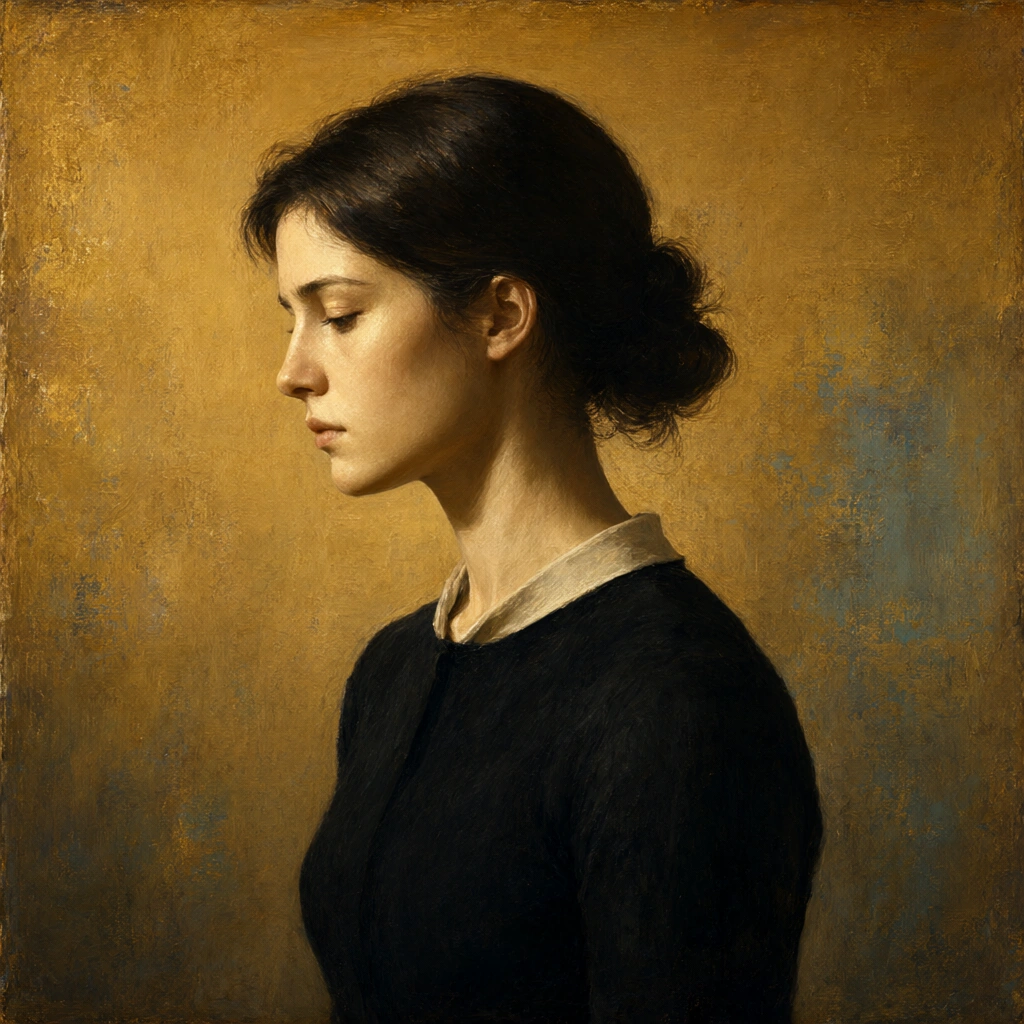 Qwen Image 2.1
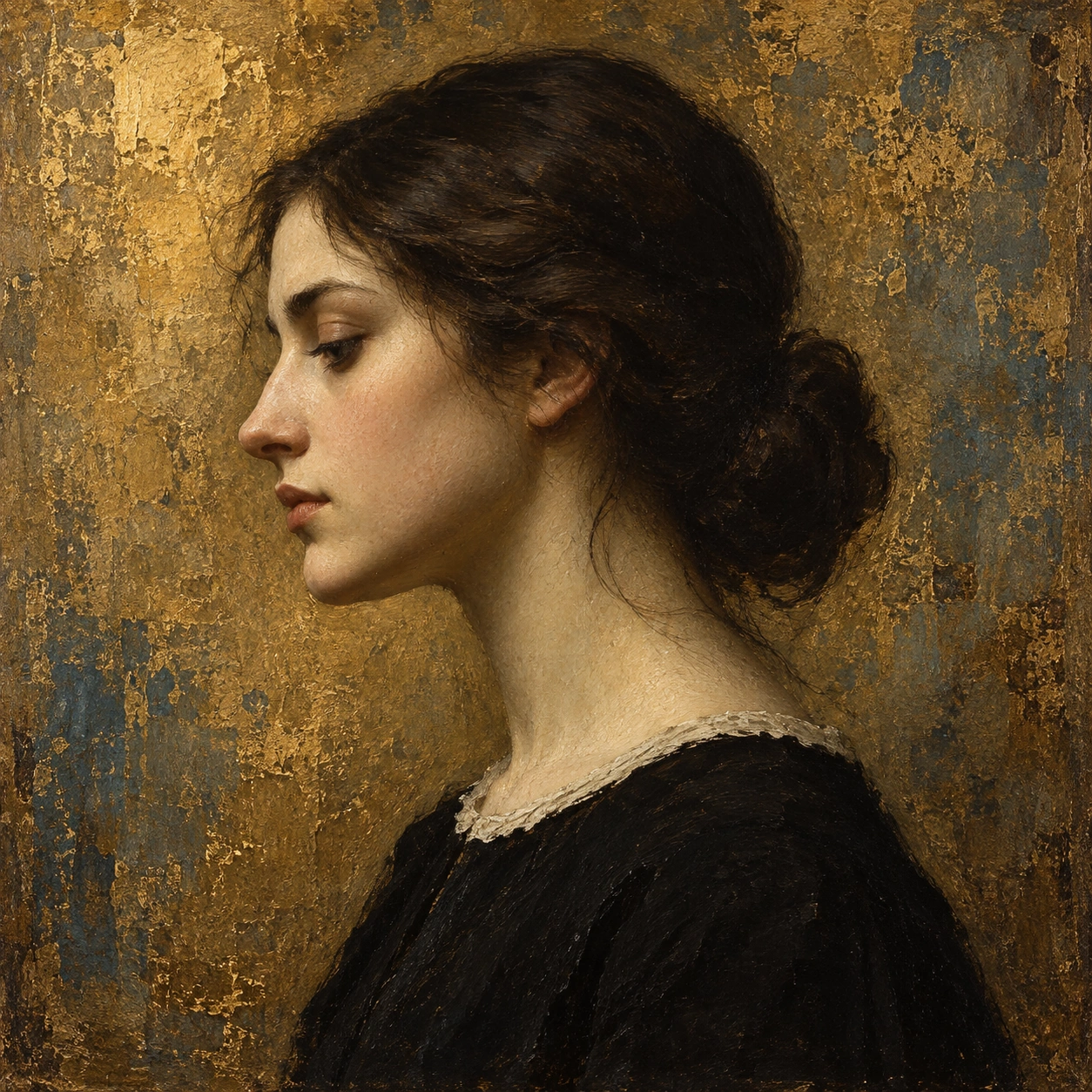 GPT Image 2.5
Reference details
- Reference ID
- 4258
- Category
- Painting
Reference prompts
Style prompt
Traditional oil painting with restrained anatomical modeling, a dark compact silhouette, and a broad scratched ochre-gold field. Warm upper-side light touches selected pale planes, while umber and near-black shadows retain depth. Rough layered wall pigment, blue-gray flecks, and visible brush edges contrast with smoother focal transitions. The composition stays solemn, quiet, and materially aged.Full example prompt
A square traditional oil portrait shows a young dark-haired woman from the shoulders up in left-facing profile. Her hair is gathered into a loose low knot, with a few fine strands softening the outline around forehead and neck. She wears a simple black dress with a narrow pale collar, and her long slender neck rises against a textured ochre-gold ground. The face is calm, eyes lowered slightly, lips closed, and nose precisely silhouetted. Warm light from upper left brushes the forehead, cheek, nose, and throat, while the back of the head and black garment recede into rich shadow. The background is not a room but a painterly wall of layered warm gold, brown, blue-gray flecks, scraped patches, and small brush marks. Her skin is smoothly modeled yet retains visible paint edges around the cheek and collar. The profile occupies the central-left, leaving a broad field of textured color behind the head and toward the right. The tonal palette is restrained: ivory skin, umber hair, near-black dress, aged gold, and muted blue-gray undertones. The image feels introspective and solemn. Its depth comes from selective light, controlled anatomy, and rough wall texture rather than props or narrative setting.