
Styles
#4281
Jenny Saville style reference and prompts
Explore the “Jenny Saville” reference with thick paint texture, close cropping, and earth tones. View the images, copy the style or example prompt, and discover related styles on Looksift.
Compare the Qwen Image 2.1 and GPT Image 2.5 examples, choose the visual qualities you want, and copy the style prompt for your own project.
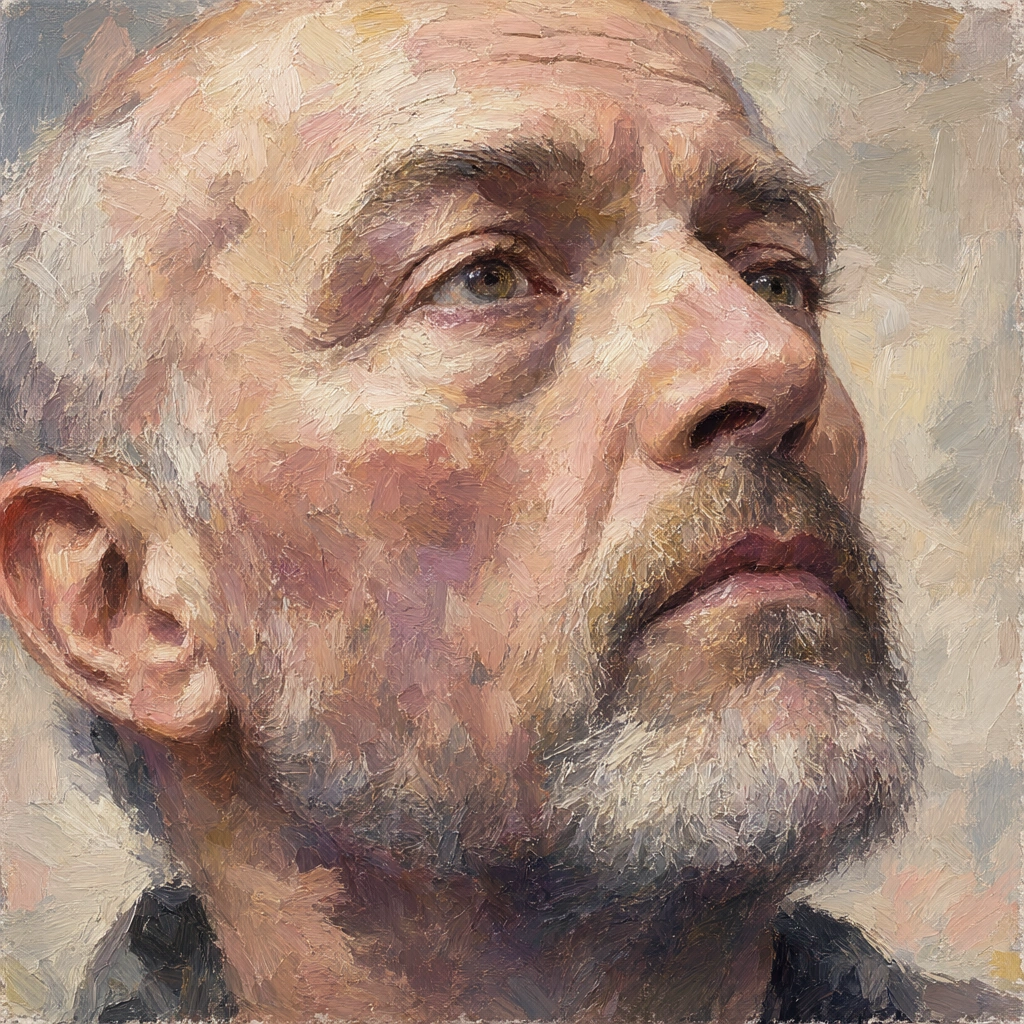 Qwen Image 2.1
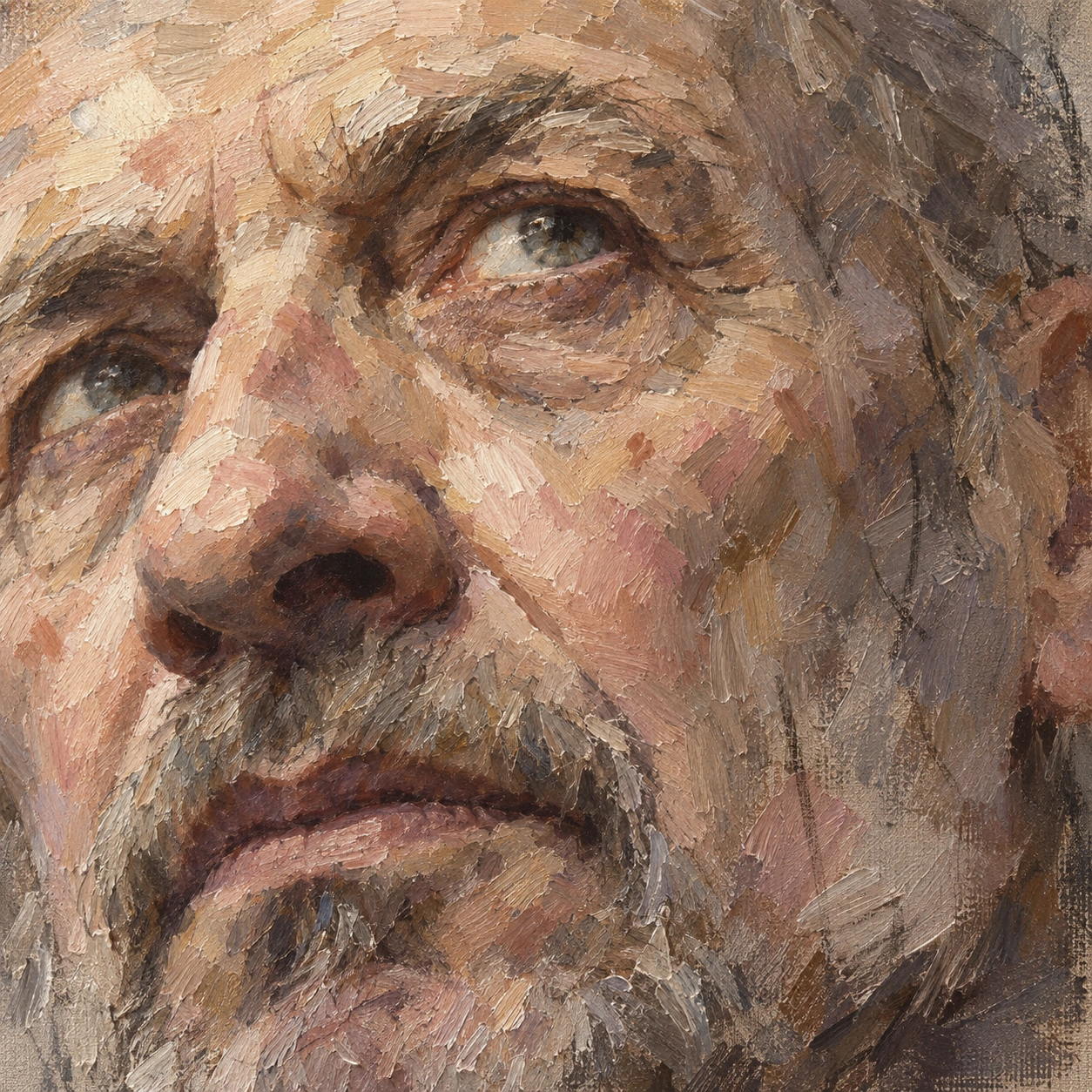 GPT Image 2.5
Reference details
- Reference ID
- 4281
- Category
- Painting
Reference prompts
Style prompt
An expressive impasto painting style builds form from short broken strokes, visible underdrawing, scumbled color, and occasional scraped passages. Warm cream, ochre, blush pink, muted mauve, cool gray, and brown-violet shadows interlock without smooth blending. A tightly cropped focal area occupies nearly the whole frame, with small high-contrast details that draw attention amid broad fragmented planes. Light spreads across raised paint and catches selected edges, while deep pigment collects in recesses. Preserve canvas texture, brush ridges, and the searching energy of a worked study. The technique can describe any close subject through irregular mark structure, layered color, and intimate scale.Full example prompt
A square expressive oil-paint study fills the frame with a weathered older man's face, cropped so closely that one side of the head extends beyond the edge. The gaze turns slightly upward and sideways, with one eye near the upper center holding the viewer's attention. The nose, heavy brow, cheek, and mouth emerge from a dense weave of short, broken brushstrokes rather than smooth blending. Warm cream, blush pink, ochre, muted mauve, and cool gray patches interlock across the skin. Dark brown-violet shadows gather beneath the eye, around the nostril, and at the lips, giving depth to the pale planes. Some drawn lines and thin underpainting remain visible between opaque strokes, making the study feel active and unfinished in a deliberate way. The surface resembles thickly worked canvas, with small ridges of pigment and scraped passages. Light falls broadly from above left, washing the forehead and nose while leaving the lower face quieter. The composition has little background; the face itself becomes a landscape of color, marks, and expression. The image feels intimate and searching, holding both close observation and the spontaneity of a painter's study. Its emotional force comes from the eye and irregular paint structure rather than dramatic staging.