
Styles
#4287
Through-the-Viewfinder photography style reference and prompts
Explore the “Through-the-Viewfinder photography” reference with fine grain, muted colors, and reflected light accents. View the images, copy the style or example prompt, and discover related styles on Looksift.
Compare the Qwen Image 2.1 and GPT Image 2.5 examples, choose the visual qualities you want, and copy the style prompt for your own project.
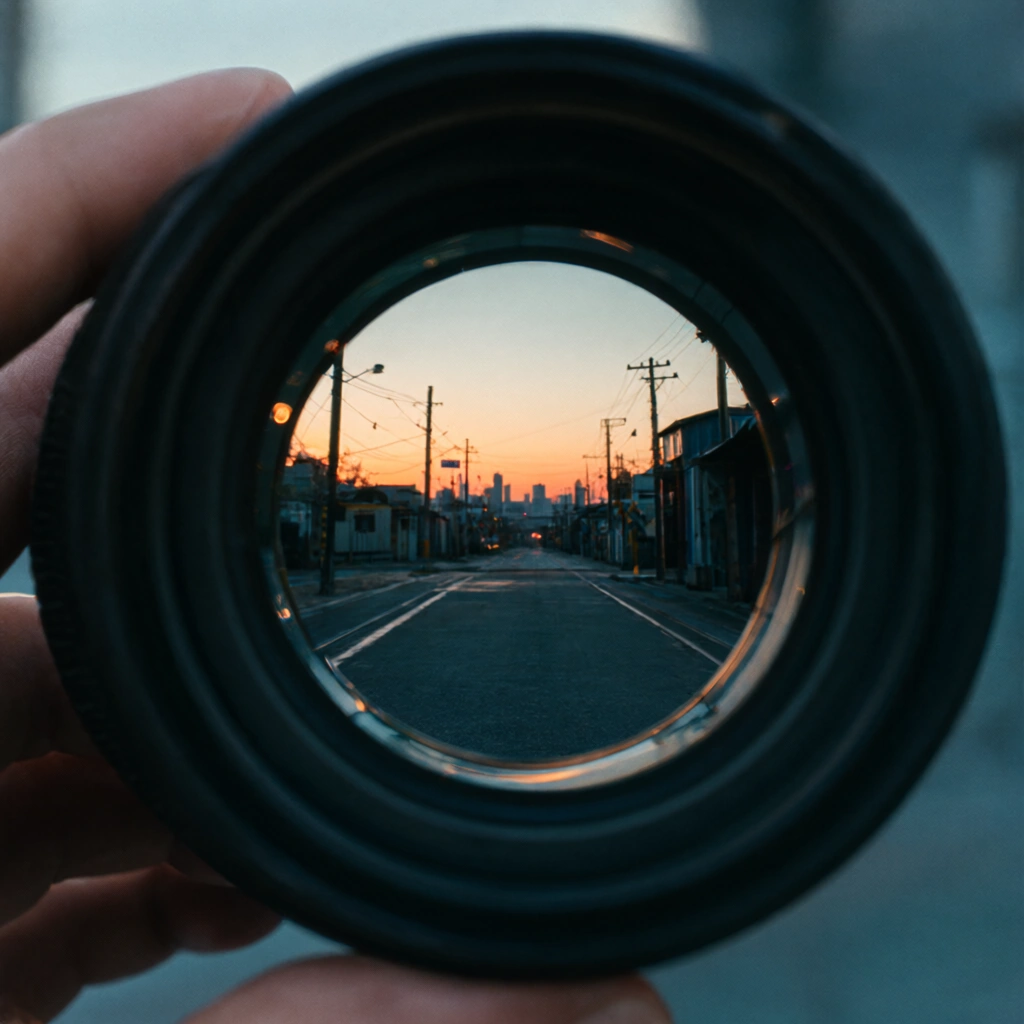 Qwen Image 2.1
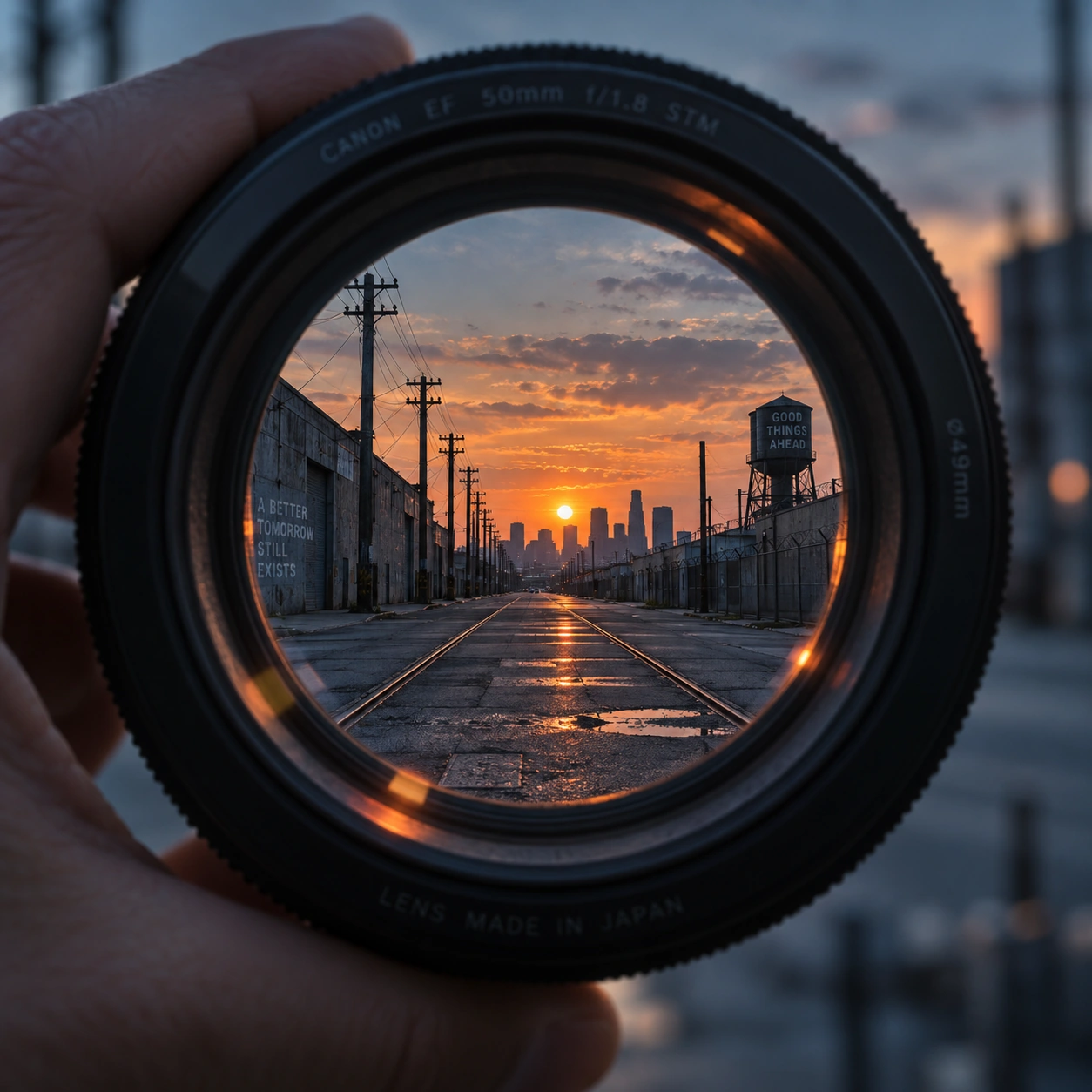 GPT Image 2.5
Reference details
- Reference ID
- 4287
- Category
- Photography
Reference prompts
Style prompt
A cinematic photographic style uses an oversized circular frame within the frame to organize attention. Shallow depth of field softens nearby hands or objects into a dark surround, while a distant central scene remains comparatively crisp. Cool teal and desaturated blue-gray dominate the outer field, with concentrated amber and coral light at a far horizon. Small optical reflections and a warm rim articulate glass or another transparent layer. Converging lines draw the eye through the circle into depth. Fine grain, slight lens softness, and restrained contrast keep the result tactile and contemplative rather than sterile. The visual mechanism is a contrast between close physical framing and an expansive view beyond.Full example prompt
A square cinematic photograph centers on a large camera lens held close to the viewer by a hand at the left edge. Through the circular glass opening, an empty industrial street runs toward a distant city silhouette and a low orange sunset. Utility poles and narrow structures create converging lines within the lens. Outside the circle, the fingers and lens barrel fall into soft focus, becoming a dark framing device around the sharply defined distant view. Cool teal and desaturated blue-gray tones color the surrounding scene; amber and coral light concentrate at the horizon and reflect faintly in the glass. The circular aperture occupies most of the frame, creating a strong image-within-image structure. A narrow warm rim and small reflections trace the lens elements, revealing their thickness without overwhelming the street. Shallow depth of field separates near hand and metal from the viewed distance, while fine film grain and slight optical softness keep the image tactile. The industrial road feels quiet and spacious, with its rails or pavement lines pulling the eye inward. The whole frame conveys patient observation at dusk, balancing a precise geometric circle against atmospheric color and a personal, handheld point of view.