
Styles
#4311
Gouache paint style reference and prompts
Explore the “Gouache paint” reference with dry-brush texture, tactile surfaces, and delicate contours. View the images, copy the style or example prompt, and discover related styles on Looksift.
Compare the Qwen Image 2.1 and GPT Image 2.5 examples, choose the visual qualities you want, and copy the style prompt for your own project.
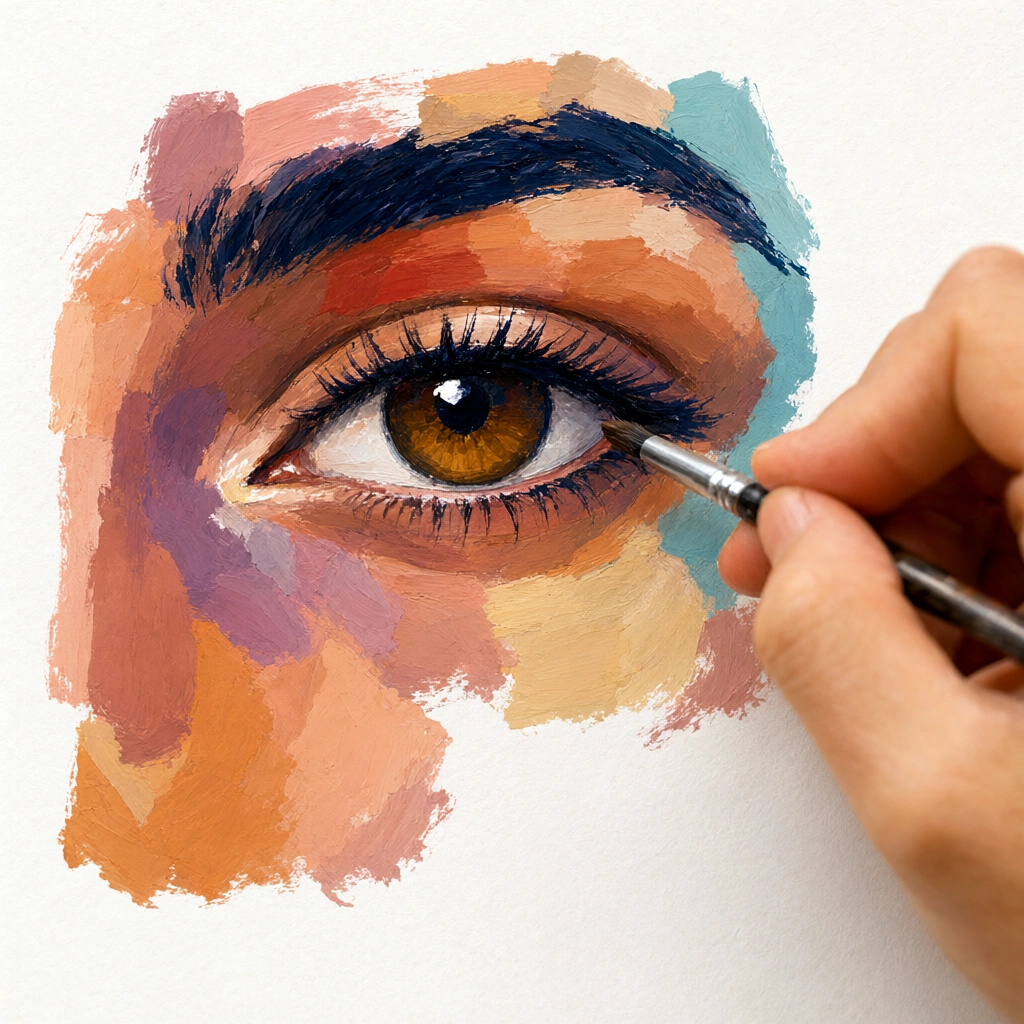 Qwen Image 2.1
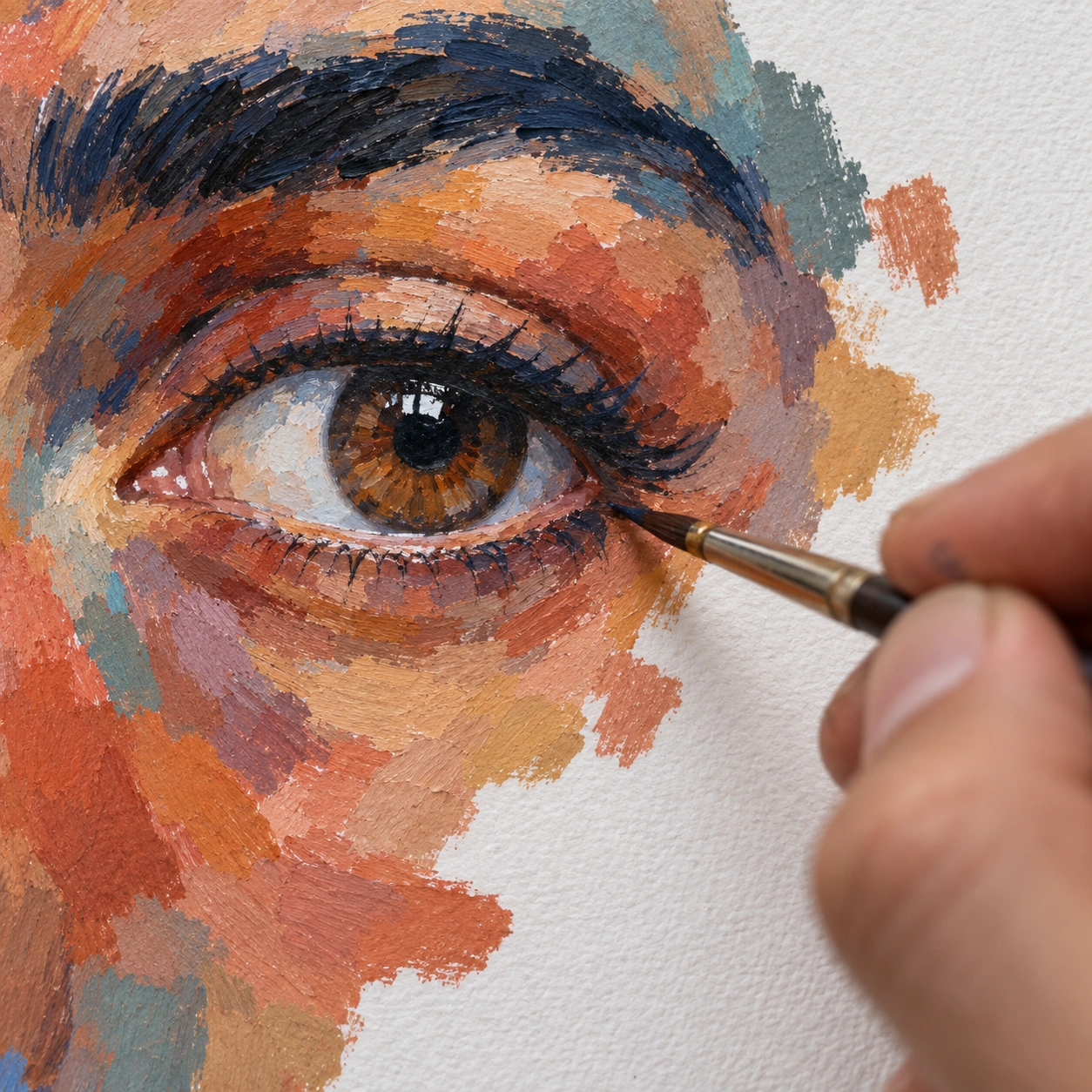 GPT Image 2.5
Reference details
- Reference ID
- 4311
- Category
- Photography
Reference prompts
Style prompt
Use opaque matte gouache handling with neighboring color patches left visibly distinct. Build volume by placing warm ocher, rust, coral, peach, and mauve beside cool teal, cyan, and indigo, rather than smoothing them into airbrushed gradients. Show paper tooth, uneven stroke ends, dry-brush grain, and small areas of unpainted ground. Allow broad confident daubs to establish masses, then add a few narrow dark lines and bright highlights at focal details. Crop intimately around the active surface, with one tool or working gesture optionally entering at an edge to reveal scale. Keep lighting even and natural so the pigment's flat, dense material quality remains clear. The overall effect is colorful, tactile, and visibly in progress.Full example prompt
A square close-up photograph shows a gouache painting in progress on white textured paper. The image under construction is a single large eye with a warm brown iris, a glossy black pupil, and a bright reflected highlight. Dense navy and dark blue strokes define the upper brow and lash line, while broad patches of rust, coral, ocher, peach, mauve, and muted teal build the surrounding skin as visible, separate blocks. The face is unfinished: color patches stop irregularly against wide unpainted white areas on the right and lower edge, revealing the paper and the artist's process. From the right side, a hand holds a small pointed brush. Its dark bristles touch the outer lower eyelid, adding a fine line of pigment. The hand and brush occupy the right foreground and are softer than the painted eye, which remains the visual center. Brushwork varies from opaque flat daubs and dry textured strokes to narrow precise marks around the eye. There is no blended airbrush finish; neighboring colors retain their identities even where they suggest soft volume. Warm orange and earthy red dominate, balanced by cool cyan and indigo. The square crop is intimate and slightly oblique, emphasizing the contact between brush tip and image. Light is natural and even enough to reveal paper tooth and thick matte pigment without strong reflections. No palette, lettering, frame, or other finished painting is visible in the selected panel. The mood is immediate and tactile, capturing a moment when a recognizable form emerges from accumulated color patches.