
Styles
#0480
Omar Galliani style reference and prompts
Explore the “Omar Galliani” reference with layered surface texture, sepia tones, and a monochrome palette. View the images, copy the style or example prompt, and discover related styles on Looksift.
Compare the Qwen Image 2.1 and GPT Image 2.5 examples, choose the visual qualities you want, and copy the style prompt for your own project.
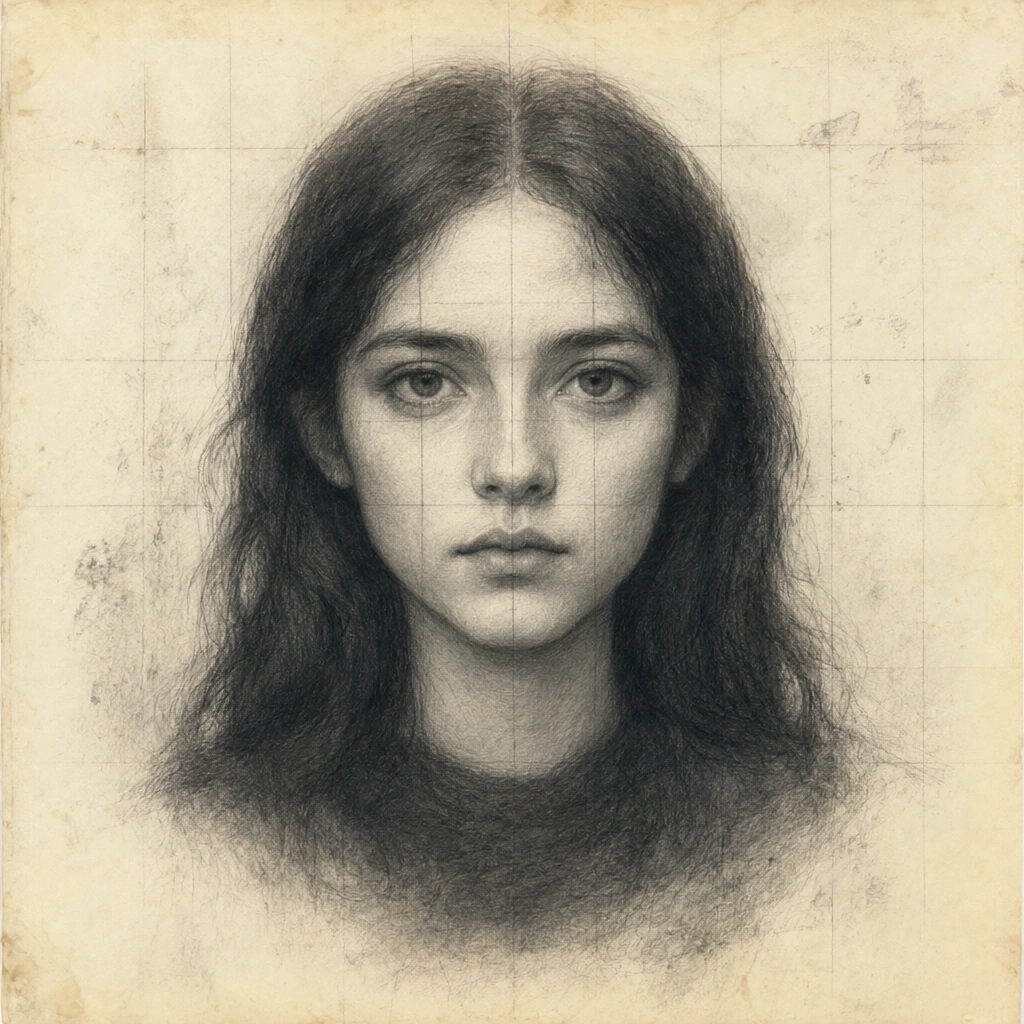 Qwen Image 2.1
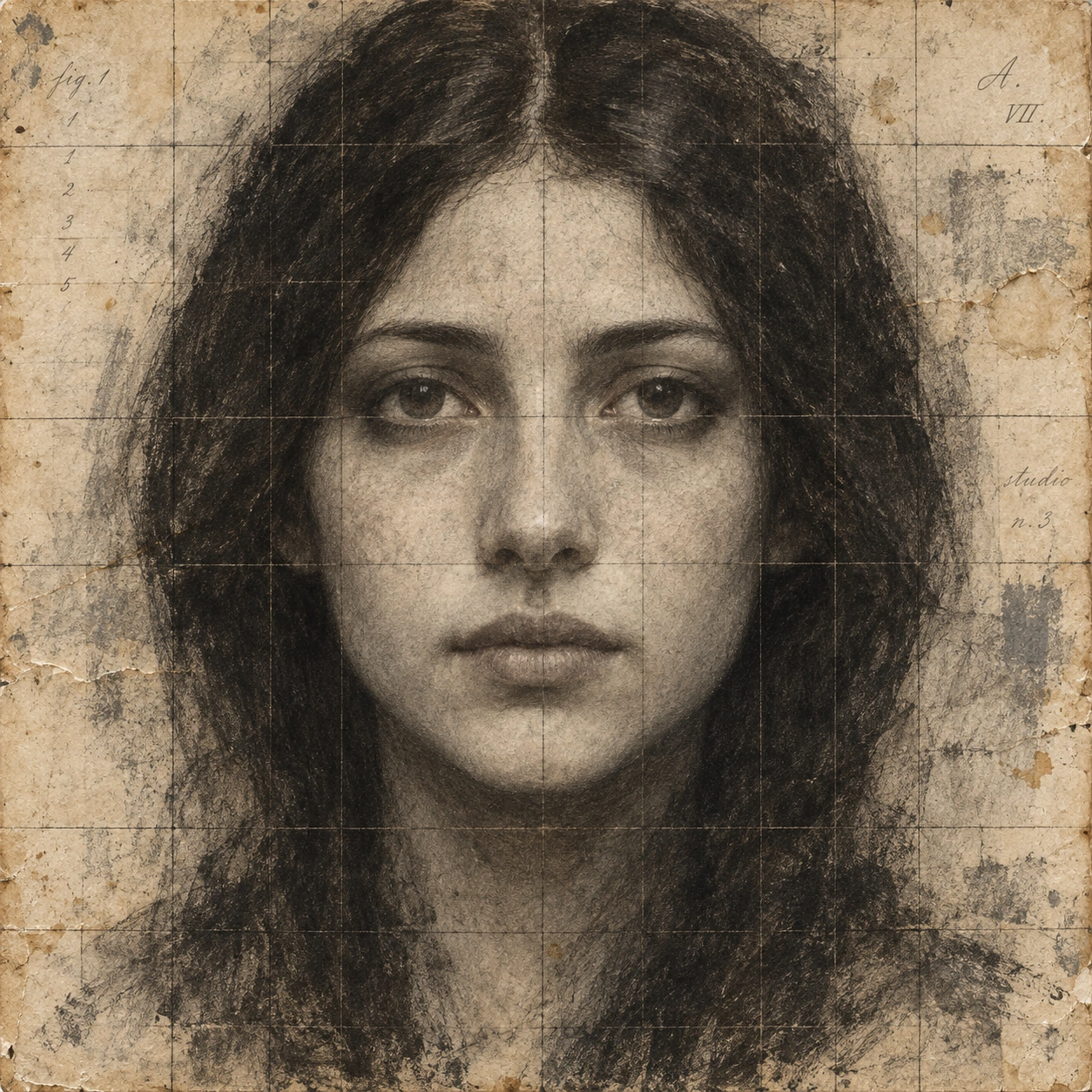 GPT Image 2.5
Reference details
- Reference ID
- 0480
- Category
- Ink & line
Reference prompts
Style prompt
Monochrome graphite and charcoal drawing develops finely shaded focal planes on visibly aged cream paper. Deep carbon blacks, rubbed smoky grays, and untouched pale paper form a broad tonal ladder with a warm sepia undertone. Minute parallel strokes model small curves and recesses, while larger areas dissolve into smudges, scuffs, and soft-edged dark masses. A faint square grid, measured straight lines, and occasional ghost marks remain superimposed across the image, introducing an archival geometric rhythm. Light is diffuse and frontal, allowing subtle gray transitions without glossy highlights. The main form is nearly symmetrical and tightly framed, but irregular stains and imperfect drawn edges keep it organic. Precise rendered detail gathers near the center; outer contours loosen into worn paper texture. The result balances technical observation, hand-worked surface, and the quiet passage of time.Full example prompt
A large graphite portrait on aged cream paper shows a young woman facing straight ahead. Her dark hair forms a broad almost hoodlike shape around the forehead and cheeks, while the face is rendered with finely shaded eyes, a softly modeled nose, and a calm closed mouth. Her gaze is direct but understated, and the neck fades into a charcoal-dark lower edge rather than a fully described body. Across the entire image, faint ruled squares and thin vertical and horizontal construction lines remain visible. Some lines pass directly over the eyes and cheeks, making the image feel like a drawing assembled on a measured, archival sheet. The paper carries old yellowing, scuffed patches, faint handwriting-like traces, and gray rubbed smears. The figure is highly realistic at the focal eyes and lips, yet the hair and background dissolve into broad smoky carbon marks. Charcoal blacks deepen the side locks and shadows under the chin, while the exposed face uses a wide range of pencil grays and creamy paper highlights. The arrangement is nearly symmetrical, but small variations in the hairline, shading, and paper stains keep it alive. Light is diffuse and frontal, leaving soft shadows around the eye sockets and nose without a photographic shine. The geometric grid gives a quiet counter-rhythm to the organic curves of the face, and the worn substrate makes the finished image feel discovered rather than freshly polished. The overall mood is reflective and slightly uncanny: a precise human presence appears through layers of drawing, measurement, and timeworn material.