
Styles
#0741
Intaglio Print Style Reference: Animal Muzzle Close-Up
An intaglio-like animal close-up uses incised lines, crosshatching and rubbed plate tone. View the images, copy the style or example prompt, and explore related references on Looksift.
Compare the Qwen Image 2.1 and GPT Image 2.5 examples, choose the visual qualities you want, and copy the style prompt for your own project.
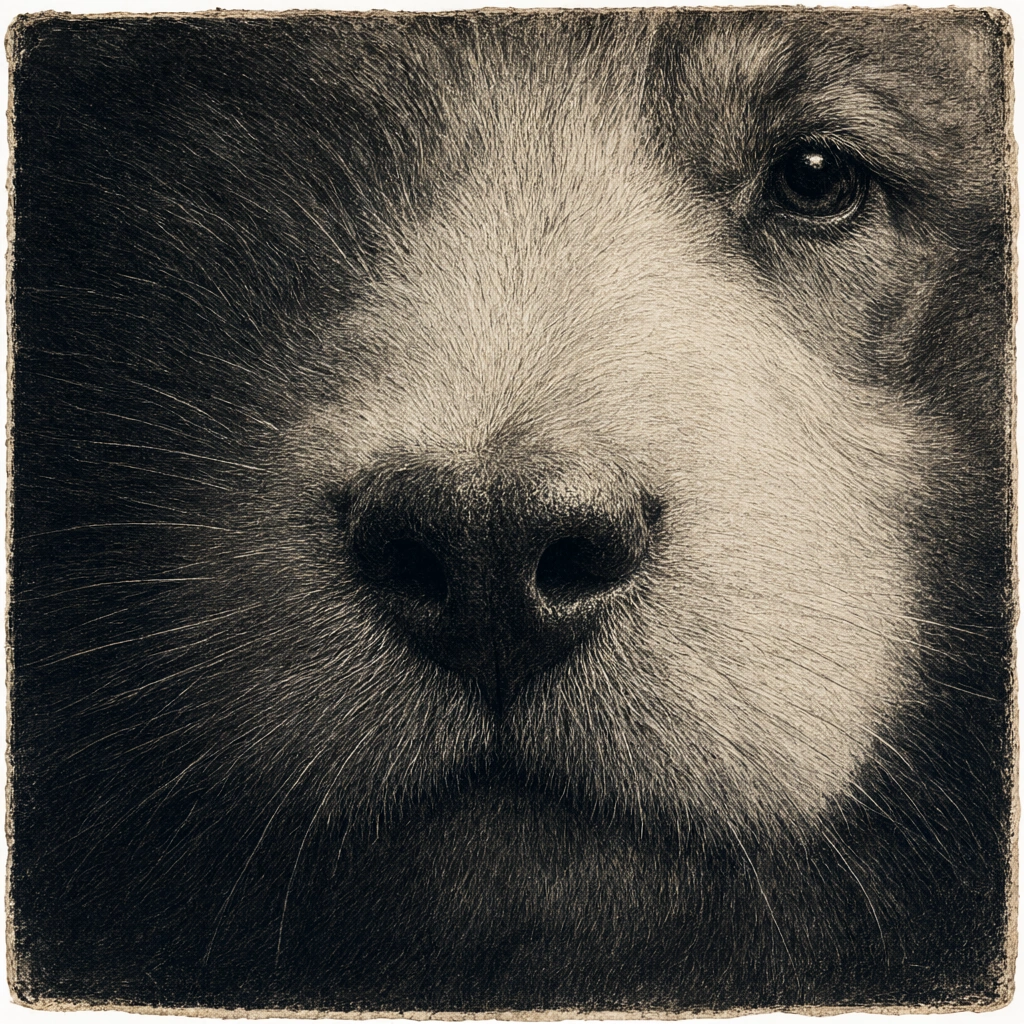 Qwen Image 2.1
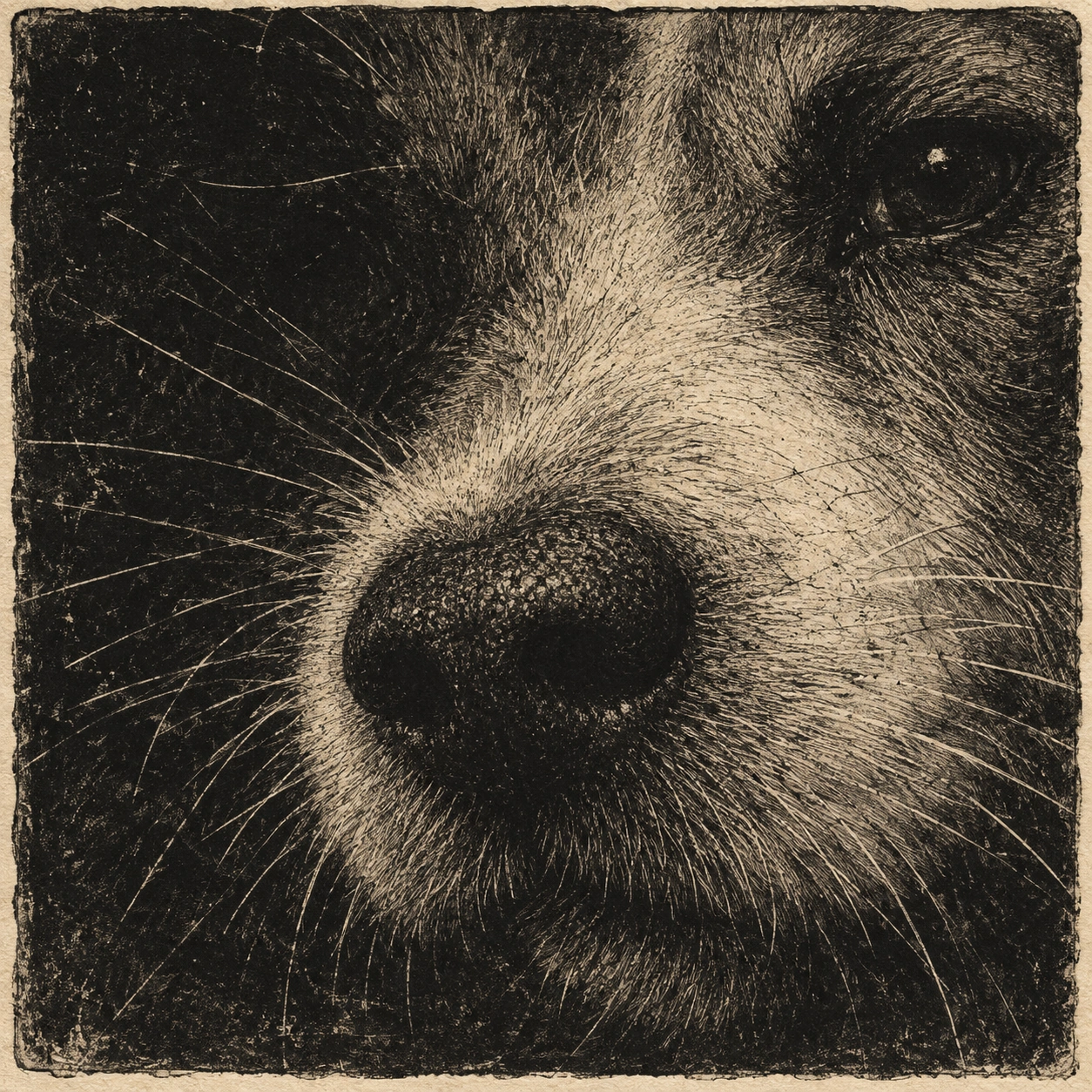 GPT Image 2.5
Reference details
- Reference ID
- 0741
- Category
- Ink & line
Reference prompts
Style prompt
An intaglio-like monochrome print language builds volume from densely incised radiating lines, crosshatching, rubbed plate tone, and exposed warm paper. Deep black pools in recessed areas, while grainy gray transitions soften the brightest planes. Uneven ink, scratches, and worn boundaries keep the surface materially present. A close compressed focal area sends fine marks outward into darker negative space, creating movement without color. Diffuse light is inferred from pale reserves against etched shadow. The result is tactile, dramatic, and antique.Full example prompt
A square intaglio-like print presents an extreme close-up of an animal's muzzle against a dark, heavily worked ground. A rounded black nose occupies the lower center, with pale fur and whiskered texture rising around it. Above and to the right, one shadowed eye is only partly visible, giving the face an intimate, slightly mysterious gaze. Fine lines radiate from the nose and cheek in many directions, becoming longer and more forceful as they travel into the dark left field. The muzzle is not smoothly shaded; it emerges from thousands of incised strokes, rubbed gray patches, and exposed warm paper. Deep black gathers inside the nose, under the muzzle, and near the upper corners, while a soft pale region wraps around the bridge. The contrast creates a strong center without a literal spotlight. The printed surface shows grain, scratches, uneven ink pressure, and a worn irregular edge, making the material process visible. The animal is cropped so closely that no body or setting is described. Its whisker lines and fur become almost abstract linear energy, yet the nose and eye hold the image as a recognizable face. Diffuse light seems to strike the front of the muzzle, leaving recessed areas dark and giving the broad pale plane gentle relief. The composition is compressed and tactile, with radial lines pushing outward from one dense focal point. The overall effect is dramatic but quiet, combining intimate observation with the coarse, engraved depth of an old monochrome print.