
Styles
#0850
Harry Furniss style reference and prompts
Explore the “Harry Furniss” reference with hatching and a monochrome palette. View the images, copy the style or example prompt, and discover related styles on Looksift.
Compare the Qwen Image 2.1 and GPT Image 2.5 examples, choose the visual qualities you want, and copy the style prompt for your own project.
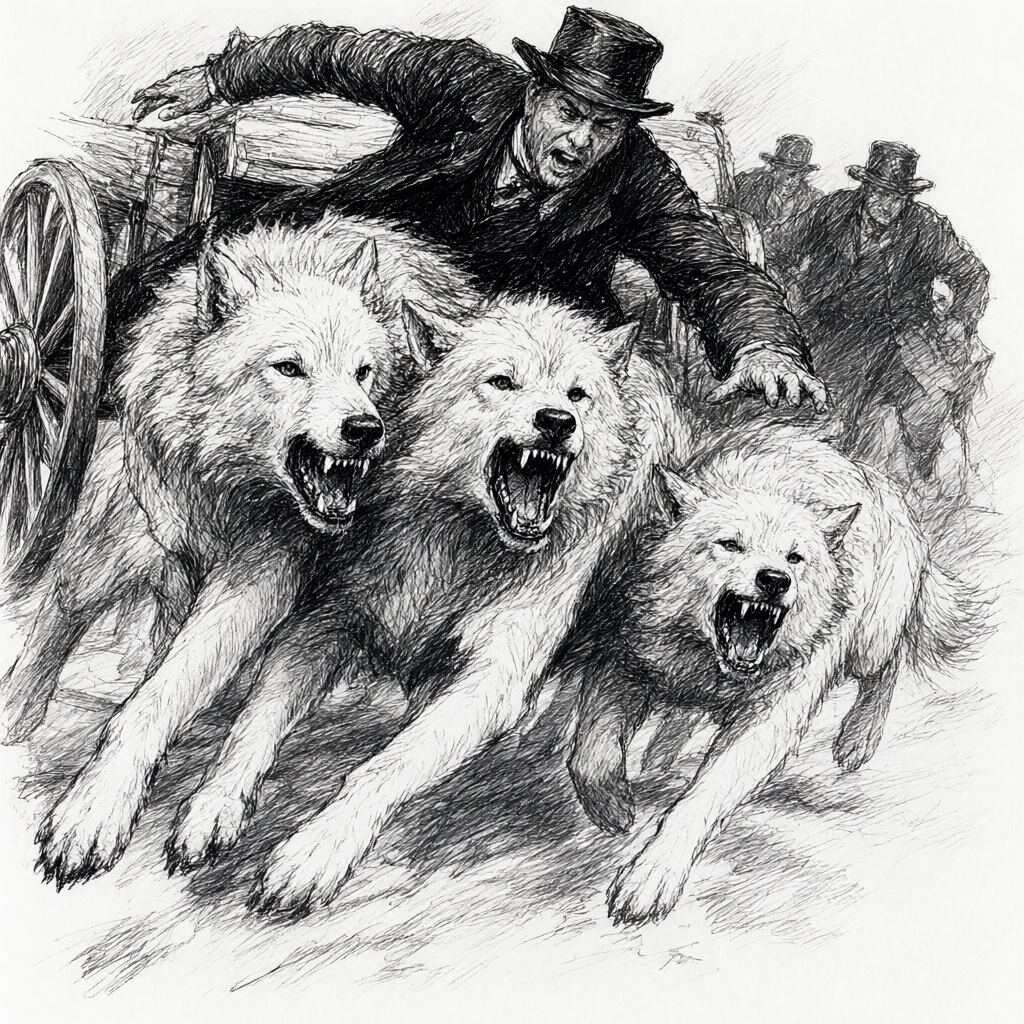 Qwen Image 2.1
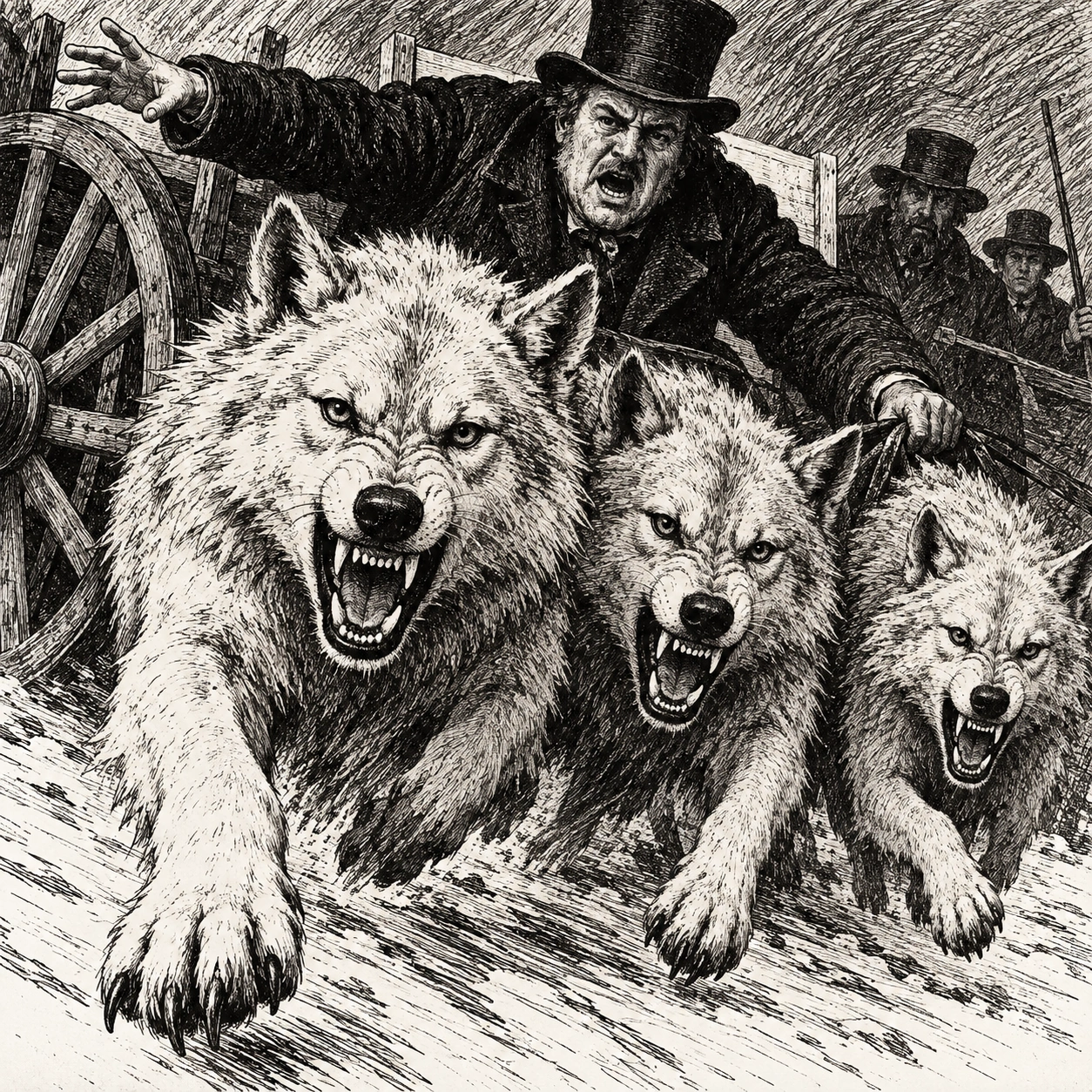 GPT Image 2.5
Reference details
- Reference ID
- 0850
- Category
- Ink & line
Reference prompts
Style prompt
Black-and-white narrative drawing creates motion with vigorous directional hatching, broken contours, and crowded overlaps. Pale unmarked paper areas stand against dense black line masses, so luminous shapes remain legible even in a busy composition. Short strokes change direction to distinguish rough, smooth, and folded textures. Strong foreground scale and recession through partial occlusion bring immediacy to the scene. Shadow is built from accumulated marks rather than a smooth gradient, giving the result an etched, animated, slightly unruly character.Full example prompt
This square black-and-white ink illustration catches three pale, wolf-like canines lunging toward the viewer in front of a rough wagon. Their bodies occupy nearly the whole lower half. The largest animal at left stretches one foreleg forward and bares its teeth; the central animal overlaps its shoulder, while a smaller head at right also opens its mouth in a snarl. Dense short strokes describe shaggy fur, pointed ears, dark noses, and the shadows beneath their jaws. Behind them, a heavyset man in a dark top hat and coat leans forward from the wagon area. One arm extends across the upper left; the other reaches toward the animals at the right. His face is pinched and animated, with dark brows and an open mouth. A wooden wagon wheel with thick spokes anchors the far left, and a pale rail or wagon side sits behind his body. Two more hat-wearing figures appear deeper in the right background, their features simplified by heavy shadow and quick linework. Scraped white ground beneath the animals is marked with fast directional strokes that make their motion feel abrupt. The upper background dissolves into hatching rather than a fully specified landscape. There is no color; brighter paper areas define fur and the open ground, while overlapping black lines deepen clothing, the wagon, and the space behind. The sharpest contrast gathers in the gaping mouths and the dark coat of the man. The image has the lively urgency of a narrative engraving, with crowded diagonal movement and vigorous pen texture carrying the action.