
Styles
#1631
Vince Low style reference and prompts
Explore the “Vince Low” reference with crosshatching, scratch-like marks, and a monochrome palette. View the images, copy the style or example prompt, and discover related styles on Looksift.
Compare the Qwen Image 2.1 and GPT Image 2.5 examples, choose the visual qualities you want, and copy the style prompt for your own project.
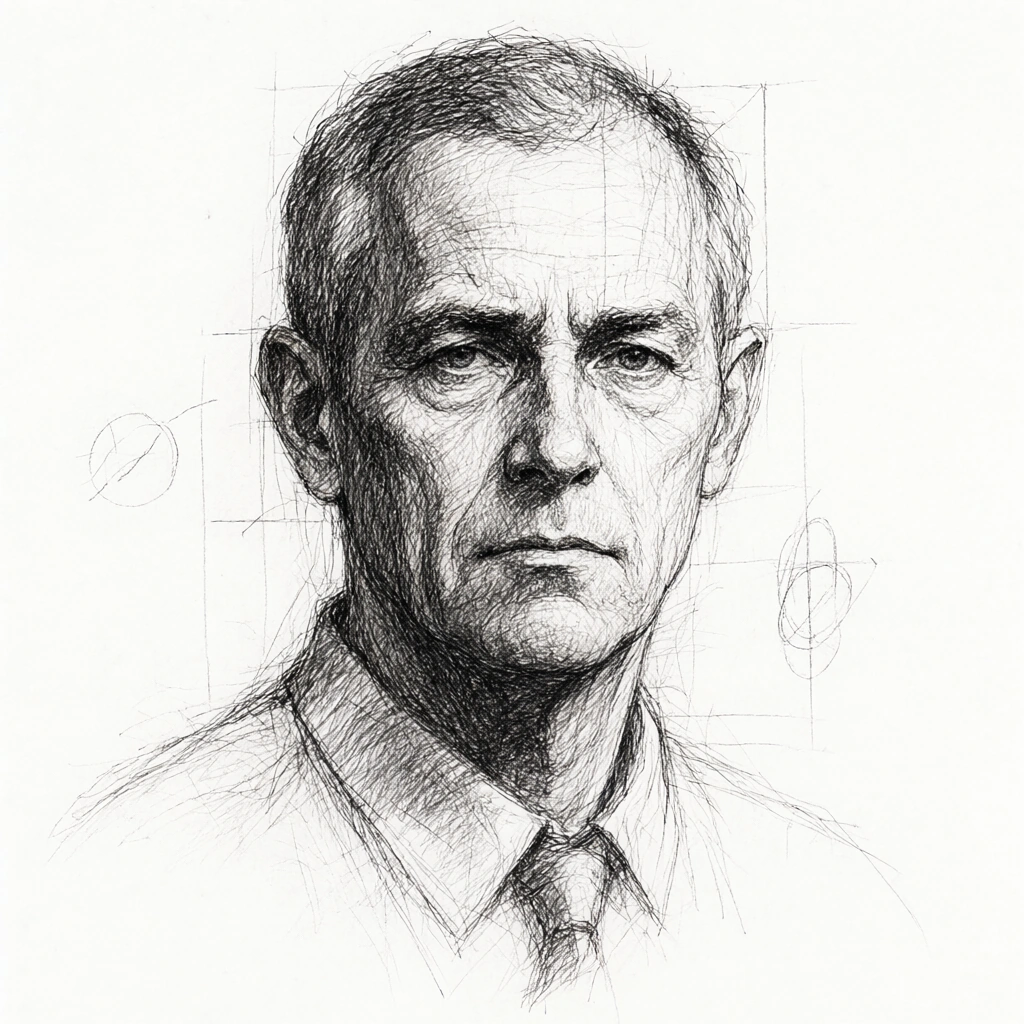 Qwen Image 2.1
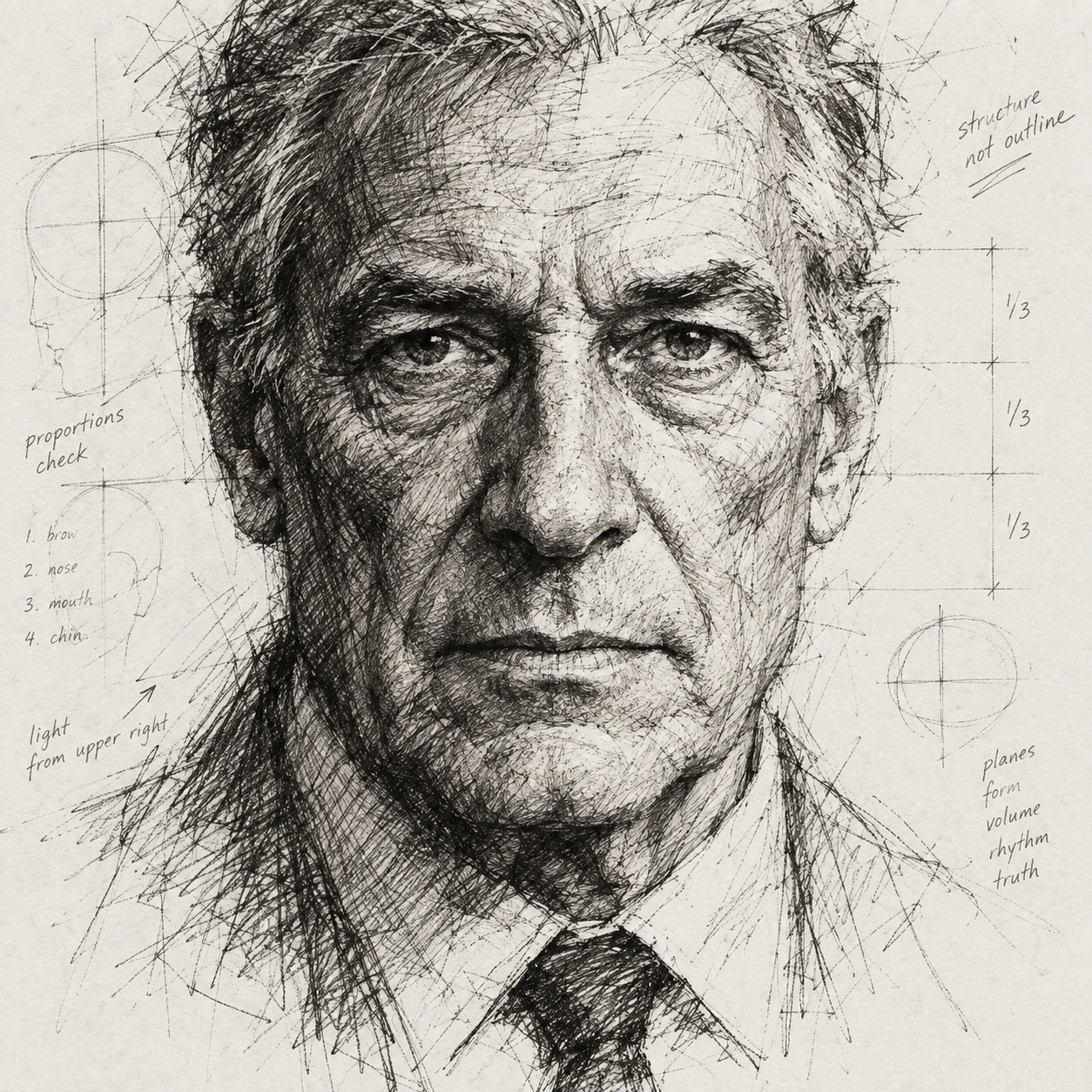 GPT Image 2.5
Reference details
- Reference ID
- 1631
- Category
- Ink & line
Reference prompts
Style prompt
A monochrome ink drawing made from dense, restless crosshatching, searching contours, and visible construction marks on light paper. Concentrate the sharpest definition in a small central focal area, then let surrounding edges loosen into overlapping strokes, circular guides, measurements, and occasional scribbled fragments. Build volume through directional line density rather than smooth blending: crowded black hatching forms shadow, while unmarked paper becomes light. Keep a restrained range of black, charcoal gray, and white, with no color distraction. Preserve irregular hand pressure, tiny corrections, and layered line history so the image feels observed and worked through in real time. The effect should combine precise visual recognition with energetic graphic disorder.Full example prompt
A black ink portrait drawing on pale paper shows an older man's face looking directly toward the viewer, cropped closely above the chest. The eyes sit just above the center of the square and hold a calm, stern gaze; dense dark marks around the lids and brows make them the clearest focal point. A long nose, firmly closed mouth, and angular jaw are built from an accumulation of short, restless strokes rather than a smooth contour. Dark crosshatching gathers along the left cheek, temple, and under the chin, while lighter broken lines sketch the right side of the face. His short hair dissolves into an untidy mesh of marks near the top edge. At the bottom, a shirt collar and tie emerge with only a few controlled angles before fading into the paper. The background stays largely white, yet faint construction lines, scribbled notes, circular guides, and horizontal measurements hover around the head, making the drawing feel both analytical and spontaneous. Tonal light appears to fall from the upper right, leaving the left side more heavily hatched; there is no painted setting or cast shadow. The whole image depends on a remarkable contrast between disciplined facial likeness and freely scattered graphic evidence of the drawing process.