
Styles
#1712
Aberdeen Bestiary style reference and prompts
Explore the “Aberdeen Bestiary” reference with ink contours, tactile surfaces, and teal and ochre tones. View the images, copy the style or example prompt, and discover related styles on Looksift.
Compare the Qwen Image 2.1 and GPT Image 2.5 examples, choose the visual qualities you want, and copy the style prompt for your own project.
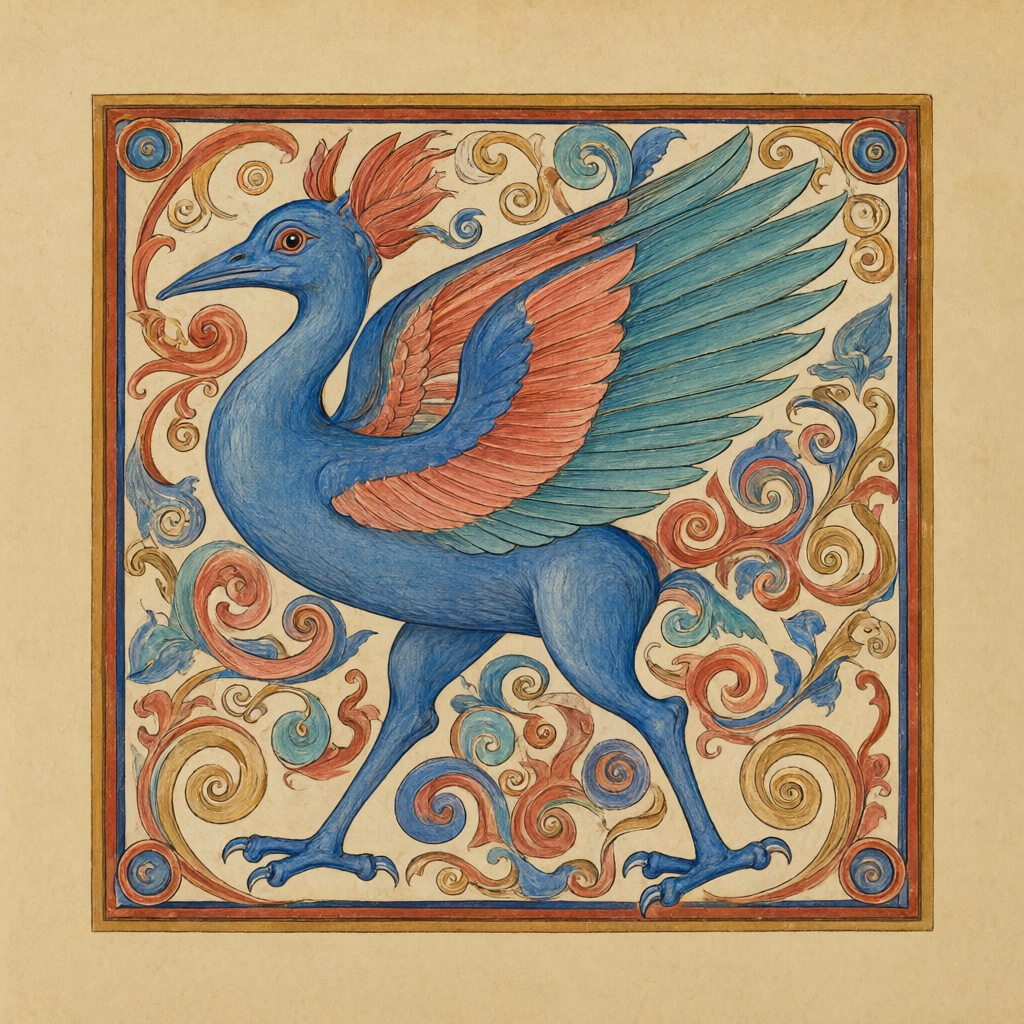 Qwen Image 2.1
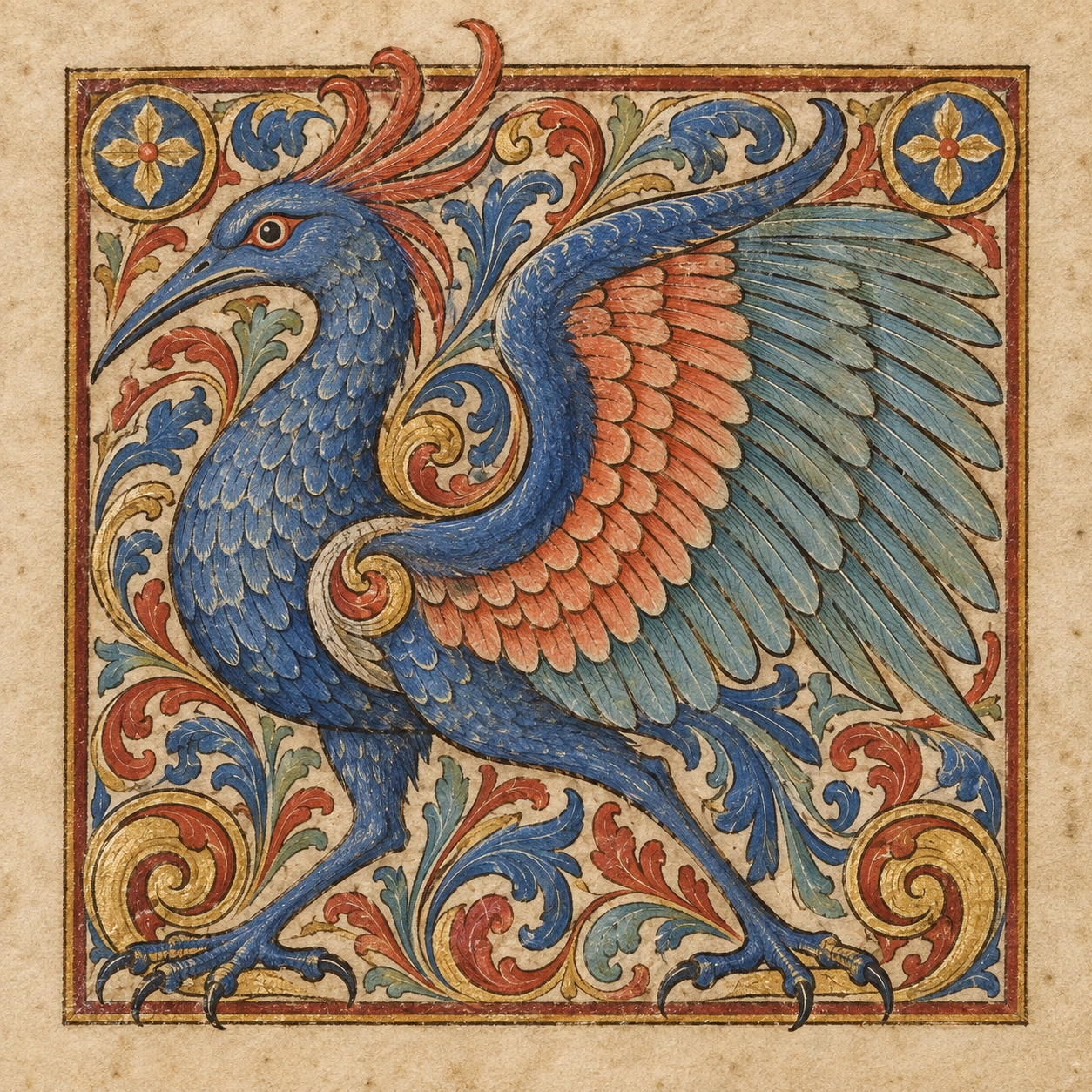 GPT Image 2.5
Reference details
- Reference ID
- 1712
- Category
- Ink & line
Reference prompts
Style prompt
The illuminated manuscript image combines matte mineral-like pigment, fine ink contours, and a warm aged-paper ground. A narrow square frame contains densely interwoven curved forms, with circular corner accents and repeated scrolls organizing the crowded space. Blue and teal occupy the largest linked shapes, while coral pink, rust red, and ochre highlight selected inner segments. Individual parts are separated by decisive dark lines and close parallel hatching, giving local relief without establishing modern deep perspective. Flat even illumination preserves the clarity of each color plane; slight pigment wear and parchment grain make the surface tactile. Large sweeping arcs cross rows of much smaller repeated strokes, creating motion within a stable geometric enclosure. The edges remain intricate yet carefully bounded, so ornament feels lavish rather than chaotic. The overall effect is symbolic and jewel-like, with disciplined framing and layered handmade detail carrying the visual style across any chosen subject.Full example prompt
A square illuminated manuscript image shows a blue winged mythical creature enclosed within an ornate painted frame on tan parchment. A narrow ochre and dark red border defines the inner square, leaving a broad plain paper margin around it. Circular blue-and-gold ornaments anchor the upper corners, while curling spiral forms turn inward at the bottom corners. The space within the border is packed with rust-red, ochre, pale teal, and blue scrollwork, so very little ground remains empty. The creature faces left with a long pointed beak, a small red-ringed eye, and a cluster of reddish hornlike plumes rising behind its head. Its broad blue neck curves down into a rounded chest, where fine tonal marks suggest layered scales or smooth feathers. The largest feature is a raised wing sweeping across the center and right. A strong blue leading edge bends over rows of coral-pink feather bases, and long teal outer feathers stack tightly toward the right border. Dark ink outlines separate each feather, while fine parallel strokes give the wing its volume. Beneath the wing, a compact torso rests on two long blue legs. Clawed feet spread across the bottom edge of the inner frame, one at the left and another reaching toward the right spiral. A curled patterned form at the shoulder and several leaflike blue shapes behind the body add to the ornamental complexity. The body and scrolls overlap without naturalistic depth, filling the square like an interwoven emblem. Illumination is even and flat across the parchment, with local pale highlights and darker ink hatching shaping the creature rather than a single cast shadow. Muted mineral blue is the dominant color, warmed by red-orange feather accents and golden spirals. The surface has fine grain and slight wear, as if pigment has settled into old paper. The overall composition turns an energetic leftward stride into a controlled decorative knot of wing, claw, circle, and curling border.