
Styles
#1741
Theophile Steinlen style reference and prompts
Explore the “Theophile Steinlen” reference with fine linear detail, sepia tones, and crosshatching. View the images, copy the style or example prompt, and discover related styles on Looksift.
Compare the Qwen Image 2.1 and GPT Image 2.5 examples, choose the visual qualities you want, and copy the style prompt for your own project.
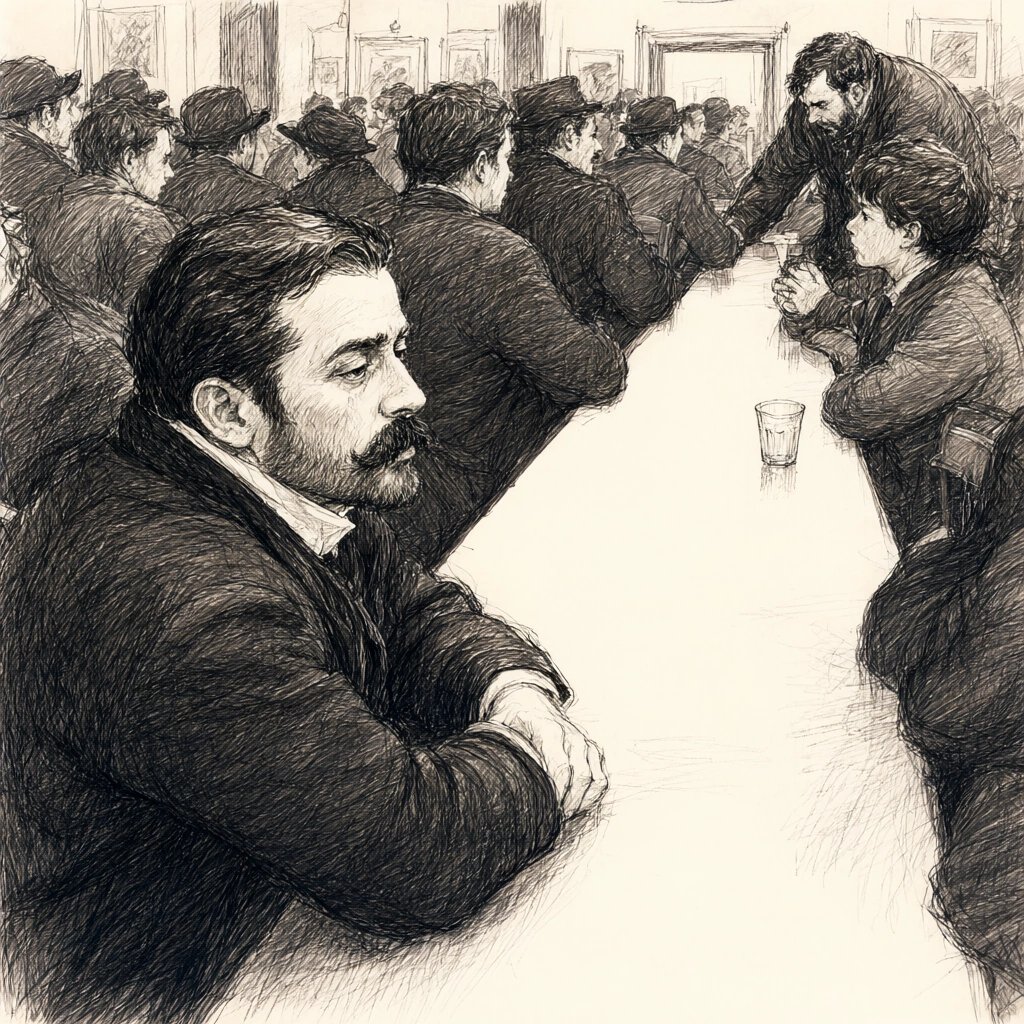 Qwen Image 2.1
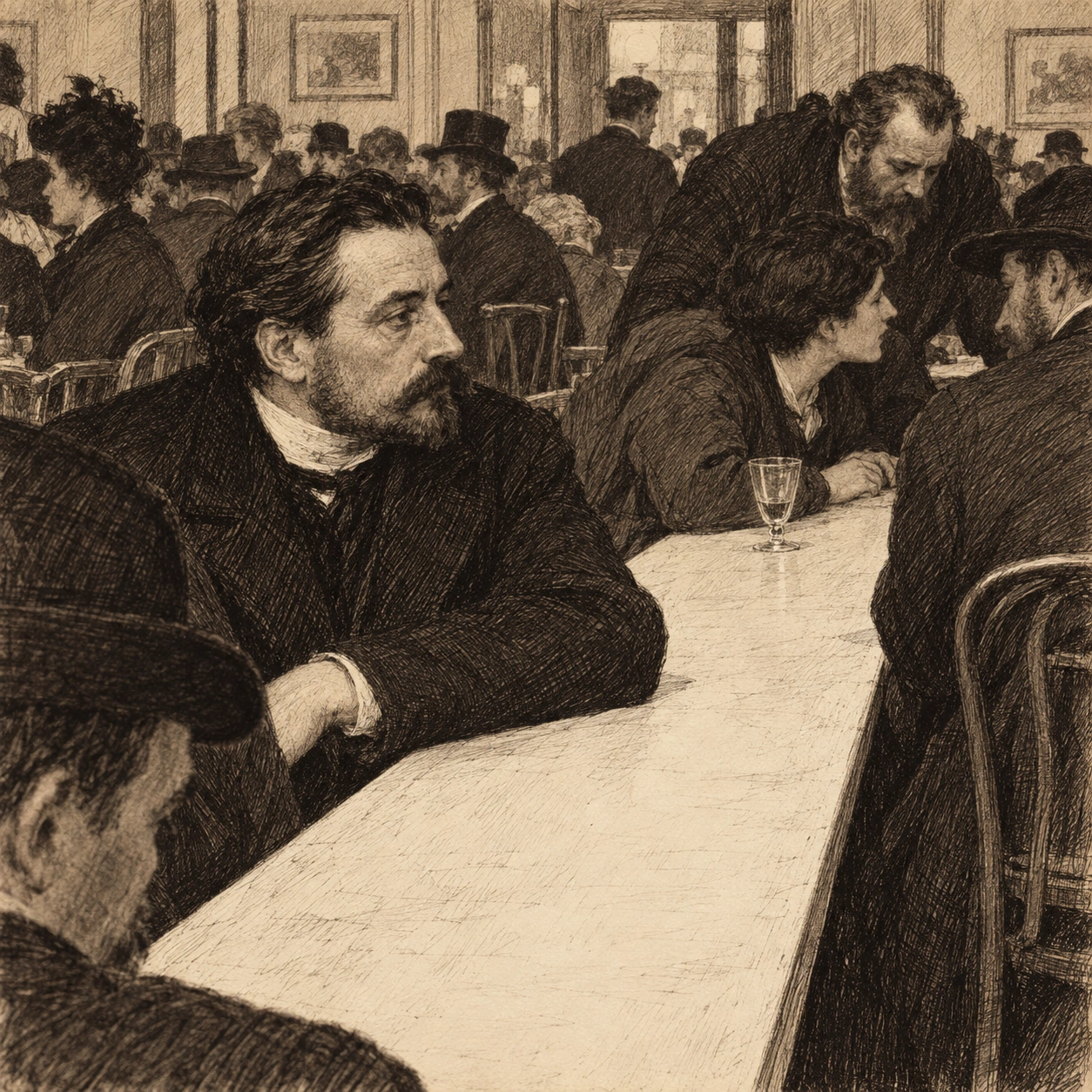 GPT Image 2.5
Reference details
- Reference ID
- 1741
- Category
- Ink & line
Reference prompts
Style prompt
Sepia ink drawing uses fine crosshatching, close contour work, and broad unmarked paper to organize crowded figures. Charcoal-brown coats and hats form dense overlapping masses, while pale wedge-shaped spaces keep the eye moving through them. Faces receive selective delicate lines; farther forms loosen into quick strokes and broken outlines. Interior light is soft and diffuse, represented through reserved paper rather than white paint or bright reflection. A strong diagonal surface leads into stacked shallow depth, and partial crops at the edges reinforce the sense of bustle. The overall effect is observational, textured, and lively without relying on strong color.Full example prompt
A square sepia-toned ink drawing shows a crowded café interior centered on a mustached man seated at a long pale table. He occupies the left foreground, wearing a heavy black jacket over a high white collar, with one arm resting along the table edge. His dark hair is combed back, his thick mustache and short beard are carefully crosshatched, and he looks toward the right with a tired, intent expression. The tabletop extends diagonally from the lower-left foreground toward the upper-right center, creating a bright wedge between the man and the other patrons. Near its far end, a small clear glass stands beside a younger dark-haired person who leans forward and turns toward the right. A larger bearded man bends over this seated figure from behind. Across the upper half, many people in dark hats and coats fill the room in overlapping rows; some face away, others appear in half profile. Framed pictures, vertical wall divisions, and a doorway-like opening show faintly behind the dense crowd. A partial head enters at the lower left, emphasizing the close, packed viewpoint. The light is diffuse and indoor-soft, leaving the tabletop almost white while dark coats collect thick shadow through repeated pen strokes. Fine crosshatching shapes faces and sleeves; looser lines and erased-looking gaps keep the background active without making every figure equally sharp. The overall composition pulls the eye along the pale diagonal table into a crowded social room, balancing intimate observation against restless bustle.