
Styles
#2068
Teun Hocks style reference and prompts
Explore the “Teun Hocks” reference with fine linear detail, a matte finish, and negative space. View the images, copy the style or example prompt, and discover related styles on Looksift.
Compare the Qwen Image 2.1 and GPT Image 2.5 examples, choose the visual qualities you want, and copy the style prompt for your own project.
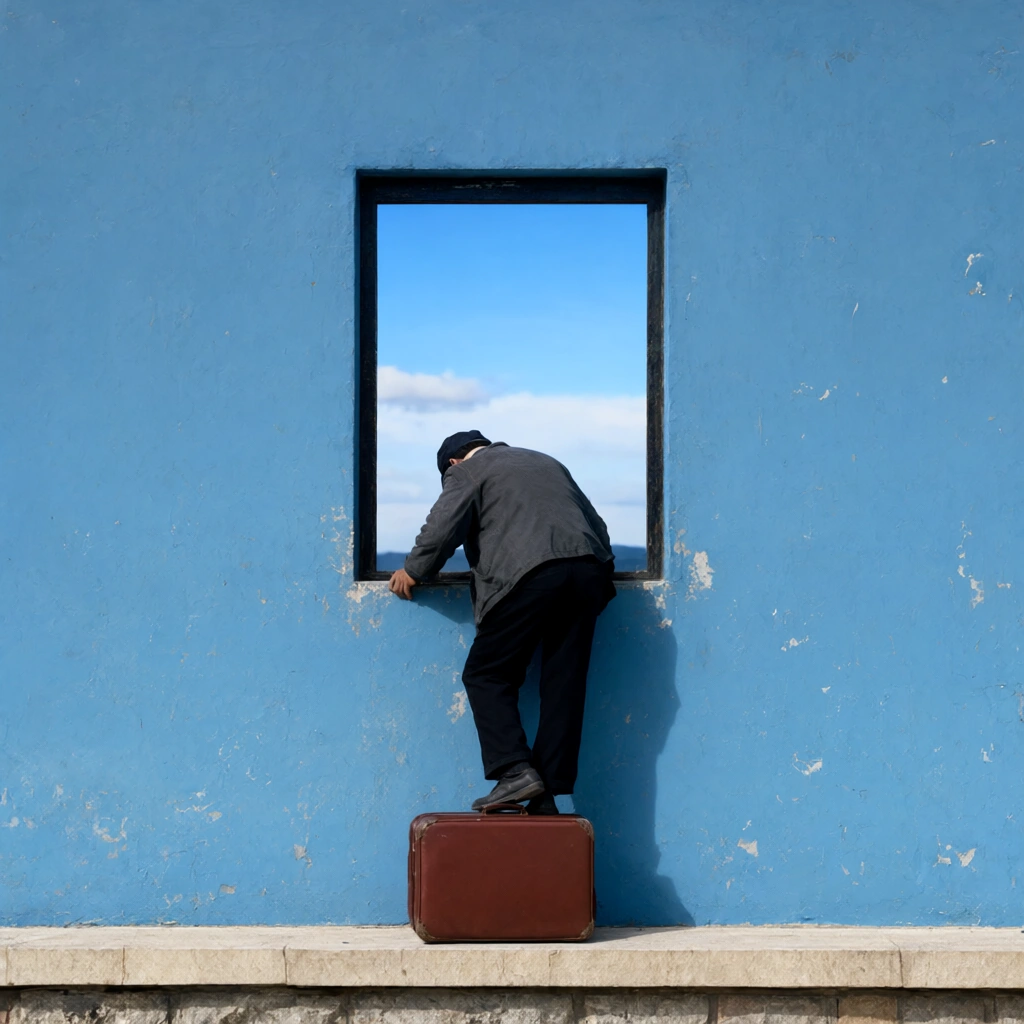 Qwen Image 2.1
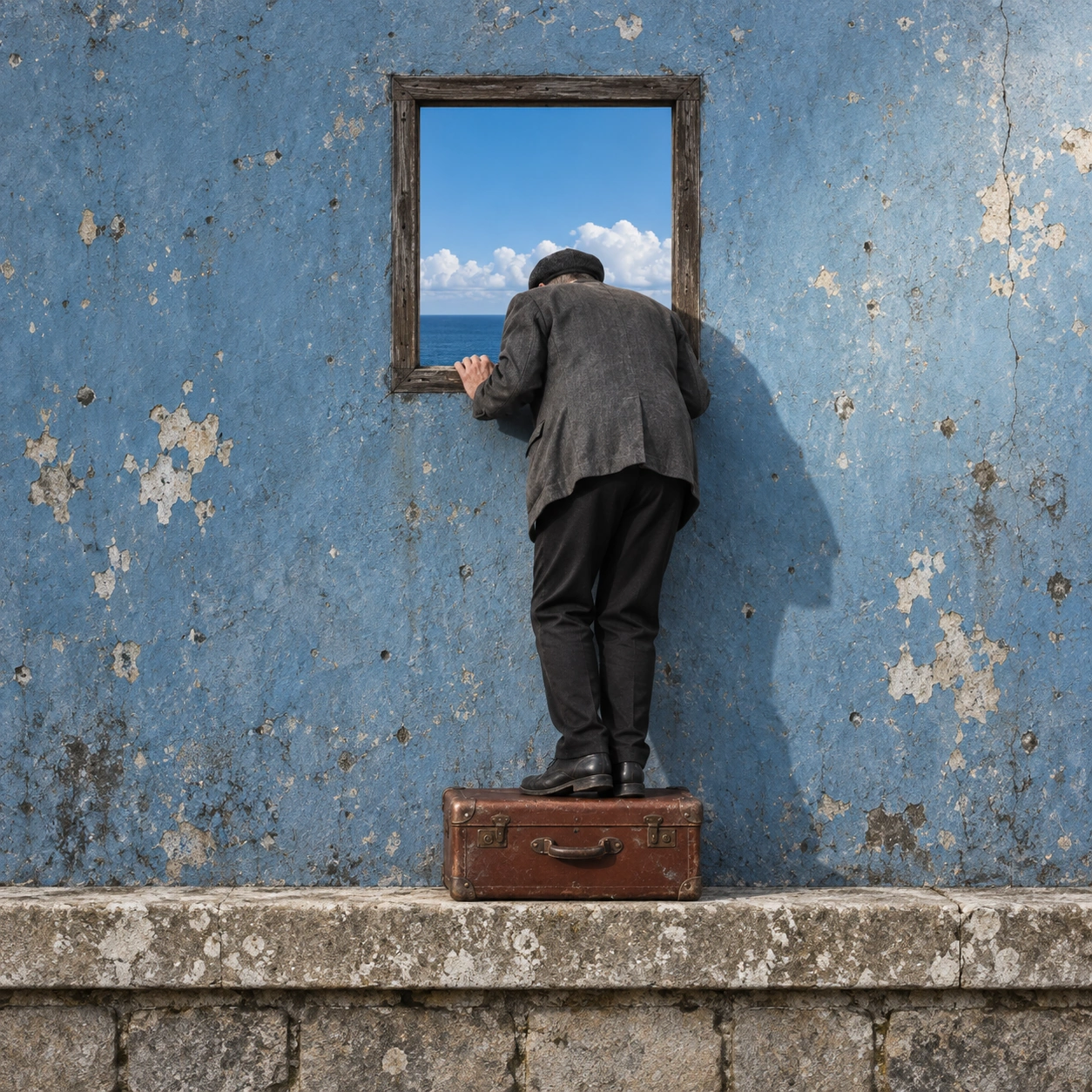 GPT Image 2.5
Reference details
- Reference ID
- 2068
- Category
- Photography
Reference prompts
Style prompt
The staged photographic treatment uses plain geometric framing and a large weathered matte color field. Dusty blue and gray occupy most of the picture, punctured by one clearer saturated rectangle and a small warm brown accent near the bottom. Chipped paint, stains, rough plaster, and hairline scratches give the broad field specific physical texture without filling it with clutter. A compact dark form is centered low against the much larger pale wall, making scale and isolation immediately apparent. Straight vertical and horizontal edges create a stable grid, while the form's uneven silhouette introduces a slight comic imbalance. Directional daylight from one side produces a concise cast shadow and makes the opening appear deeper than the surrounding flat plane. Detail remains sharp enough to reveal material wear but avoids glossy finish. The overall effect is minimal, surreal, and quietly humorous, relying on negative space and one impossible-seeming spatial relationship.Full example prompt
A square staged photographic image shows a single man leaning through a rectangular opening in a weathered blue wall. The wall fills almost the whole frame, its matte blue paint chipped in scattered pale patches and marked by scratches and stains. A narrow dark wooden frame surrounds the opening near the upper center. Through it appears a bright blue sky with low white clouds and a thin darker horizon; no room beyond the wall is visible. The man stands with his back to the viewer on a reddish-brown suitcase positioned directly below the opening. He wears a loose dark gray jacket, black trousers, and dark shoes. His head bends forward into the opening so that only a small dark cap or hair shape and a pale strip of neck are seen. One hand grips or rests near the left lower edge of the frame, and his bent legs make his balance on the case look slightly precarious. The suitcase has worn corners and a shallow handle shape, and it sits on a pale horizontal stone ledge crossing the entire lower frame. Beneath that ledge, a strip of block-like masonry is just visible. Light enters from the right, brightening the wall near the window and giving the figure a dark cast shadow to its right. The sky inside the opening is much clearer and more saturated than the aged wall, creating a visual contrast between flat exterior surface and apparent depth. The image is sparse, with large areas of chipped blue negative space around one small, awkward human action. The overall composition is quiet and absurd, using simple geometry, weathered texture, and a tiny glimpse of open distance to make the scene feel suspended.