
Styles
#3023
Charles Demuth style reference and prompts
Explore the “Charles Demuth” reference with cool blue-gray tones, soft diffused light, and geometric reflections on water. View the images, copy the style or example prompt, and discover related styles on Looksift.
Compare the Qwen Image 2.1 and GPT Image 2.5 examples, choose the visual qualities you want, and copy the style prompt for your own project.
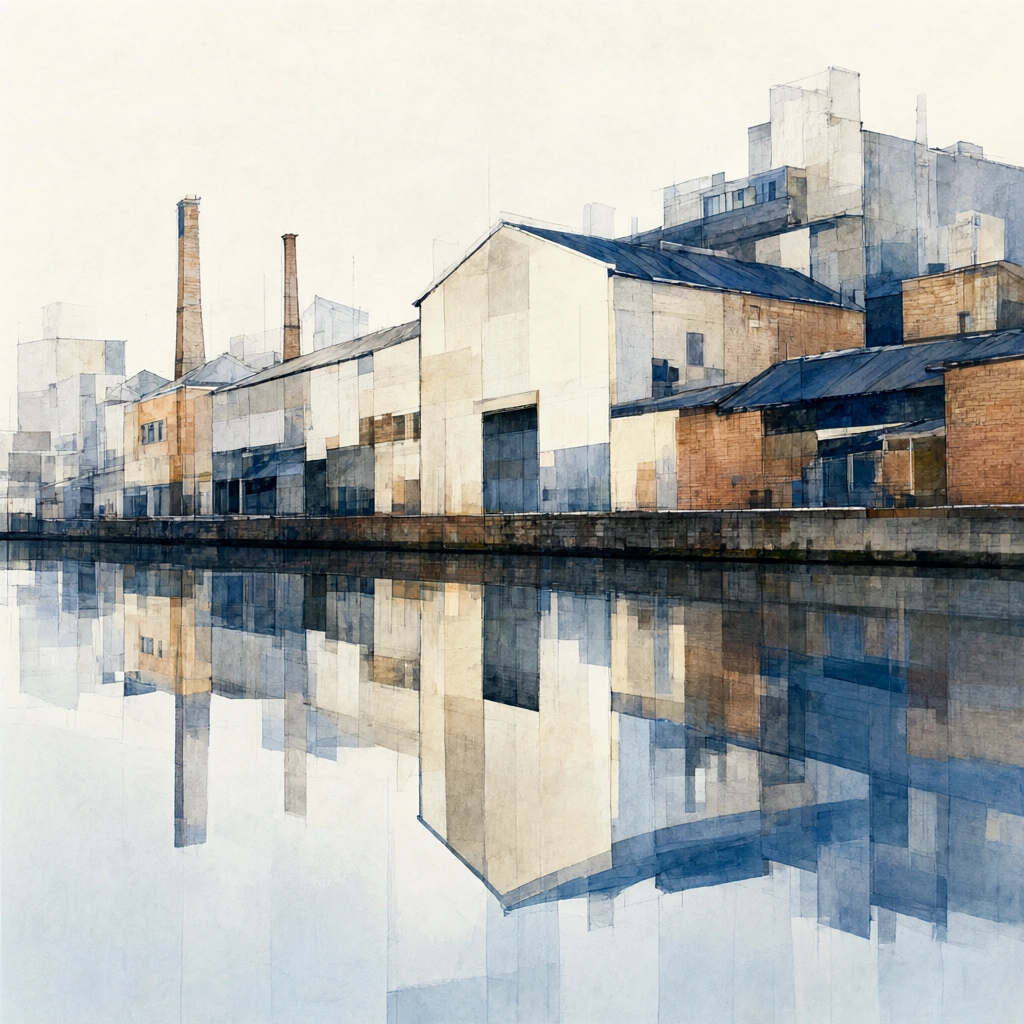 Qwen Image 2.1
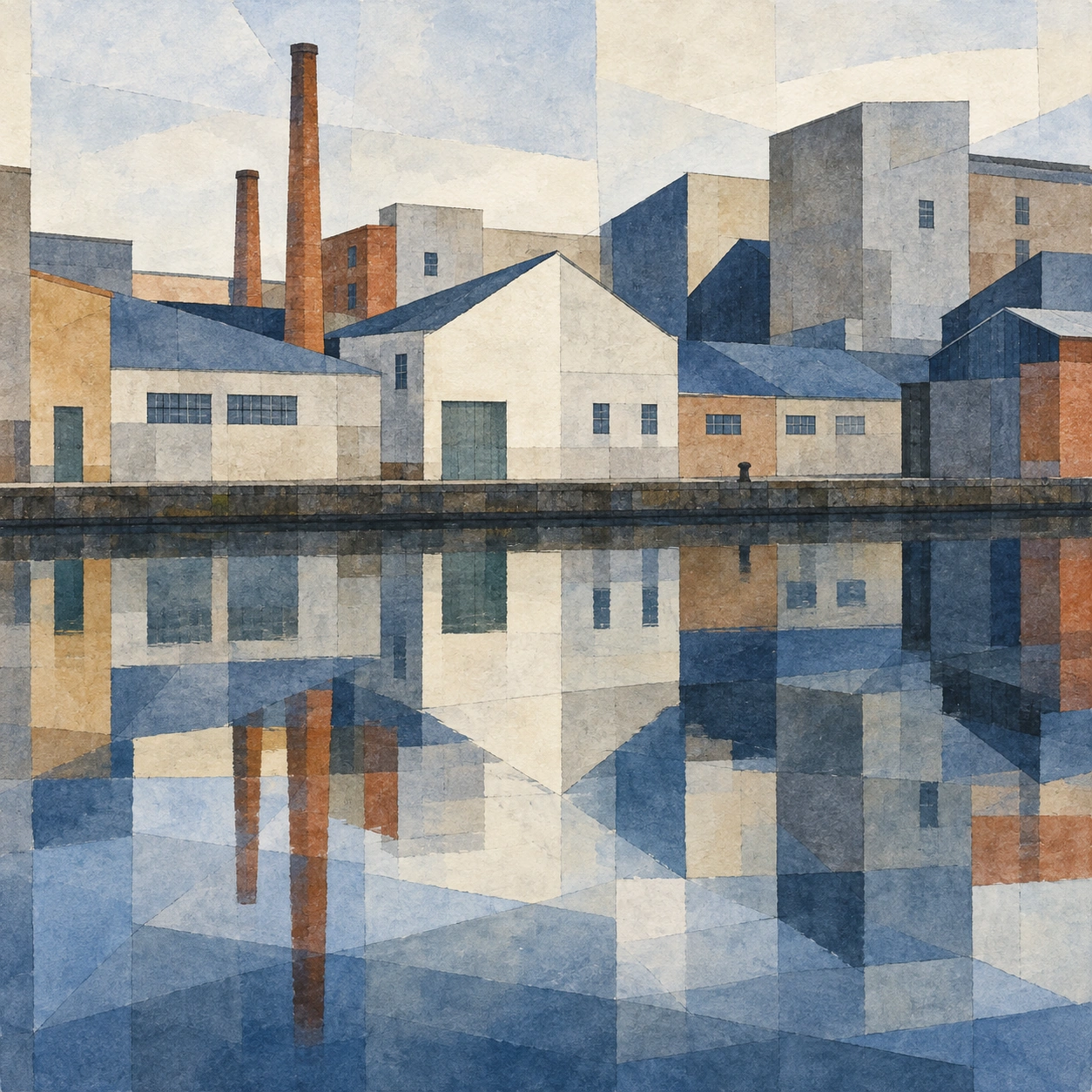 GPT Image 2.5
Reference details
- Reference ID
- 3023
- Category
- Painting
Reference prompts
Style prompt
The geometric watercolor treatment breaks observed space into overlapping translucent planes. Cream, dusty tan, brick orange, muted blue, and blue-gray keep the palette restrained, with cooler denser color gathered in a broad lower band. Straight edges, rectangles, and narrow vertical strokes establish a measured rhythm, while softened wash boundaries prevent the image from feeling rigid. A strong horizontal division pairs upper forms with fragmented inverted counterparts. Diffuse light makes pale planes nearly luminous without hard cast shadows. Pencil-like seam lines and uneven pigment deposition preserve the paper surface. The composition compresses depth into interlocking masses and reflections, producing an overall effect that is quiet, analytical, and lightly atmospheric.Full example prompt
This is a square, geometric watercolor-like painting of an industrial district reflected in still canal water. Across the upper half, low pale warehouses and taller blocky structures press together along the far bank. Narrow brick chimneys rise near the left center, while dark blue rooflines, small rectangular windows, and layered walls step toward the right. A simple white gabled building stands prominently near the middle, its sloping roof pointing into the pale sky. The lower half mirrors the architecture in cool water, though the reflection breaks into long rectangles and angular blue-gray facets rather than preserving every edge exactly. A narrow dark bank line divides the real structures from their inverted echo. Cream, pale gray, dusty tan, brick orange, and muted blue fill overlapping translucent planes. The light is soft and diffuse, as if under high cloud, brightening the upper walls and sky while leaving the reflected forms denser and cooler below. Hard, straight architectural edges meet watery, semitransparent color washes; faint pencil-like divisions remain visible through some overlapping areas. No person dominates the scene, and the small dark mark along the far bank does not resolve into a clear action. The perspective is shallow and compressed, with staggered masses building a rhythmic skyline rather than a deep street view. No readable sign or text appears. The overall composition is calm and structural, using a strong horizontal waterline to balance clustered vertical forms with their fragmented geometric reflections.