
Styles
#3772
Agnes Cecile style reference and prompts
Explore the “Agnes Cecile” reference with pooled pigment and washes, close cropping, and pale neutral tones. View the images, copy the style or example prompt, and discover related styles on Looksift.
Compare the Qwen Image 2.1 and GPT Image 2.5 examples, choose the visual qualities you want, and copy the style prompt for your own project.
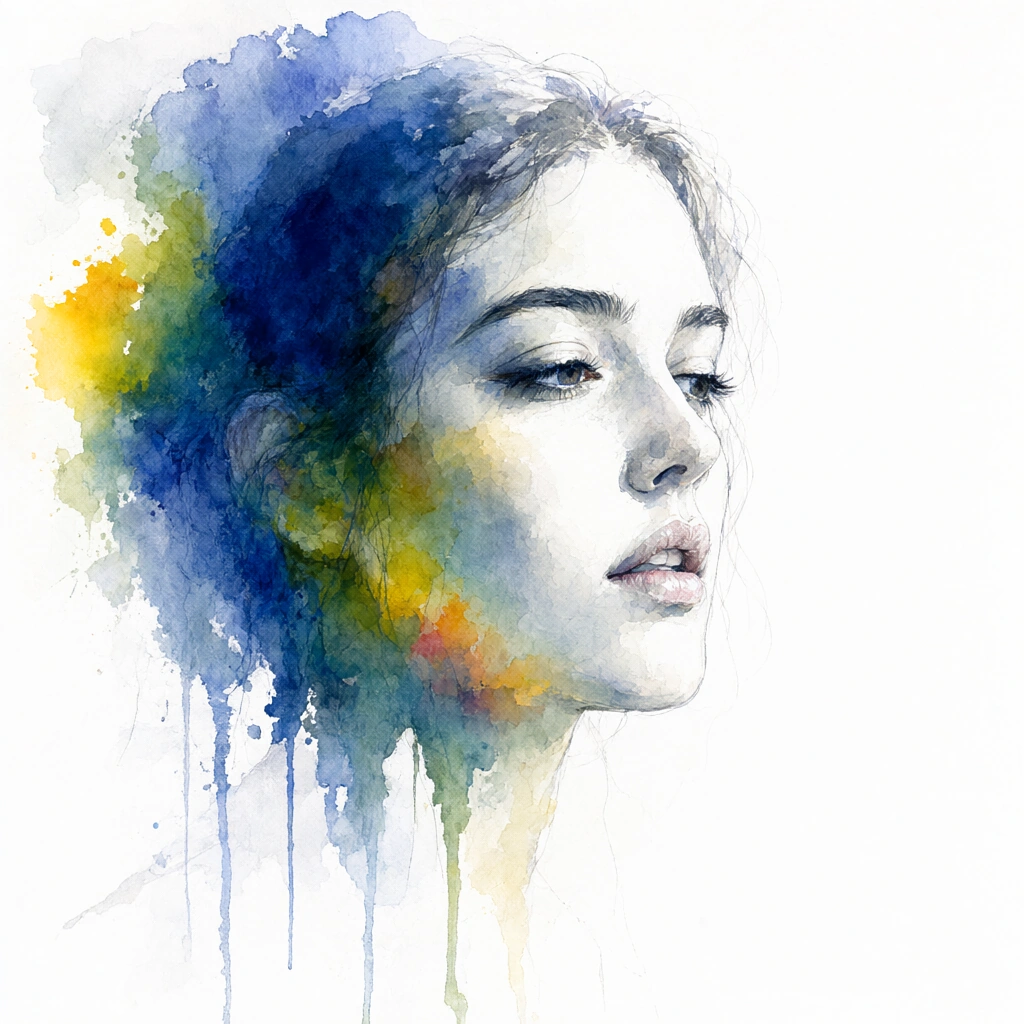 Qwen Image 2.1
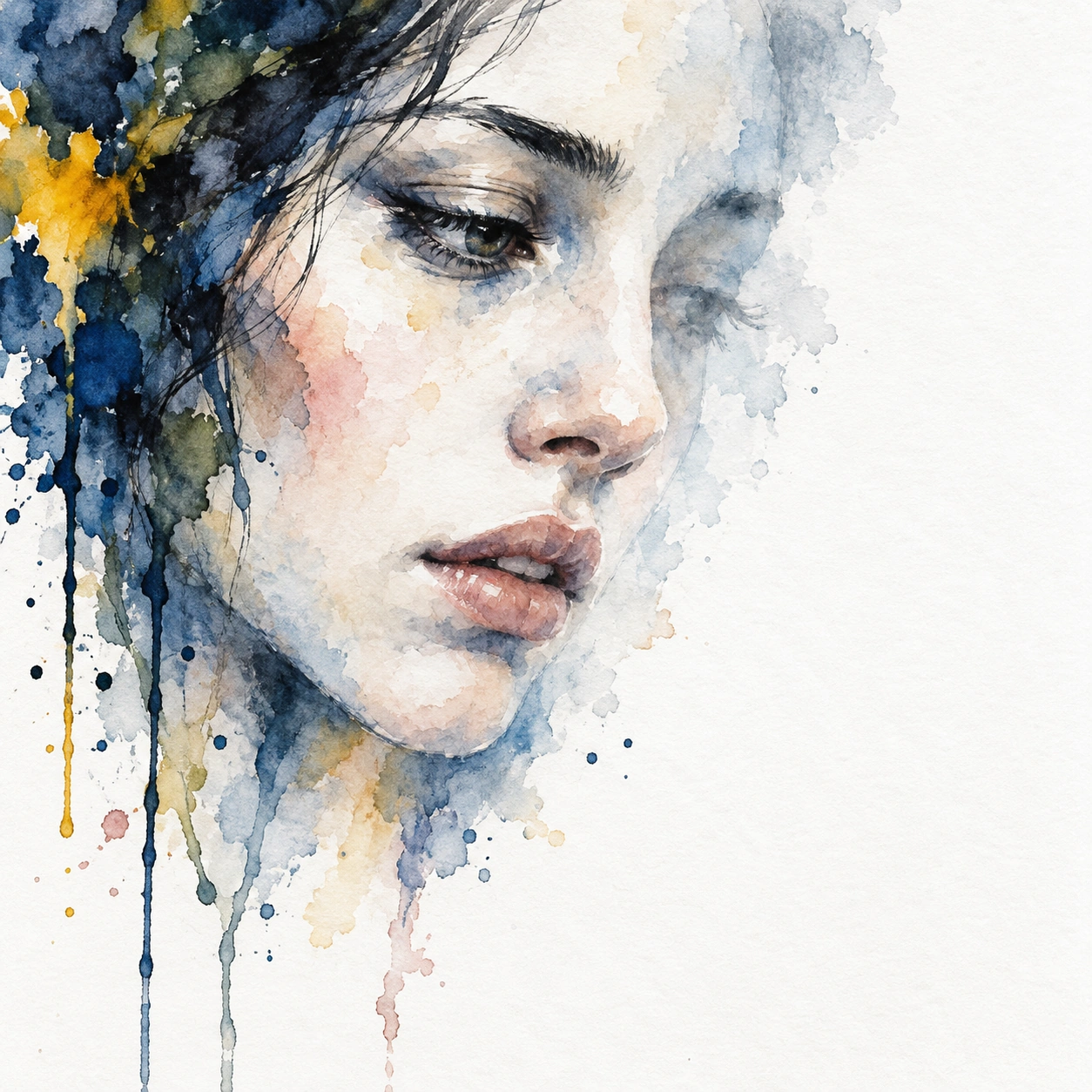 GPT Image 2.5
Reference details
- Reference ID
- 3772
- Category
- Painting
Reference prompts
Style prompt
Expressive watercolor on white paper combines a few sharply observed dark lines with loose transparent pigment blooms. Indigo, ultramarine, slate blue, olive, and small mustard or rose accents gather asymmetrically on one side, while large untouched white areas remain essential to the light. Water-driven edges bleed, feather, and overlap; thin vertical drips extend the color beyond the main shape. Some focal details stay crisp and nearly black, but adjacent contours are incomplete or dissolve into pale gray-blue wash. The surface shows paper brightness, accidental splatter, translucent layering, and the varying density of pooled pigment. Close cropping gives the painted cluster presence without filling the whole field. Light is created by restraint: open paper and pale wash contrast with concentrated dark marks. The effect is intimate, fluid, and emotionally exposed, balanced between disciplined drawing and material chance.Full example prompt
An expressive watercolor portrait brings a thoughtful young woman's face out of broad white paper. She turns slightly to the right, eyes lowered, with a quiet parted mouth. Her features are only partly complete: one eye and brow are sharply drawn in dark blue-black, while the far eye, cheek, and chin dissolve into thin pale washes. Around the left side of her head, saturated indigo, ultramarine, olive green, and a small burst of mustard yellow bloom into irregular organic shapes. Several narrow drips descend from these dense color areas past the face and into the blank lower margin. The white of the paper forms the brightest planes of forehead, nose, and cheek; no opaque white paint needs to be added. Fine pencil-like lines mark eyelashes, lip edges, and faint facial construction, but most boundaries remain fluid. Water has carried pigment beyond the drawn contour, creating soft cauliflower edges, transparent overlaps, and accidental splashes. The image is cropped very close, so the face fills the left and middle while a broad clean white interval remains at right. Cool blue-gray shadows model the eye socket and underside of the chin, offset by small warm yellow and rose notes. Light is implied through untouched paper and translucent wash rather than a specific source. The portrait feels vulnerable and immediate, suspended between careful observation and the unpredictable flow of watercolor.