
Styles
#4414
Conté drawing style reference and prompts
Explore the “Conté drawing style” reference with hatching, tactile surfaces, and close cropping. View the images, copy the style or example prompt, and discover related styles on Looksift.
Compare the Qwen Image 2.1 and GPT Image 2.5 examples, choose the visual qualities you want, and copy the style prompt for your own project.
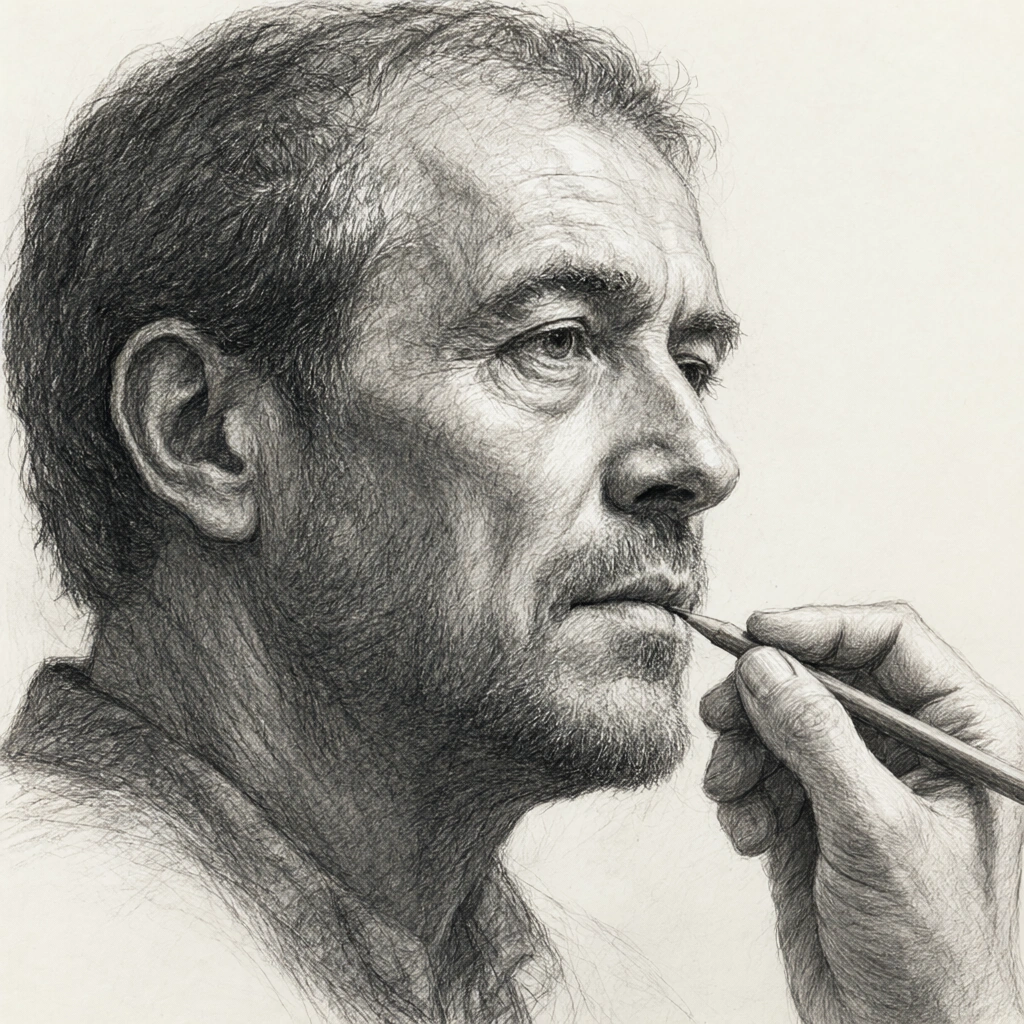 Qwen Image 2.1
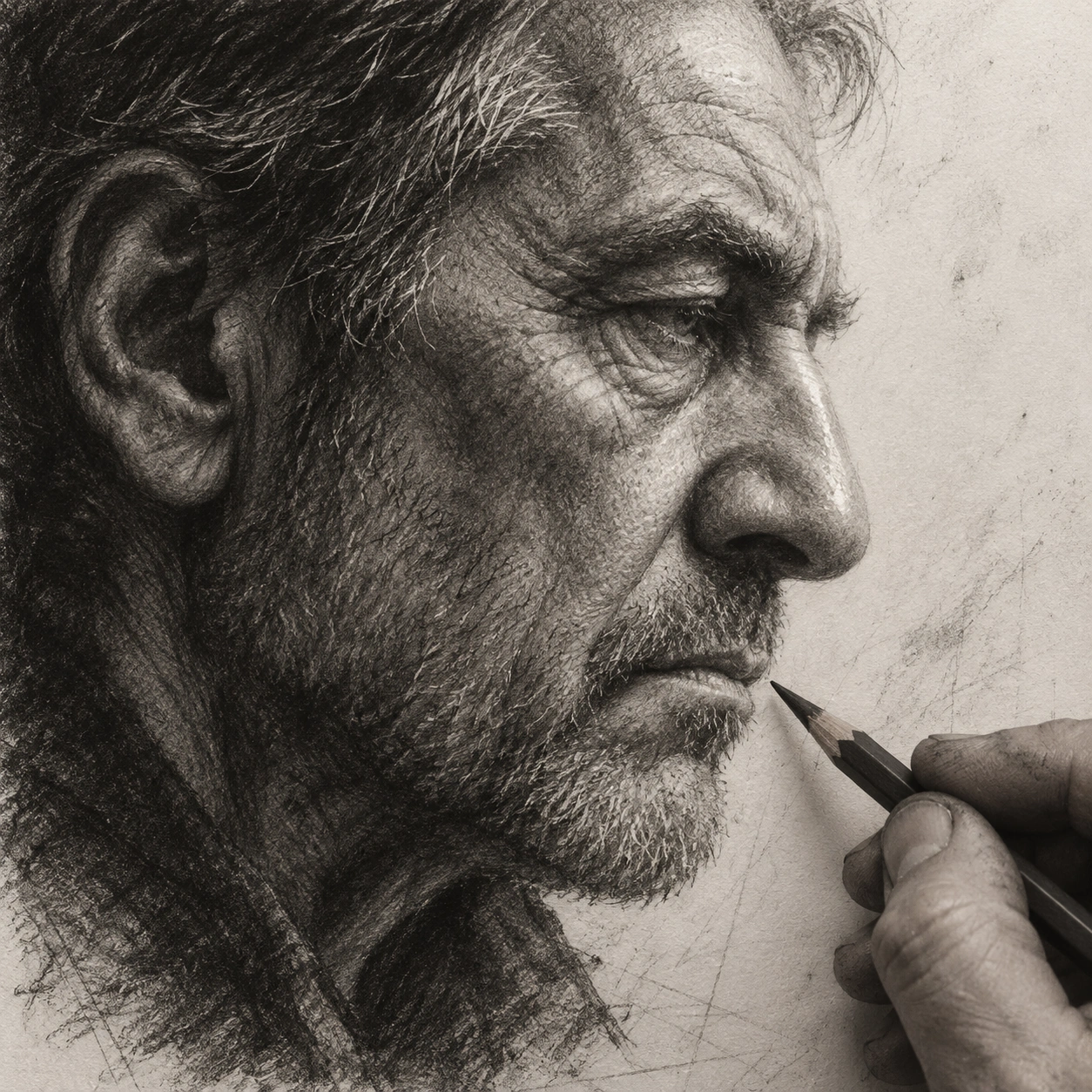 GPT Image 2.5
Reference details
- Reference ID
- 4414
- Category
- Painting
Reference prompts
Style prompt
A close graphite-and-charcoal drawing style builds volume through directional hatching, rubbed middle tones, dense black pockets, and erased light. A tightly cropped focal surface occupies most of the frame, with open pale paper balancing one side. Fine line follows planes and wrinkles while broader smudges connect them. Visible construction marks, paper tooth, and a few unfinished edges preserve the working-study character. Broad side light makes selected ridges and textures legible without smoothing them. A drawing tool or other small process detail may enter the frame and give the image immediacy. The mood is patient, searching, and tactile, with observation evident in every mark.Full example prompt
A square monochrome drawing study shows an older man's face in close profile, turned toward the right. The furrowed brow, heavy eyelid, prominent nose, compressed lips, and stubbled jaw are observed with severe attention. A hand holding a pencil enters from the lower right, its tip near the mouth, making the process of drawing visible within the image. The man's head fills nearly the whole frame, while pale paper remains open behind the right side of the face. Soft graphite shading models the cheek and forehead; dense charcoal-black passages gather in hair, ear, neck, and deep facial creases. Fine directional hatching follows the skin's planes, and faint construction marks remain around the lower edge. Light comes broadly from the upper right, catching the ridge of the nose and wrinkled eye area while the left side sinks into dark. The close crop and visible hand make the scene intimate and investigative rather than formal. Smudges, erased highlights, and paper tooth give the drawing a physical working surface. The whole frame feels like an exacting studio study, where patient observation and the pressure of the pencil matter more than polished completion.