
Styles
#1345
Bernd and Hilla Becher style reference and prompts
Explore the “Bernd and Hilla Becher” reference with fine grain, negative space, and a monochrome palette. View the images, copy the style or example prompt, and discover related styles on Looksift.
Compare the Qwen Image 2.1 and GPT Image 2.5 examples, choose the visual qualities you want, and copy the style prompt for your own project.
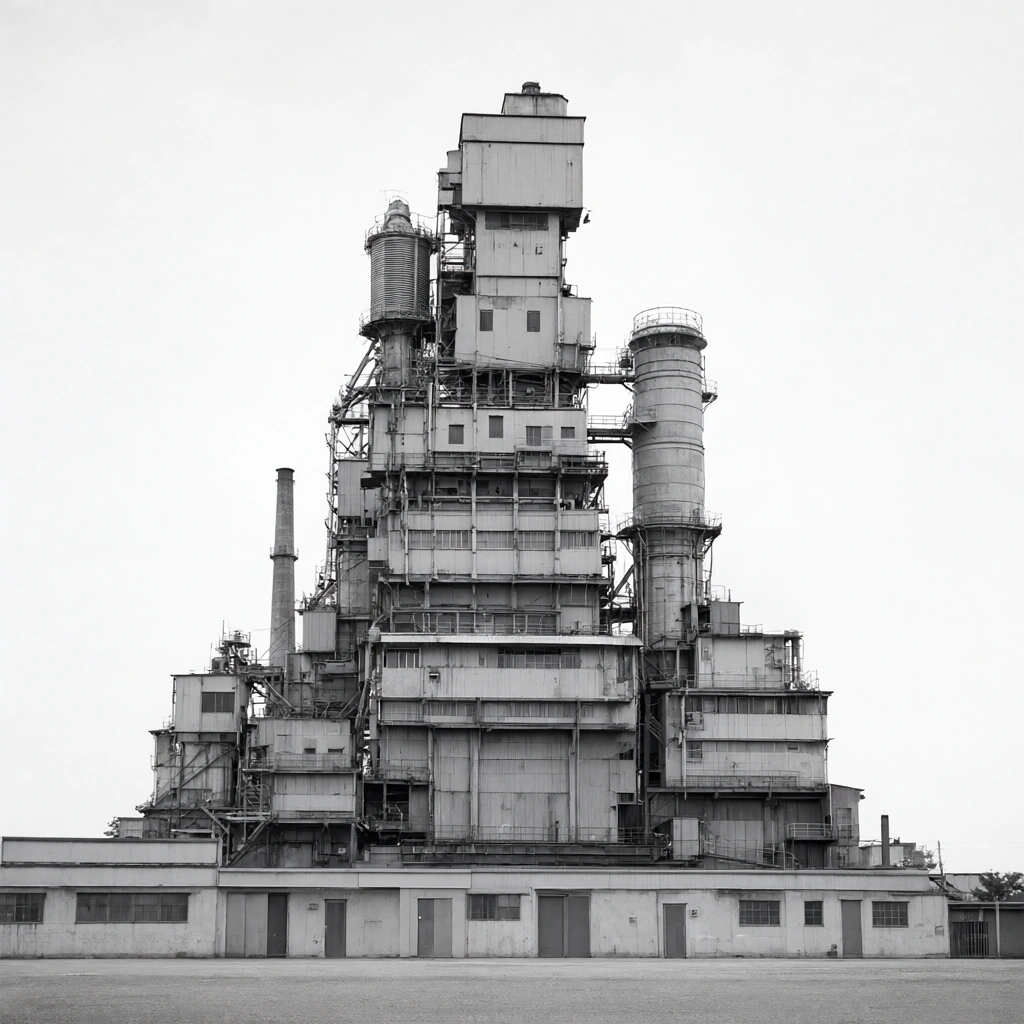 Qwen Image 2.1
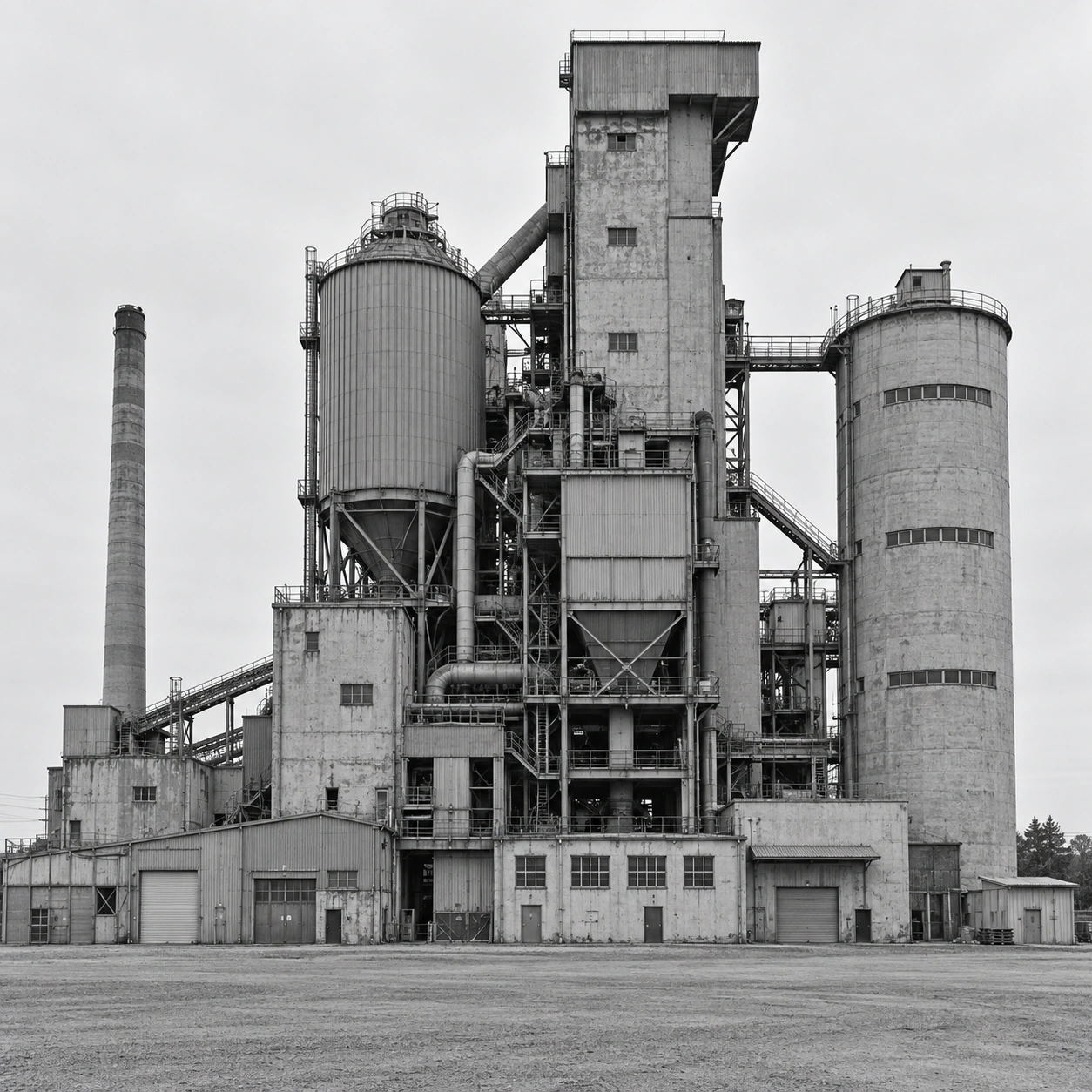 GPT Image 2.5
Reference details
- Reference ID
- 1345
- Category
- Photography
Reference prompts
Style prompt
The monochrome documentary photography treats complex forms with a level frontal view, even focus, and calm, descriptive light. A simple pale field surrounds a densely articulated central mass, so the silhouette can be read before its small components. Rectangular and cylindrical volumes overlap in layers; repeated bands, apertures, and narrow lines create an intricate internal rhythm without dissolving the larger geometry. The tonal scale is broad but gentle, dominated by middle grays and interrupted by dark recesses rather than theatrical blacks. Overcast illumination reveals material wear and fine grain while keeping cast shadows subdued. Horizontal grounding and generous upper negative space balance a tall irregular profile. Edges remain relatively crisp throughout the depth, giving the image an archival, comparative clarity. The overall effect is objective and quietly imposing, finding visual order in accumulated functional detail.Full example prompt
A square black-and-white documentary photograph records a tall industrial structure standing alone beneath a blank pale sky. The camera faces the structure directly from ground level at a measured distance, giving its many parts a readable, almost diagrammatic arrangement. Along the bottom, a wide empty foreground forms a flat gray base, with low utility buildings and doors lined up against the main complex. The central mass rises through stacked rectangular chambers, platforms, narrow windows, and exposed connecting frames. At the upper center, a tall boxy tower carries a broad projecting top, while a ribbed cylindrical vessel sits slightly to its left. A separate round tower with narrow horizontal bands and a rimmed top stands on the right, joined visually to the central block by small walkways and braces. On the far left, a thin chimney extends upward behind lower structures, its uncomplicated silhouette contrasting with the crowded machinery beside it. Pipes, stairs, beams, and small apertures make a dense mesh through the middle levels, yet the major rectangular and cylindrical volumes remain easy to distinguish. The upper outline is irregular rather than symmetrical, stepping across different heights before meeting the pale open sky. At the base, grids of windows and small rooflines give scale to the much larger vertical equipment. No people stand prominently in the foreground, and no sign can be read. Flat overcast light reveals gray surface differences without strong cast shadows. Dark openings and undersides mark depth, while weathered walls and metal retain faint granular texture. The photograph uses an even focus across the structure, allowing details near the edges to remain as legible as the center. Its quiet tonal range extends from off-white sky through many middle grays to a few nearly black recesses. The overall composition is frontal and restrained, isolating a complicated functional form so its repeated modules and changing vertical rhythm become the central subject.