
Styles
#1611
Stanko Abadzic style reference and prompts
Explore the “Stanko Abadzic” reference with fine grain, negative space, and a monochrome palette. View the images, copy the style or example prompt, and discover related styles on Looksift.
Compare the Qwen Image 2.1 and GPT Image 2.5 examples, choose the visual qualities you want, and copy the style prompt for your own project.
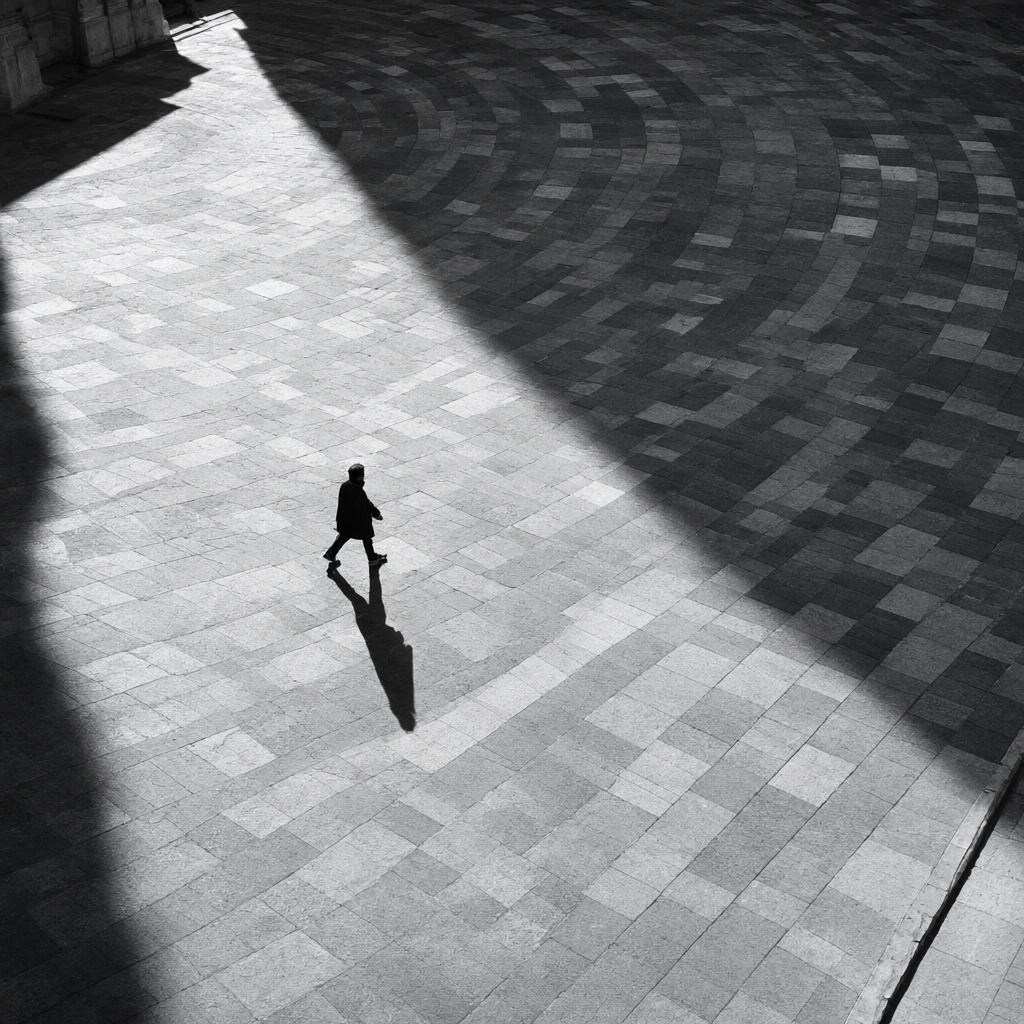 Qwen Image 2.1
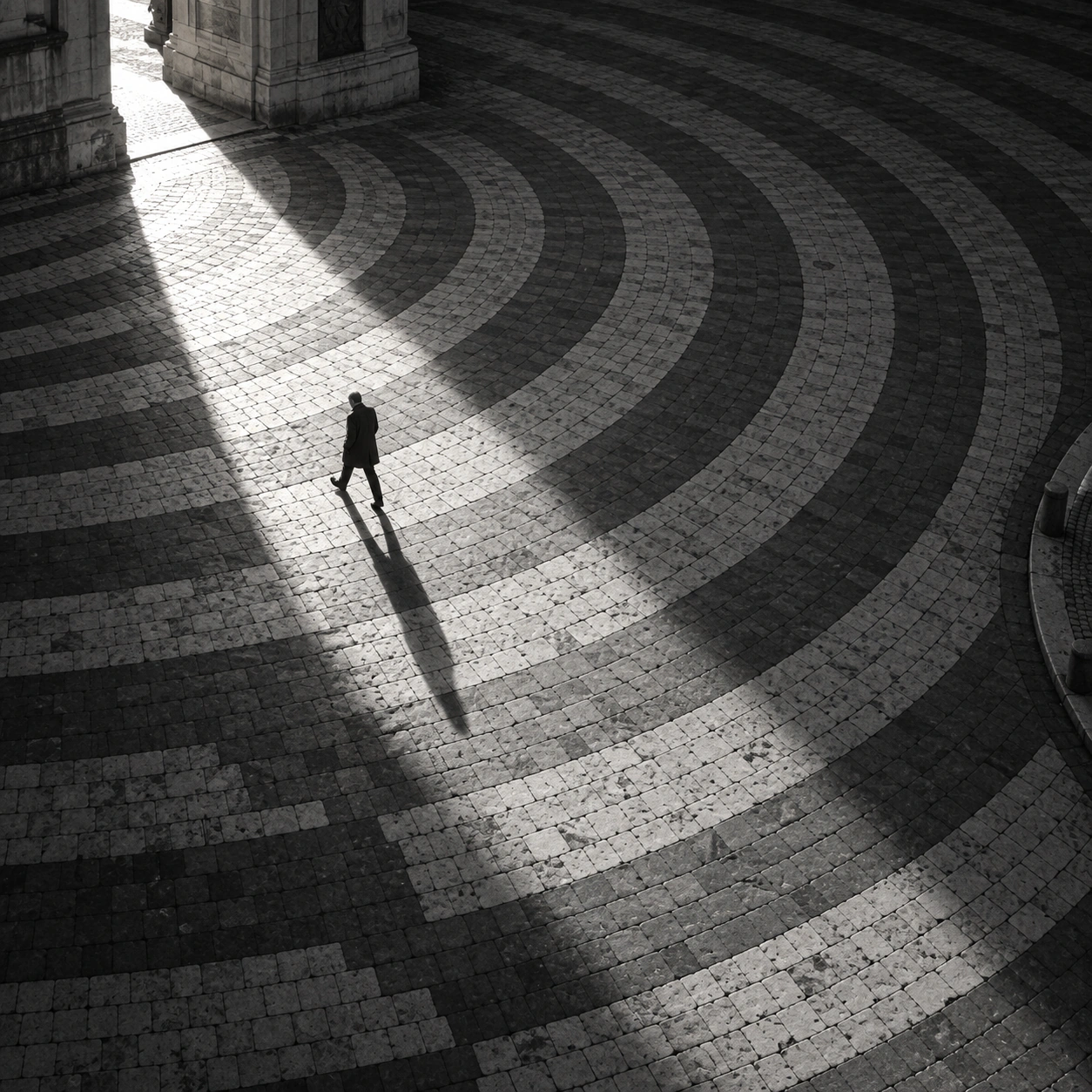 GPT Image 2.5
Reference details
- Reference ID
- 1611
- Category
- Photography
Reference prompts
Style prompt
A high-angle monochrome photographic treatment organizes everyday forms into bold geometry. Repeating patterns sweep across the frame while a small contrasting form establishes proportion. Direct sunlight creates a sharply bounded bright region and elongated shadows against deep surrounding darks. Stone, fabric, or other real surfaces retain fine grain and slight wear. The tonal range moves from luminous white through silvery midtones to dense black, with no color distraction. The composition feels candid yet exceptionally precise, finding quiet tension in pattern, negative space, and one fleeting moment.Full example prompt
The image is a high-angle black and white street photograph of a solitary person crossing an enormous patterned plaza. The paving consists of alternating pale and dark square stones arranged in broad concentric curves. Those curves swell across almost the whole square frame, giving the ground a graphic rhythm that seems to bend around the walker. A hard wedge of sunlight enters from the upper left, cutting diagonally across the paving; most of the upper right and lower left remain in deep shadow. Near the center-left, a small figure in a dark coat walks through the bright region with one leg extended mid-step. Their long, sharply defined shadow stretches toward the lower edge and becomes a second vertical presence among the checks. The top-left corner contains a sliver of monumental masonry and a bright opening, while a narrow curb appears at the far right. Human scale is deliberately modest against the sweeping geometry. The photograph relies on the real light and stone texture, not on decorative effects: crisp contrast, subtle grain, weathered paving joints, and small variations in the printed gray tones. The camera's distant viewpoint turns an ordinary crossing into an exact composition of pattern, light, movement, and absence. The frame feels candid, quiet, and faintly uncanny.