
Styles
#2063
Rene Burri style reference and prompts
Explore the “Rene Burri” reference with fine grain, negative space, and a monochrome palette. View the images, copy the style or example prompt, and discover related styles on Looksift.
Compare the Qwen Image 2.1 and GPT Image 2.5 examples, choose the visual qualities you want, and copy the style prompt for your own project.
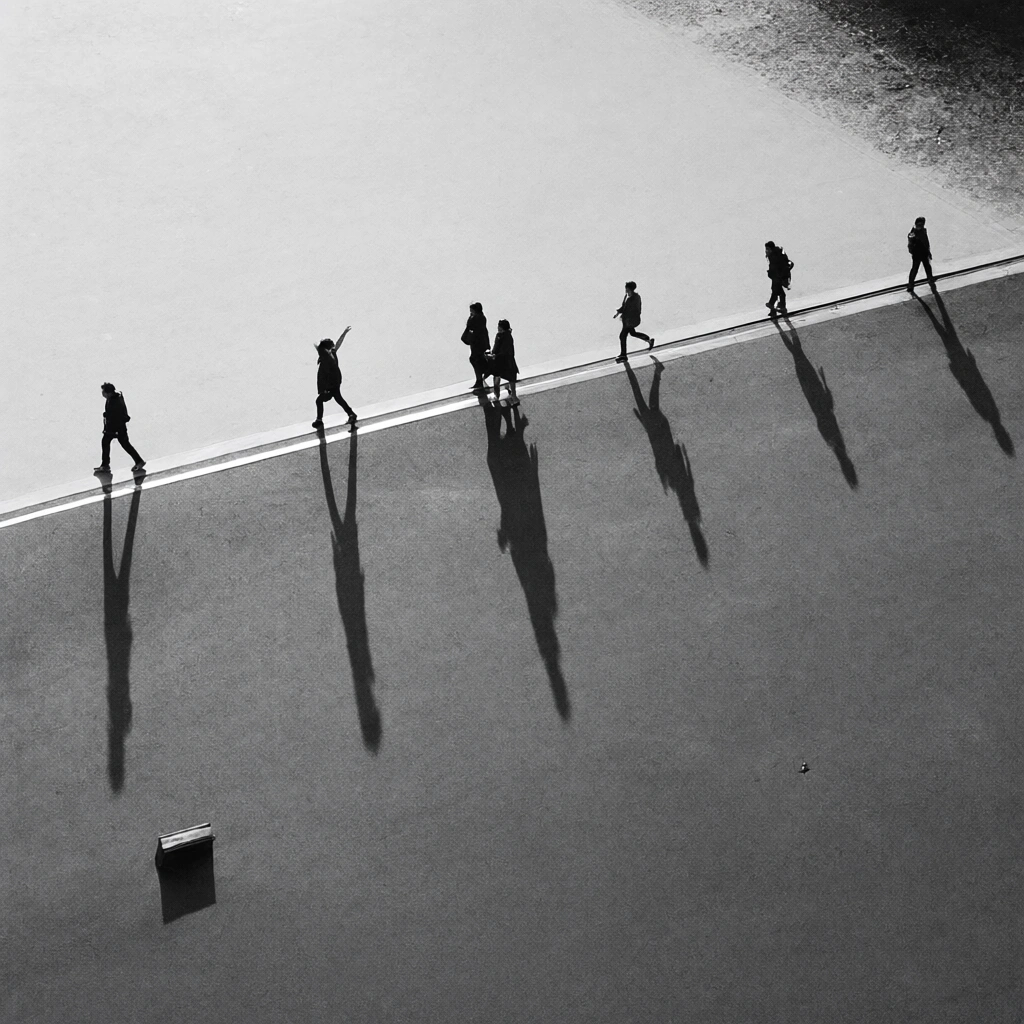 Qwen Image 2.1
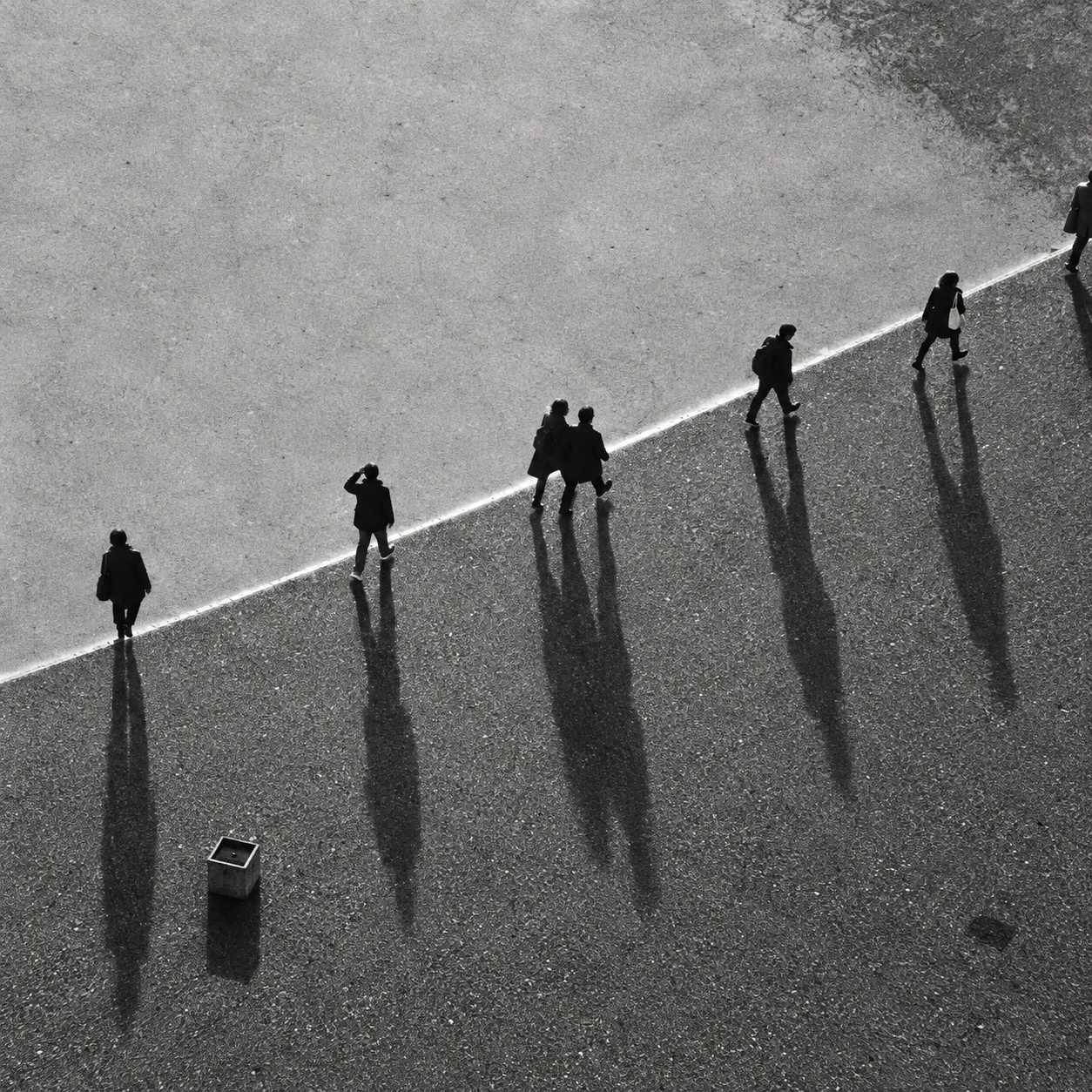 GPT Image 2.5
Reference details
- Reference ID
- 2063
- Category
- Photography
Reference prompts
Style prompt
High-angle black-and-white photography reduces a wide scene to a few pale and dark gray fields divided by a decisive diagonal. Small near-black silhouettes recur at uneven intervals, and their long directional shadows make a second rhythmic sequence across the lower area. Hard low light brightens the dividing edge while leaving the surrounding texture restrained. Fine grain and slight tonal variation remain visible inside otherwise simple expanses, keeping the geometry photographic rather than perfectly flat. The high viewpoint compresses depth and lets spacing, scale, and shadow length organize movement. Sparse isolated marks in the negative space prevent the pattern from becoming too regular. The overall effect is austere, graphic, and observant, with value contrast carrying nearly all the visual information.Full example prompt
The image is a square black-and-white street photograph taken from a steep high angle, showing scattered pedestrians walking along a diagonal boundary and casting long shadows. The upper half is a broad pale gray surface with subtle texture and few details, darkening into a rougher patch at the upper right. A thin bright edge cuts from the left lower-middle toward the upper right, separating that pale expanse from a darker grainy paved area below. Small figures move along or just below this line at intervals rather than forming a dense crowd. At the left, a lone dark figure walks near the boundary, with an elongated shadow reaching almost straight down. Slightly to the right, another figure raises an arm near the head; its shadow falls in the same downward direction. Near the center, two overlapping walkers create a denser knot of dark coats, legs, and shadow shapes. Farther right, two more separate figures stride along the edge, and a partly cropped figure appears near the upper-right corner. The people are rendered mostly as black silhouettes, with only small pale gaps at arms and legs giving clues to their movement. Across the lower area, their shadows stretch several times their height toward the bottom edge, some merging briefly before separating again. A small rectangular object with a dark top sits alone in the lower-left portion, casting its own short shadow, while one tiny dark mark lies near the lower right. The light is hard and low from the upper side of the frame, making the narrow boundary glow and projecting the long, sharply directed shadows over the darker pavement. Fine film grain softens the continuous gray areas without weakening the black silhouettes. The distant viewpoint flattens the space into a simple diagonal division interrupted by rhythmic human marks. The overall composition uses pale and dark gray fields, one bright sloping line, and repeated long shadows to create a spare, graphic sense of urban motion.